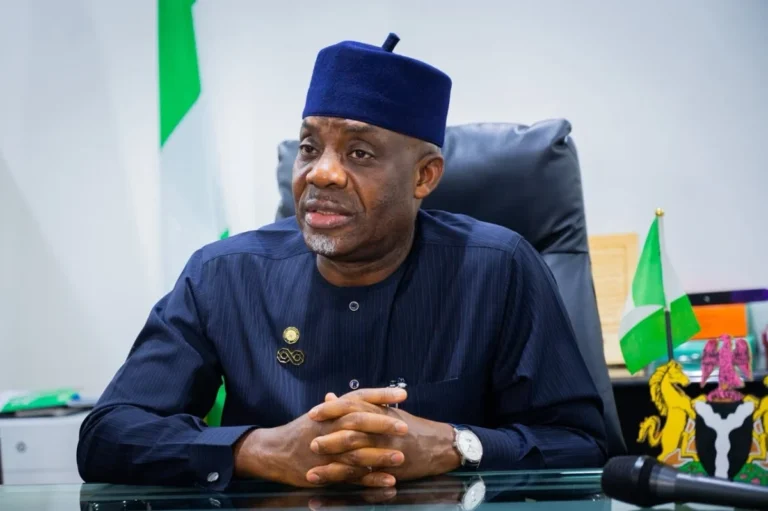
The landscape of global educational development shifted into sharp focus in New York, where Nigeria’s Minister of Education, Dr. Tunji Alausa, delivered a compelling call to action for expanded international funding, urging global leaders, development partners, philanthropic organizations, and the private sector to bridge the widening resource gap in learning institutions across the developing world. Speaking during the opening session of the Global Partnership for Education (GPE) Multiply Possibility financing campaign, Dr. Alausa emphasized that domestic resource mobilization, while vital, requires robust global solidarity to overcome the systemic barriers preventing millions of children from accessing quality education.
Co-hosted by Nigeria and Italy, the high-level event served as a crucial stepping stone toward the upcoming global financing summit. The Minister’s address resonated deeply with delegates, framing education not merely as a social service, but as the foundational bedrock for economic resilience, national security, and sustainable development. By accepting the co-hosting responsibilities for the campaign, Nigeria signaled its readiness to assume a leadership role in continental and international education advocacy, leveraging its position as Africa’s most populous nation to champion the rights of marginalized learners.
Domestic Reforms Align with Global Ambitions
Even as Dr. Alausa appealed for international cooperation, he was careful to highlight that Nigeria’s advocacy on the global stage is firmly anchored in concrete, measurable actions at home. Under the broader macroeconomic stabilization and inclusive growth agenda championed by President Bola Ahmed Tinubu’s administration, the Nigerian government has initiated sweeping reforms designed to modernize the educational sector. These ongoing interventions focus heavily on expanding physical and digital access, mitigating financial cost barriers for vulnerable households, and overhauling curricula to emphasize practical skills acquisition.
In a formal statement released in Abuja by his Special Adviser on Media and Communications, Ikharo Attah, Dr. Alausa detailed Nigeria’s comprehensive domestic financing commitments extending through 2030. This forward-looking financial framework integrates updated expenditure projections from the Federal Government with aligned budgetary commitments across the country’s thirty-six states. This multi-tiered fiscal approach acknowledges Nigeria’s complex federal structure, ensuring that resource mobilization reaches grassroots levels where the need for educational infrastructure is most acute.
This alignment of federal and sub-national priorities forms a critical pillar of the administration’s Renewed Hope Agenda. By institutionalizing predictable funding streams, the Nigerian government aims to insulate educational development from short-term economic shocks while creating an environment conducive to long-term learning outcomes. The integration of digitalization into the classroom ecosystem further underscores the nation’s determination to prepare its youth for the demands of the modern, technology-driven global economy.
The Global Financing Landscape and Collective Commitments
Dr. Alausa’s remarks at the GPE campaign arrived against the backdrop of a broader, concerted movement among GPE partner nations. Collectively, fifty developing partner countries have pledged more than $400 billion in domestic financing for education through the year 2030. This staggering figure demonstrates an unprecedented level of political will across the Global South to prioritize human capital development despite constrained fiscal spaces and competing demands for public resources.
However, the Minister was quick to caution that domestic efforts alone will not suffice to bridge the persistent financing shortfall facing global education. International public finance, official development assistance, and private sector investments remain indispensable catalysts for scaling up innovations, constructing resilient infrastructure, and supporting marginalized populations—particularly girls, children in rural areas, and those affected by conflict or displacement.
The Global Partnership for Education has long functioned as a vital multilateral mechanism, aligning donor contributions with nationally owned sector plans. By channeling resources through transparent, country-led frameworks, the GPE ensures that external funding reinforces local institutional capacity rather than creating parallel systems. Dr. Alausa lauded this collaborative model, noting that it provides an effective bridge between high-level political commitments and tangible improvements on the ground.
Chronology of the GPE Multiply Possibility Campaign
To fully understand the significance of the New York gathering, it is necessary to examine the timeline of events leading up to the current financing push. The Global Partnership for Education has historically operated on multi-year replenishment cycles, rallying donor nations and partner countries to secure predictable funding for foundational learning.
- Early 2024: GPE initiated consultations with co-hosting governments and key stakeholders to design the "Multiply Possibility" campaign, aimed at mobilizing non-traditional donors and reinvigorating public sector commitments toward education.
- Mid 2024: Nigeria and Italy formally agreed to co-host the high-level launch of the campaign, recognizing the strategic importance of linking European development diplomacy with African demographic realities.
- September 2024 (UN General Assembly Margins): Initial strategic dialogues took place in New York, setting the stage for deeper commitments from private philanthropies and corporate entities.
- Late 2024 / Early 2025: Partner countries finalized their domestic financing projections through 2030, with Nigeria consolidating federal and state-level budgetary frameworks into a unified national commitment.
- Current Phase: The unfolding GPE Multiply Possibility campaign gathers momentum, pushing toward the forthcoming High-Level Financing Event where definitive funding pledges are expected to be formalized.
Economic Implications and Strategic Analysis
From an analytical perspective, Nigeria’s prominent involvement in the GPE campaign carries profound implications for both domestic development and regional stability. With a median age of under twenty years, Nigeria possesses a massive demographic dividend. If properly educated and equipped with marketable skills, this youthful population could drive exponential economic growth, transforming the country into a global talent powerhouse. Conversely, a failure to adequately invest in education risks exacerbating youth unemployment, poverty, and social unrest.
Economists and policy analysts note that Dr. Alausa’s emphasis on fiscal federalism—synchronizing federal projections with state-level commitments—addresses a historical bottleneck in Nigeria’s educational governance. In the past, federal policy pronouncements frequently failed to translate into action at the primary and secondary levels, which fall largely under the purview of state and local governments. By fostering a harmonized approach to budgeting and implementation, the current administration is creating a more accountable and cohesive educational architecture.
Furthermore, the strategic push for digitalization aligns with global labor market shifts. As automation and artificial intelligence reshape industries worldwide, early exposure to digital literacy equips Nigerian students to compete in remote global job markets, thereby boosting foreign remittance inflows and strengthening the national currency over the long term.
Stakeholder Reactions and Institutional Endorsements
The international development community has largely welcomed Nigeria’s proactive stance. Representatives of multilateral development banks and international non-governmental organizations have praised the Nigerian government for combining fiscal discipline with ambitious social targets.
Education advocates point out that while funding is critical, the ultimate metric of success will be learning outcomes—specifically, reductions in out-of-school rates and improvements in foundational literacy and numeracy. Civil society organizations in Nigeria have expressed cautious optimism, urging transparency in the disbursement of the newly pledged domestic funds and calling for rigorous monitoring mechanisms to ensure that resources reach the most underserved classrooms.
Philanthropic foundations have also signaled increased readiness to collaborate with the Nigerian government, particularly in areas requiring high capital expenditure, such as solar-powered digital learning labs in off-grid rural communities and targeted teacher training programs.
Moving from Rhetoric to Classroom Realities
Concluding his engagements in New York, Dr. Alausa reiterated that the ultimate measure of success for the GPE campaign will not be found in lofty communiqués or financial pledges on paper, but in the tangible transformation of classrooms across the developing world. He stressed that political will must continuously be translated into operational efficiency, ensuring that every child, regardless of socio-economic background, gains access to meaningful learning opportunities.
Reaffirming the unwavering commitment of President Tinubu’s administration, the Minister assured international partners that education will remain at the core of Nigeria’s development matrix. As the global community prepares for the upcoming High-Level Financing Event, Nigeria stands positioned as a vocal advocate for educational equity, demonstrating that sustainable national development begins with the empowerment of the next generation.