The global agricultural and geopolitical landscapes are undergoing a profound transformation as the United States actively seeks to diversify its import channels for potash, a critical agricultural fertilizer ingredient. While Canada has historically supplied the vast majority of American potash, recent trade frictions and shifting foreign policies have compelled Washington to cast a wider net. This strategic pivot has brought unexpected attention to two Atlantic-facing African nations—Gabon and the Republic of Congo—which are positioning themselves as viable, long-term alternative suppliers for American farmers.
The evolution of these trade dynamics highlights how deeply intertwined agricultural commodities have become with national security and international diplomacy. As potash is formally recognized by the United States as a critical mineral, the race to secure stable, resilient, and competitively priced supply chains is reshaping international alliances and driving investment into emerging African mining sectors.
Background and Context: The Potash Market and Canadian Dominance
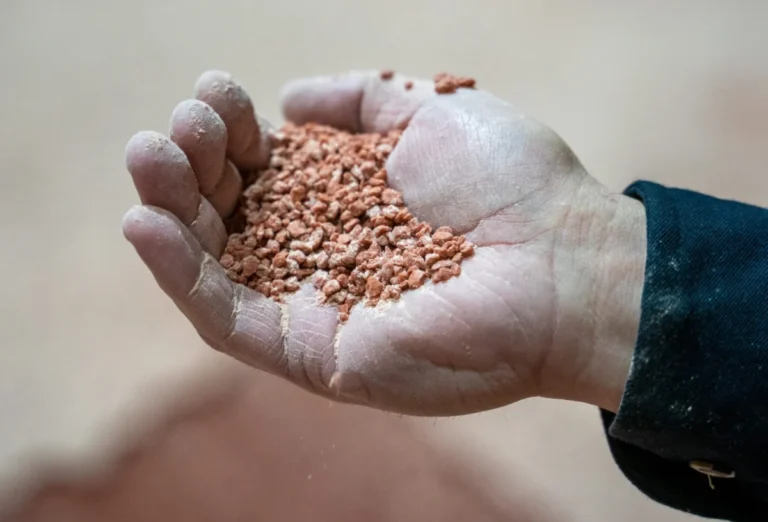
Potash is a potassium-rich salt essential for modern agricultural productivity, serving as a primary component in commercial fertilizers used to boost crop yields globally. For decades, the United States has relied heavily on its northern neighbor, Canada, for the overwhelming majority of its potash imports. Canadian producers, anchored by vast mineral deposits in Saskatchewan, have maintained a near-monopoly on the North American market due to geographical proximity, established rail infrastructure, and long-standing trade agreements.
However, recent political shifts and escalating trade tensions between Washington and Ottawa under the administration of President Donald Trump and Canadian Prime Minister Mark Carney have strained this traditional trade corridor. With agricultural costs fluctuating and food security emerging as a top-tier domestic priority, the White House has begun looking beyond traditional partnerships to insulate American farmers from potential supply chain vulnerabilities.
This strategic reassessment gained momentum in late September when President Trump announced that Washington was exploring a major trade arrangement to acquire Belarusian potash at prices significantly lower than those commanded by Canadian suppliers. The announcement followed declarations by Belarusian President Alexander Lukashenko—a close ally of Moscow—that direct potash exports to the United States had recommenced following a partial easing of U.S. sanctions against Minsk.
As part of these burgeoning trade discussions, Lukashenko has also advocated for the release of more than $40 million in Belarusian funds currently frozen within the U.S. banking system. This diplomatic maneuvering underscores how economic coercion and statecraft are increasingly utilized to alter global commodity flows.
Strategic Implications: Price Versus Supply Chain Security
While the prospect of cheaper Belarusian potash may offer short-term financial relief to American agricultural sectors, industry experts emphasize that Washington’s primary motivation extends far beyond unit costs. Farhad Abasov, chairman of Millennial Potash, noted in an interview with Business Insider Africa that the ongoing talks with Belarus reflect a broader American preoccupation with supply security and geopolitical resilience.
"Whether or not significant Belarusian volumes ultimately reach American farmers, Washington is clearly looking at alternative sources," Abasov stated. "I believe that creates an opening over time for reliable new suppliers, including Atlantic-facing projects in Africa."
The logistical hurdles associated with Belarusian potash further complicate its viability as a dependable long-term solution for the United States. As a landlocked nation, Belarus depends heavily on intricate rail networks and foreign port facilities to export its minerals. European Union sanctions and ongoing geopolitical friction in Eastern Europe have repeatedly disrupted these transit routes, making Belarusian supply inherently vulnerable to sudden geopolitical shocks.
In contrast, Atlantic-facing African nations offer direct maritime access to North American shipping lanes, bypassing many of the chokepoints that plague landlocked Eurasian producers. This geographic advantage has suddenly thrust West and Central African mineral deposits into the global spotlight.
Gabon Emerges as a Frontrunner with Direct U.S. Backing
Among the African jurisdictions poised to capitalize on Washington’s shifting procurement strategy, Gabon has emerged as a prominent contender. The country’s Banio Potash Project, situated approximately 60 kilometers from the Atlantic coast near the town of Mayumba, offers a direct maritime route to United States ports.
The Banio project boasts substantial geological assets, holding an estimated 648.2 million tonnes of measured resources, 1.8 billion tonnes of indicated resources, and an expansive 3.56 billion tonnes of inferred resources. Current development plans, evaluated through an ongoing Definitive Feasibility Study, target an initial production capacity of 800,000 tonnes of muriate of potash (MOP) annually, with provisions for scalable expansion to meet heavier global demand.
"The attributes we believe can make Banio competitive are its potential for solution mining, its scale and, critically, its location near the Atlantic and planned port infrastructure at Mayumba," project representatives have emphasized.
Significantly, the Banio project has already attracted tangible diplomatic and financial interest from the United States government. The U.S. International Development Finance Corporation (DFC) has committed $3 million in early-stage development funding. Furthermore, on September 10, a high-level American diplomatic delegation—including U.S. Embassy Acting Chargé d’Affaires for Gabon Susan N’Garnim—visited the Banio site to inspect drilling operations, logistical infrastructure, and progress toward the Definitive Feasibility Study.
Industry analysts clarify that while this financial commitment does not constitute formal construction financing or a binding offtake agreement, it signals a strong political alignment, placing official Washington endorsement squarely behind the project’s advancement.
The Republic of Congo Offers a Second Atlantic Gateway
Complementing Gabon’s efforts, the Republic of Congo houses similarly vast potash reserves situated close to the Atlantic coastline, presenting an alternative maritime pathway into Western markets.
A primary driver in the Congolese sector is Kore Potash’s flagship Kola development project, managed via its local subsidiary, Sintoukola Potash. Designed from the ground up to integrate seamlessly with dedicated marine export infrastructure, the Kola project is projected to produce approximately 2.2 million tonnes of muriate of potash annually upon reaching operational capacity.
Unlike Gabon’s Banio project, the Kola development has not yet secured formal U.S. government backing or direct financial investment. Nevertheless, its immense scale, combined with favorable Atlantic access, positions it as an exceptionally strong candidate for future multilateral or private-sector supply diversification initiatives undertaken by North American buyers.
While other African nations—such as Ethiopia and Eritrea—also possess substantial potash deposits, their internal logistical challenges and the specific chemical composition of their mineral reserves render them less suitable for the bulk muriate of potash market demanded by large-scale American agriculture. Consequently, Gabon and the Republic of Congo maintain a distinct competitive edge in capturing future U.S. import quotas.
Fact-Based Analysis: The New Geopolitics of Agriculture
The integration of African mineral reserves into North American supply chain planning marks a departure from traditional commodity sourcing. For decades, African mining sectors were viewed primarily through the lens of regional extraction for European or Asian markets, with little strategic integration into North American industrial policy.
The formal designation of potash as a critical mineral by the United States government has fundamentally altered this paradigm. As Abasov summarized: "What has changed strategically is that potash is now formally recognized by the United States as a critical mineral. African potash is therefore no longer simply an African agricultural story. It can also become part of a broader U.S. strategy to build more diversified and resilient fertilizer supply chains."
Outlook and Future Implications
As Washington balances its immediate economic imperatives against long-term strategic vulnerabilities, the diversification of the U.S. potash market appears all but inevitable. Trade negotiations with Belarus may yield short-term price concessions, but the inherent political risks of relying on a sanctioned Eurasian state limit its viability as a permanent solution.
For African producers in Gabon and the Republic of Congo, this convergence of American strategic interests, Atlantic maritime geography, and abundant mineral wealth provides a historic window of opportunity. Over the coming decade, as Definitive Feasibility Studies conclude and port infrastructures at locations like Mayumba are finalized, these emerging African projects may well transition from regional developmental prospects to foundational pillars of North American agricultural security.