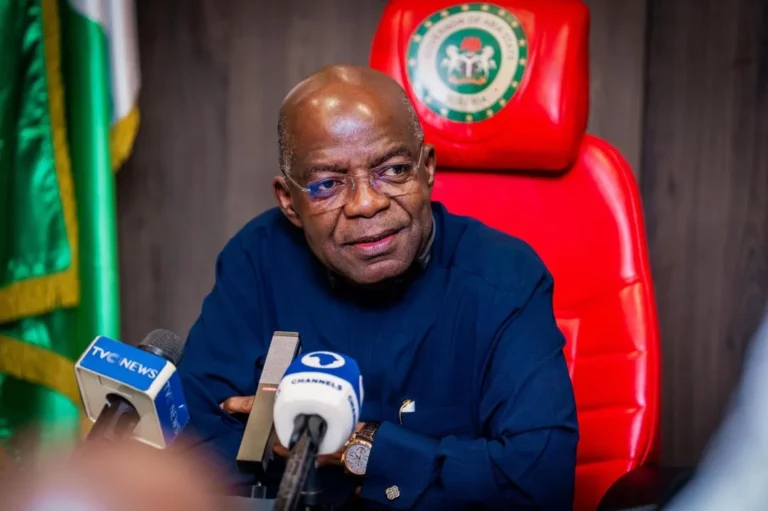
Abia State Governor, Alex Otti, has thrown his weight behind the controversial removal of the petrol subsidy, asserting unequivocally that individuals advocating for a return to the subsidy regime do not have the best interests of Nigeria at heart. Governor Otti made these remarks during an extensive and exclusive interview broadcast on Arise Television, where he dissected the profound economic implications of the policy shift, reviewed his longstanding intellectual and economic stance on government interventions, and addressed the severe financial pressures currently facing ordinary citizens across the federation.
The debate surrounding the subsidy regime has remained a central fixture of Nigerian socio-political discourse since President Bola Tinubu announced the termination of the decades-long policy on May 29, 2023. While the federal administration and several reform-minded economists maintain that the policy was a fiscal necessity to rescue the nation from imminent bankruptcy, critics, labor unions, and opposition figures have continuously pointed to the galloping inflation, soaring transportation costs, and general economic hardship as compelling reasons to reverse the decision. However, Governor Otti’s intervention provides a strong defense from a sitting chief executive who argues that long-term national survival must supersede short-term populist appeals, particularly as the political horizon shifts toward future electoral cycles.
A Longstanding Economic Position on Consumption Versus Production
During his Arise Television interview, Governor Otti elaborated on his consistent opposition to subsidizing the consumption of fossil fuels, a stance he has maintained long before assuming office in May 2023. According to the Abia State helmsman, government support and financial interventions should deliberately target productive sectors of the economy—such as agriculture, manufacturing, infrastructure, and technology—rather than being funneled into consumer goods that are ultimately burnt away.
“I don’t have a problem supporting production, but consumption should not be subsidised,” Otti stated emphatically during the broadcast.
The governor revealed that his advocacy for the total dismantling of the subsidy regime dates back to the height of the COVID-19 pandemic in 2020. At that critical juncture in global history, international crude oil demand plummeted drastically, causing global oil prices to crash. Otti recalled that he had authored analytical pieces at the time arguing that the unique market conditions presented Nigeria with a golden, once-in-a-generation window of opportunity to exit the expensive subsidy arrangement without inflicting maximum immediate pain on the populace. Unfortunately, he noted, political expediency and a lack of decisive leadership prevented successive administrations from seizing the moment, leaving the nation’s treasury heavily indebted and structurally vulnerable.
Unmasking the Subsidy Scam and Wasteful Consumption
Governor Otti did not mince words when describing the mechanics of the defunct subsidy regime, labeling it outright as a "scam" that drained national resources to benefit a privileged few while encouraging systemic wastefulness among citizens. Under the old arrangement, where the federal government absorbed a significant portion of the landing cost of imported petroleum products, artificially low pump prices created distorted economic incentives.
Otti explained that when a commodity is heavily subsidized, consumers lose the natural economic urge to practice conservation or optimize usage. To illustrate his point, the governor painted a vivid picture of how cheap fuel distorted behavioral patterns: “So if you are being subsidised, you can just blast all vehicles, maybe 20 vehicles, you put all of them on the road because somebody is paying for it.”
This artificial inflation of demand not only ballooned the national subsidy bill to unsustainable levels—often rivaling or surpassing the capital budgets of critical ministries like health and education—but it also fostered an opaque environment ripe for monumental corruption, round-tripping, and massive smuggling rings that bled millions of liters of subsidized fuel across Nigerian borders into neighboring West African countries daily.
Acknowledging Initial Pains While Condemning Populist Rhetoric
While maintaining an unyielding stance on the structural necessity of the reform, Governor Otti candidly acknowledged that the abrupt withdrawal of the subsidy imposition has brought undeniable hardship to millions of households. The immediate aftermath of the May 2023 announcement saw petrol prices more than triple across the country, triggering a cascading effect that drove up the costs of food, transportation, healthcare, and basic utilities.

“There will be the pain initially,” Otti conceded, validating the lived experiences of ordinary Nigerians struggling to make ends meet in an increasingly hostile economic climate.
However, the governor sharply criticized politicians and commentators who, sensing political leverage as upcoming electoral cycles approach, whip up populist sentiments by demanding a reversal of the policy. He warned that succumbing to such short-sighted emotional appeals would permanently cripple the Nigerian economy and mortgage the future of unborn generations.
“You know, as election approaches, people will be making all sorts of arguments, but removing the subsidy was the right thing to be done,” Otti asserted. He added bluntly, “And I don’t think anybody who is praying that subsidy returns means well for the country.”
Chronology of the Fuel Subsidy Removal Policy
To fully understand the gravity of Governor Otti’s recent statements, it is imperative to review the timeline of events that brought Nigeria to this critical economic crossroads:
- December 2011: The administration of former President Goodluck Jonathan attempted to completely remove the fuel subsidy, leading to nationwide protests known as the "Occupy Nigeria" movement, which forced the government to partially reinstate the subsidy at a capped rate.
- March 2020: Amid the global economic lockdown triggered by the COVID-19 pandemic, international crude oil prices fell into negative territory for the first time in history. Financial experts, including analysts like Alex Otti, urged the federal government to seize the opportunity to deregulate the downstream oil sector permanently.
- August 2021: President Muhammadu Buhari signed the Petroleum Industry Act (PIA) into law, providing the legal framework for the total deregulation of the downstream petroleum sector and formally setting the stage for the eventual cessation of fuel subsidies.
- May 29, 2023: During his inaugural address at Eagle Square in Abuja, newly sworn-in President Bola Tinubu officially declared that "subsidy is gone," bringing an immediate end to the decades-old multi-trillion-naira payment system.
- June–December 2023: Pump prices surged from around ₦185 per liter to over ₦600 per liter, sparking widespread inflation, industrial strike threats from organized labor, and frantic efforts by federal and state governments to introduce palliative measures, including cash transfers and wage awards.
- July 2026: Governor Alex Otti makes his high-profile appearance on Arise Television, reinforcing his unwavering support for the reform and condemning critics calling for a reversal.
Broader Economic Implications and Structural Reforms
Economists and public policy analysts have largely viewed Governor Otti’s intervention as a timely reinforcement of fiscal realism within the Nigerian Governors’ Forum and the broader political landscape. For years, the subsidy regime acted as a black hole sucking away public revenue that should have been channeled into human capital development and physical infrastructure.
Before the 2023 removal, Nigeria was spending a staggering share of its total federal revenue—sometimes exceeding 30% to 40%—solely on servicing the subsidy bill, leaving very little for the three tiers of government (Federal, State, and Local) to share and invest in developmental projects. The removal of the subsidy, combined with the simultaneous unification of foreign exchange windows, fundamentally altered the macroeconomic architecture of the country.
Although the short-term consequences included a contraction in purchasing power and heightened poverty levels, proponents argue that fiscal federalism has been positively impacted. With the removal of the subsidy, FAAC (Federation Account Allocation Committee) disbursements to state governments have significantly increased, providing sub-national executives with unprecedented financial liquidity. Governors like Alex Otti have repeatedly argued that these expanded revenues place a moral and administrative burden on state governments to execute transparent, high-impact infrastructural projects and social welfare programs that directly alleviate the burdens faced by their constituents.
Path Forward for Nigeria’s Downstream Sector
As Nigeria navigates the complex transition phase of a fully deregulated downstream petroleum sector, the focus has steadily shifted toward domestic refining capacity and energy security. The commencement of operations at major domestic refineries, including the multi-billion-dollar Dangote Refinery and the revitalization of state-owned refineries under the Nigerian National Petroleum Company Limited (NNPCL), is expected to stabilize product supply, eliminate excessive importation costs, and eventually moderate pump prices through the forces of local market competition.
Governor Otti’s unwavering position underscores a growing consensus among technocrats and reform-minded leaders that returning to the era of state-subsidized fossil fuel consumption would be an irreversible economic catastrophe. For Nigeria to transition from a rent-seeking, consumption-driven economy to a globally competitive, production-led powerhouse, leaders argue that the painful bitter pill of structural reform must be swallowed, digested, and backed by deliberate, inclusive social safety nets to protect the most vulnerable segments of society during the transition.