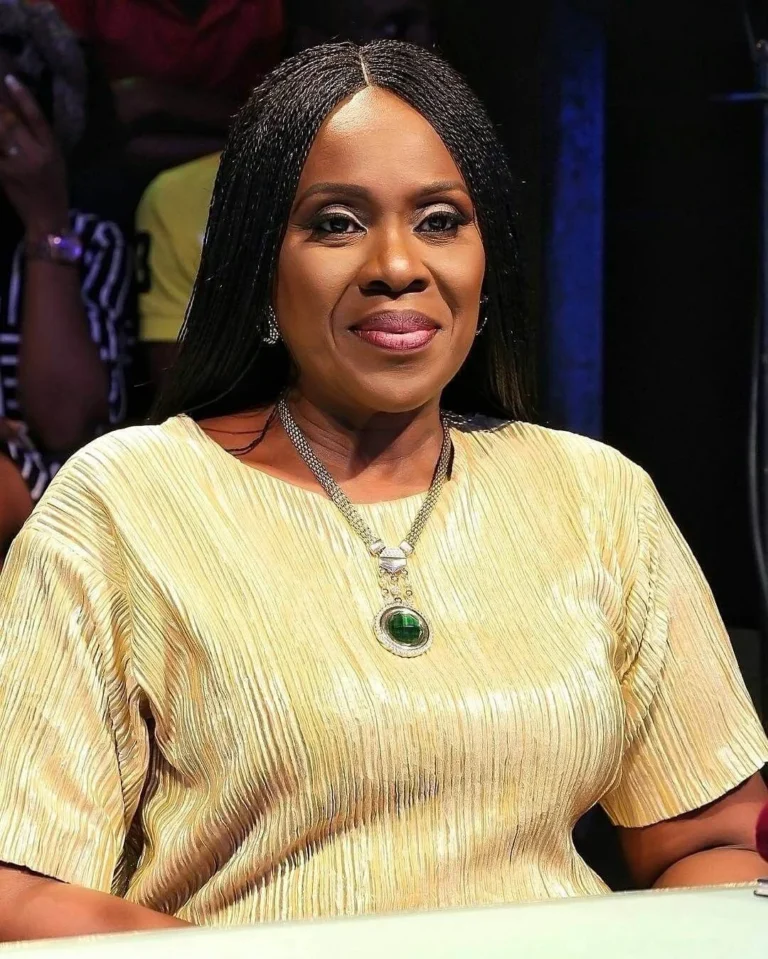
The Nigerian creative landscape pauses today, September 29, to celebrate an enduring icon as veteran actress, director, and arts administrator Joke Silva marks her 65th birthday. Across social media platforms, television networks, and theatrical circles, fans, industry colleagues, and government figures have united in paying tribute to a woman whose career has spanned over four decades. Born on September 29, 1961, Silva has transitioned from a promising stage performer in the late 20th century to a towering matriarch of modern Nigerian cinema, television, and theatre. Her milestone birthday serves not only as a personal celebration for the celebrated artist but also as a reflective moment for the broader Nigerian entertainment industry, commonly known as Nollywood, to evaluate the foundations upon which its current global success is built.
Chronology of a Storied Career: From Stage to Screen
To understand the magnitude of Joke Silva’s footprint in the Nigerian creative sector, one must examine a chronology defined by relentless dedication, formal training, and artistic evolution. Silva’s journey into the arts began long before the commercial boom of home video production in Nigeria during the early 1990s.
During the late 1970s and 1980s, Silva honed her craft on the live stage, an environment that demanded absolute discipline, vocal projection, and emotional authenticity. Seeking to formalize her natural talents, she trained at the prestigious Webber Douglas Academy of Dramatic Art in London, as well as studying English at the University of Lagos. This rigorous academic and practical foundation distinguished her early performances in theatrical productions staged across Lagos and international venues.
By the early 1990s, as the Nigerian film industry began its commercial ascent with pioneering direct-to-video releases, Silva was well-positioned to bridge the gap between high-art theatre and popular screen media. Her early television and film credits established a standard for dramatic integrity. Throughout the 1990s and 2000s, she delivered critically acclaimed performances in landmark productions such as Mind Bending, Owulorojo, and Violated. These projects cemented her reputation as an actress capable of portraying complex, psychologically rich characters with nuance and grace.
As Nollywood matured into the digital era, Silva proved her adaptability by seamlessly transitioning into contemporary feature films and streaming series. Productions such as The Secret Lives of Baba Segi’s Wives (stage adaptation), White Waters—for which she won the Africa Movie Academy Award (AMAA) for Best Actress in a Supporting Role in 2008—and To Take a Wife showcased her ability to command attention alongside younger generations of performers. Her filmography now spans dozens of titles, serving as a masterclass in longevity within an industry historically plagued by rapid trends and fleeting stardom.
Institutional Leadership, Mentorship, and Creative Entrepreneurship
Beyond her visible contributions in front of the camera, Silva’s legacy is deeply intertwined with institutional capacity building within the Nigerian creative economy. Recognizing that raw talent requires structured training, she has dedicated significant portions of her career to education and professional mentorship.
Silva, alongside her husband—renowned veteran actor Olu Jacobs—founded the Lufodo Group, a production and training outfit that has nurtured numerous creative talents. Furthermore, her involvement with the Revampment of the Creative Industry and various academic institutions has positioned her as a vital policy voice. She has served as a director of studies at the Lufodo Academy of Performing Arts (LAPA), imparting technical knowledge in acting, voice control, and stage movement to aspiring practitioners.
Industry analysts frequently cite her leadership in professional bodies, including the Actors Guild of Nigeria (AGN) and the Nigerian Film Corporation initiatives, as pivotal in raising the operational standards of the local screen sector. By advocating for improved copyright laws, better working conditions, and structured distribution frameworks, Silva has actively labored to transform Nollywood from an informal cottage industry into a viable corporate economic sector.
Supporting Data and Industry Impact
The cultural and economic impact of Joke Silva’s career aligns with the broader growth trajectory of the Nigerian entertainment and media (E&M) sector. According to data from international market research firms and domestic regulatory bodies like the National Film and Video Censors Board (NFVCB), Nollywood generates hundreds of millions of dollars annually and employs over one million Nigerians, making it the second-largest employer in the country after agriculture.
Pioneers like Silva provided the critical artistic credibility necessary to attract both domestic audiences and international institutional investors during the formative years of the industry. Her accolades include multiple Africa Movie Academy Awards (AMAA), Africa Magic Viewers’ Choice Awards (AMVCA), and national honors recognizing her service to the arts. These awards quantify an artistic output that has consistently met rigorous critical standards, proving that commercial viability and high artistic merit can coexist within African cinema.
Furthermore, Silva’s career reflects the shifting demographics and internationalization of Nollywood. As streaming platforms such as Netflix, Amazon Prime Video, and local platforms like IrokoTV invest heavily in Nigerian content, veteran actors like Silva provide a crucial bridge of continuity. They offer global audiences a direct link to the historical roots of Nigerian storytelling while demonstrating the capacity of older African actors to sustain compelling narratives on the global stage.
Official Responses, Tributes, and Public Reactions
As news of her 65th birthday spread, tributes poured in from across the political, cultural, and corporate spectrums of Nigeria. Colleagues, younger actors, and cultural administrators took to public forums to express admiration for her enduring influence.
Prominent figures within the Nollywood community described Silva as a pillar of grace, professionalism, and integrity. Younger actors frequently highlight her on-set demeanor—noted for punctuality, thorough script analysis, and generous mentorship of junior cast members—as a benchmark for professional conduct. Colleagues who have shared the stage and screen with her over the decades emphasize her exceptional ability to elevate the performances of everyone around her.
Government officials and cultural agencies have also acknowledged her milestone. Representatives from federal and state ministries of culture and tourism noted that individuals like Joke Silva have played an irreplaceable role in projecting positive cultural diplomacy for Nigeria on the global stage. Her ability to maintain unblemished public standing while navigating the complexities of celebrity culture for over forty years was repeatedly cited as a model for public figures.
Broader Analysis: Implications for the Future of Nollywood
Joke Silva turning 65 offers a timely opportunity for socio-cultural analysis regarding the treatment, representation, and sustainability of veteran artists within the developing African creative economy. Historically, industries in developing markets have struggled with establishing robust social security frameworks, pension schemes, or health insurance models for aging artists who laid the foundational stones of multi-million-dollar entertainment sectors.
While Silva’s enduring relevance shields her from the economic vulnerabilities that have occasionally affected older Nigerian entertainers, her continued demand underscores the critical need for robust industry-wide safety nets and structured legacy management. The ongoing celebration of her career highlights a growing cultural appreciation for generational continuity in Nigerian cinema. Rather than discarding older actors in favor of youth-centric trends, contemporary Nollywood writers and producers are increasingly recognizing the dramatic value of multi-generational storytelling—a shift in narrative design that benefits immensely from the presence of seasoned performers.
Moreover, Silva’s success as an educator and entrepreneur points the way toward sustainable creative ecosystems. By diversifying her professional portfolio into training, production consultancy, and advocacy, she has demonstrated that an artist’s career longevity is amplified when anchored to institutional development.
Conclusion: A Living Legacy
As Joke Silva enters her sixty-sixth year, her birthday is much more than a personal milestone; it is a national celebration of artistic excellence, resilience, and cultural preservation. From her early days breathing life into theatrical texts on Nigerian stages to her commanding presence in contemporary digital cinema, she has remained a steadfast guardian of quality storytelling.
Today, as applause echoes from fans, students, and peers across the globe, Joke Silva stands as a living testament to what is possible when raw talent is combined with rigorous discipline, continuous learning, and an unwavering commitment to national identity. Her legacy is permanently etched into the annals of African entertainment, continuing to inspire the next generation of storytellers who walk the path she helped pave.