The industrial landscape of East Africa witnessed a monumental shift on Wednesday as high-ranking dignitaries, continental leaders, and industry titans converged on Lamu County, Kenya, for the official groundbreaking ceremony of the Dangote East Africa Refinery. Spearheaded by Africa’s wealthiest man, Aliko Dangote, the staggering $16 billion (approximately KSh 2.2 trillion) mega-project is designed to redefine energy security, economic integration, and industrial capacity across the region.

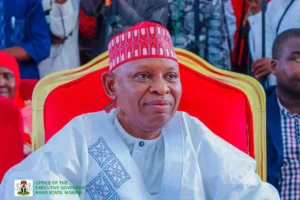
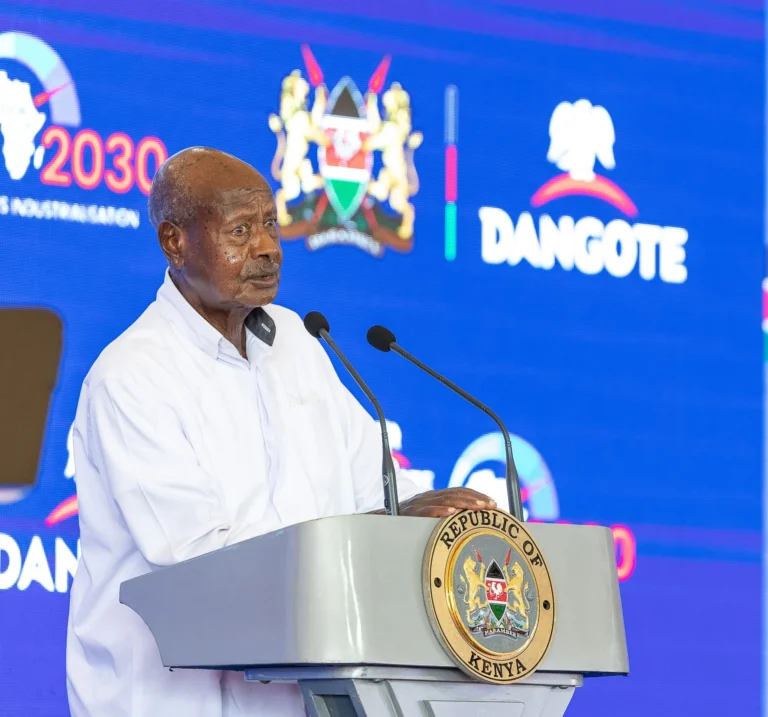
The high-profile event drew an impressive roster of continental leadership. Among those standing shoulder-to-shoulder with Kenyan President William Ruto and industrialist Aliko Dangote were former Nigerian President Olusegun Obasanjo, Ugandan President Yoweri Museveni, Ethiopian Prime Minister Abiy Ahmed Ali, Representative Romuald Wadagni of the Republic of Benin, and Jean-Lucien Savi de Tové of Togo. Their presence underscored the cross-border geopolitical and economic significance of the initiative, signaling a united front among African nations toward self-reliance and intra-continental trade.
Scope and Infrastructure of the Lamu Mega-Project
Billed as far more than a traditional petroleum refinery, the Dangote East Africa facility is conceived as a comprehensive, integrated industrial complex. According to details shared by Kenyan President William Ruto via social media and official addresses, the facility’s primary refining unit is engineered to process a massive 700,000 barrels of crude oil per day. This capacity positions Lamu County as a premier energy hub for East Africa, capable of meeting domestic fuel demands while exporting refined products to neighboring landlocked nations.

However, the refinery represents only a fraction of the total master plan. The broader industrial ecosystem slated for the site includes:
- A dedicated 1,000-megawatt (MW) power plant to guarantee uninterrupted energy supply for both the complex and surrounding industrial zones.
- A large-scale plastics manufacturing plant to support regional packaging and manufacturing sectors.
- Integrated facilities dedicated to the production of chemical products and agricultural fertilizers, a critical component for boosting food security and agricultural productivity across East Africa.
President Ruto emphasized the far-reaching nature of the investment during the ceremony. “Together with my brother Aliko Dangote, I presided over the groundbreaking ceremony of the Dangote East Africa Petroleum Refinery, a KSh2.2 trillion mega-project set to transform the energy and industrial landscape of Kenya and the region,” Ruto stated. He added that the multi-faceted nature of the complex guarantees that its economic spillovers will be felt across agriculture, manufacturing, and power generation for decades to come.

Navigating Legal Hurdles: The Controversy Surrounding the Groundbreaking
Despite the pomp, pageantry, and high-level diplomatic endorsement, the groundbreaking ceremony proceeded under a cloud of legal controversy. Just days prior to the event, the Malindi Environment and Land Court issued an injunction ordering a halt to all construction and site activities pending further hearings.
The judicial intervention was triggered by petitions filed on behalf of local farmers and inhabitants of Chandavai, an area within Lamu County. The plaintiffs raised serious allegations regarding "forceful eviction," land rights violations, and a lack of adequate public consultation concerning the massive land acquisition required for the project.

The Dangote Group acknowledged that the court order would temporarily impact on-site operational activities. Nevertheless, the conglomerate maintained that the scheduled groundbreaking ceremony would proceed as planned, a testament to the high-stakes momentum driving the investment.
Addressing investors and financial stakeholders during a subsequent fireside chat at the Nairobi Securities Exchange, Aliko Dangote addressed the legal roadblocks with characteristic bluntness. Drawing from decades of experience executing mega-projects across challenging regulatory environments in Africa, Dangote dismissed the legal opposition as par for the course.

“I’m sure some of you must have seen that one court has given an order that we shouldn’t do any construction? I said no, no. This is normal for us in Africa. In fact, this is even small,” Dangote told investors, signaling absolute confidence in the ultimate resolution of the legal disputes. He further suggested that the legal challenges were being stoked by vested interests opposed to regional economic transformation, declaring, “Anyone who wants to cause trouble, we are ready for them.”
Chronology of Events Leading to the Lamu Investment
The path to the Lamu County groundbreaking has been shaped by a strategic series of expansions, feasibility studies, and diplomatic engagements:

- Phase 1: Strategic Exploration (2022–2024): The Dangote Group began evaluating East African markets for downstream expansion, identifying Kenya’s strategic coastal positioning and Lamu Port’s infrastructure as ideal logistical anchors.
- Phase 2: Project Conceptualization and Financing (2025): Finalization of the $16 billion funding structure, incorporating private equity, international development finance institutions, and regional banking partnerships.
- Phase 3: Land Acquisition and Local Friction (Early 2026): Negotiations regarding land allocation in Lamu County ran into local resistance, culminating in petitions filed by residents of Chandavai over displacement concerns.
- Phase 4: Judicial Intervention (Late September 2026): The Malindi Environment and Land Court issued an injunction halting construction activities pending a comprehensive review of land acquisition procedures.
- Phase 5: The Groundbreaking Ceremony (September 30, 2026): Despite the judicial pause on physical construction, Dangote and regional Heads of State proceeded with the official groundbreaking, signaling unwavering political and financial commitment.
Economic Implications and Strategic Analysis
The construction of a 700,000 barrels-per-day refinery in East Africa carries profound implications for the continent’s energy architecture. For decades, African oil-producing and consuming nations alike have faced the paradox of exporting crude oil only to re-import expensive refined petroleum products. This structural deficit drains foreign exchange reserves, causes severe domestic fuel price volatility, and inhibits downstream industrialization.
By replicating the operational philosophy of the massive Dangote Refinery in Lagos, Nigeria, the East Africa project seeks to reverse this trend. The integration of a 1,000MW power plant directly addresses power deficits that traditionally plague East African manufacturing, while the fertilizer manufacturing component directly targets input costs for millions of regional farmers.

However, financial and legal analysts emphasize that the project’s success hinges on two critical variables: navigating local community grievances and securing a steady, reliable supply of crude oil feedstock. Environmental and land rights groups have urged the consortium to engage transparently with local communities in Lamu County to ensure fair compensation, environmental protection, and sustainable community development frameworks. Failure to resolve these grassroots grievances amicably could result in prolonged litigation that delays the multi-year construction timeline.
Furthermore, Dangote’s ongoing discussions regarding public ownership structures—including potential listings and broader equity participation on regional bourses like the Nairobi Securities Exchange—demonstrate an intent to anchor the project deeply within the local capital markets. This strategy not only distributes financial risk but also ensures that ordinary East African citizens share directly in the wealth generated by the industrial complex.

As heavy machinery stands ready subject to the resolution of the Malindi court proceedings, the Lamu refinery project remains a defining litmus test for mega-scale industrial development in Africa. It highlights both the immense ambition driving the continent’s economic integration and the complex socio-legal hurdles that must be successfully navigated to turn continental visions into tangible reality.