In a significant geopolitical development that threatens to redraw the energy map of the Mediterranean, the Libyan parliament based in the country’s east has unanimously ratified a maritime agreement with Turkey. This accord, which establishes a direct economic corridor between the two nations, marks a dramatic reversal in policy for the eastern administration, which had previously been one of the most vocal opponents of the Turkish-Libyan memorandum of understanding first signed in 2019. The decision effectively consolidates a strategic axis between Ankara and the disparate factions of Libya, potentially upending the regional status quo and heightening friction with Greece, Cyprus, and the European Union.
The agreement serves as a legal and administrative framework for the joint exploration and exploitation of vast natural gas and oil reserves estimated to be worth several hundred billion US dollars. By creating a contiguous maritime boundary that traverses the Mediterranean, Turkey and Libya are asserting their sovereign rights over seabed resources that have been the subject of fierce competition for over a decade. However, the geographic path of this corridor intentionally ignores the maritime claims of several Greek islands—specifically Crete, Karpathos, and Rhodes—which Athens insists possess their own extensive exclusive economic zones (EEZs) under international law.
A Chronology of Diplomatic Rifts and Realignment
The current situation is the culmination of years of volatile shifts in Libyan internal politics and regional diplomacy. To understand the gravity of the recent parliamentary vote, one must look back at the origins of the maritime dispute:
- November 2019: The UN-recognized Government of National Accord (GNA) in Tripoli signs a landmark maritime memorandum with Turkey. The agreement is immediately condemned by Greece, Egypt, and the European Union as a violation of international law.
- 2019–2020: The Libyan Civil War intensifies. Turkey provides critical military support to the Tripoli government, helping to halt an offensive by General Khalifa Hifter’s Libyan National Army (LNA), which controlled the east and was backed by Russia, Egypt, and the UAE.
- 2020–2022: Regional tensions simmer. Greece and Egypt respond by signing their own maritime delimitation agreements, which directly conflict with the Turkish-Libyan map.
- 2023–2024: Turkey initiates a "charm offensive" to mend ties with eastern Libyan factions. This includes economic incentives, reconstruction contracts, and military training programs.
- February 2025: The eastern parliament, once a staunch critic of the 2019 deal, reverses its stance and ratifies the agreement, signaling a major shift in the balance of power within Libya and a victory for Turkish regional diplomacy.
The Legal Battleground: UNCLOS vs. Turkish Maritime Doctrine
At the heart of the standoff lies a fundamental disagreement over the interpretation of the United Nations Convention on the Law of the Sea (UNCLOS). Greece relies heavily on Article 121 of the convention, which grants inhabited islands the right to a full EEZ, identical to that of mainland territory. Athens argues that the Turkish-Libyan corridor is "null and void" because it essentially draws a line across the sea that ignores the existence of major Greek islands.
Conversely, Turkey has never ratified UNCLOS and contends that the convention’s application in the semi-enclosed Mediterranean Sea produces inequitable results. Ankara argues that if the Greek interpretation were applied, it would effectively "imprison" Turkey within its own narrow coastal waters, denying it access to the vast energy resources of the Eastern Mediterranean. Turkey advocates for the principle of "equitable delimitation," suggesting that the lengths of mainland coastlines should be the primary factor in determining maritime boundaries, rather than the presence of islands that are situated far from the Greek mainland but close to the Turkish coast.
The dispute is further complicated by recent jurisprudence from the International Court of Justice (ICJ). While Athens points to the 2022 ICJ ruling in the Nicaragua vs. Colombia case—which emphasized the need for fair boundary demarcation—Turkey maintains that the unique geography of the Eastern Mediterranean necessitates a bespoke solution that cannot be settled by standard international templates.
Official Responses and International Repercussions
The reaction from Brussels and Athens was swift and uncompromising. Kaja Kallas, the European Union’s High Representative for Foreign Affairs and Security Policy, issued a firm statement on social media, emphasizing that the agreement infringes upon the sovereign rights of third states. The EU maintains that the Turkish-Libyan memorandum is inconsistent with the Law of the Sea and does not carry legal weight.
"The agreement violates the sovereign rights of third states and is fundamentally inconsistent with the established Law of the Sea," the Greek Foreign Ministry stated. Athens has signaled that it will continue to coordinate with its EU partners and regional allies, including Egypt and Israel, to challenge the legality of the deal in international forums.
For Turkey, the ratification is viewed as a strategic triumph. By securing the support of the eastern parliament, Ankara has successfully positioned itself as a primary power broker in Libya. This move is not merely about maritime borders; it is a calculated effort to neutralize the influence of Egypt and Russia in eastern Libya while securing a long-term energy partnership that bolsters the Turkish economy.
Economic and Strategic Implications
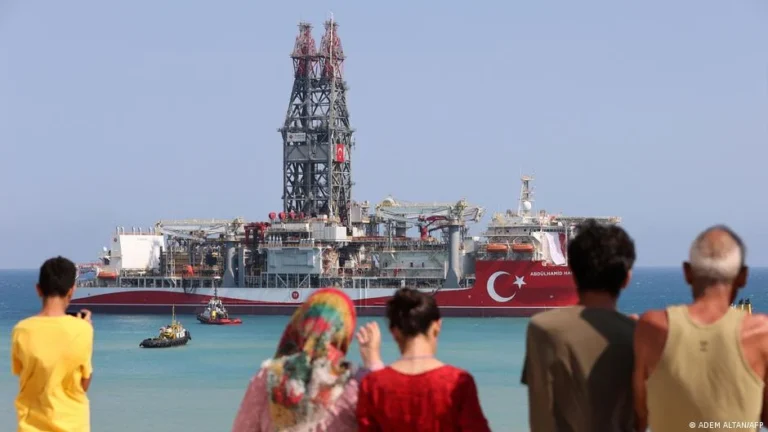
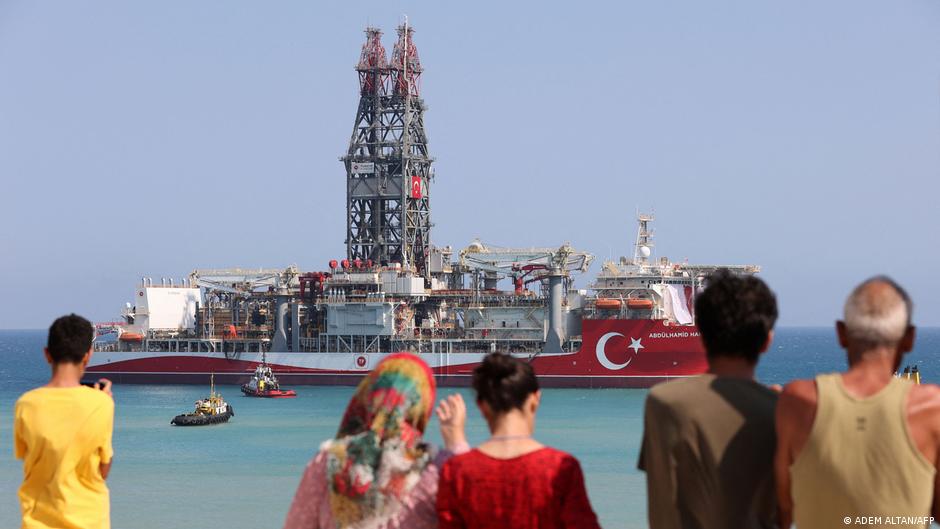
The economic stakes are immense. The Eastern Mediterranean is believed to hold enough natural gas to satisfy a significant portion of Europe’s energy needs for decades. The ratification of the maritime deal enables the Turkish state-owned oil company, TPAO, to begin seismic surveys and exploratory drilling in collaboration with the Libyan National Oil Corporation.
However, this aggressive posture risks jeopardizing the "EastMed" pipeline project—a planned subsea infrastructure meant to transport gas from Israel and Cyprus to Europe via Greece. Because the Turkish-Libyan corridor cuts directly across the proposed route of the pipeline, the agreement creates a high-stakes standoff. Any attempt to lay pipe or conduct exploration in the disputed zone could trigger a military escalation, given the increasing presence of naval vessels in the area.

Furthermore, the alignment between Ankara and the eastern Libyan administration suggests a shift toward a binary energy and defense bloc system in the Mediterranean. On one side stands the Turkey-Libya axis, asserting its right to resources based on a geography-first approach. On the other side is an emerging alliance of Greece, Cyprus, Egypt, and Israel, which enjoys the diplomatic backing of the European Union and advocates for a rules-based order centered on UNCLOS.
Looking Ahead: A Region at a Crossroads
The ratification of the agreement has effectively closed the door on any immediate diplomatic compromise. As Turkey and Libya move toward joint exploitation of the seabed, the likelihood of localized incidents at sea increases. For the international community, the challenge will be to prevent these resource disputes from spiraling into a broader conflict that could destabilize an already fragile North African state.
For Libya, the agreement is a double-edged sword. While it may provide the eastern government with increased legitimacy and a share of future energy wealth, it also draws the country deeper into the orbit of Turkish foreign policy, potentially distancing it from other Arab neighbors like Egypt.
As of mid-2025, the international community remains divided. While Turkey continues to build its influence through "soft power" investments and "hard power" military cooperation, the legal arguments presented by Greece and the EU remain the standard by which most international courts operate. Whether this standoff will lead to a negotiated settlement or a permanent state of maritime brinkmanship remains the defining question for the security of the Eastern Mediterranean. With billions of dollars in energy resources at stake and the strategic interests of several regional powers intertwined, the maritime corridor is likely to remain a focal point of geopolitical tension for the foreseeable future.