The Core of the Controversy
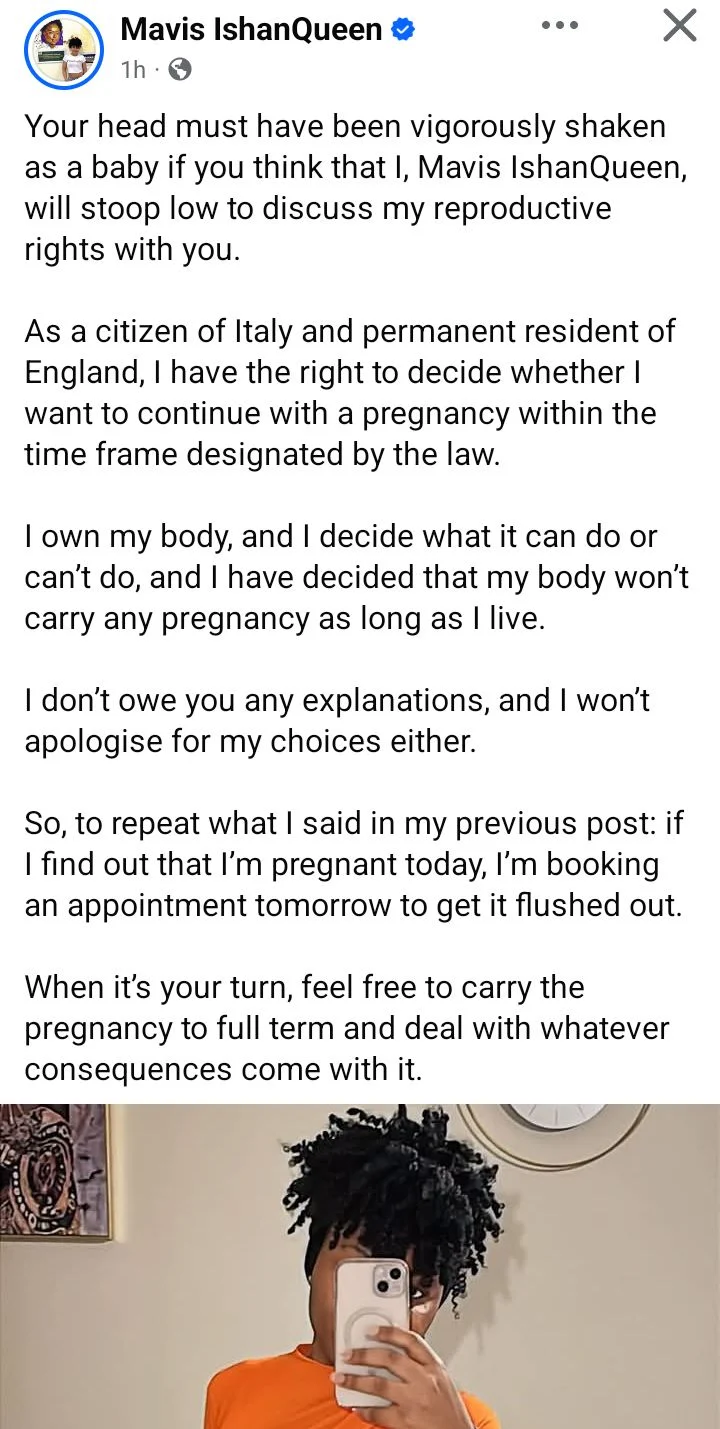
In a candid and unapologetic social media statement, Ishanqueen addressed the unsolicited scrutiny she has faced regarding her decision not to have children. She explicitly stated that she considers her reproductive choices to be a private matter that is not subject to public debate or external validation. According to Ishanqueen, her stance is rooted in a fundamental belief in bodily autonomy—the right of an individual to govern what happens to their own body without interference from societal pressures or cultural expectations.

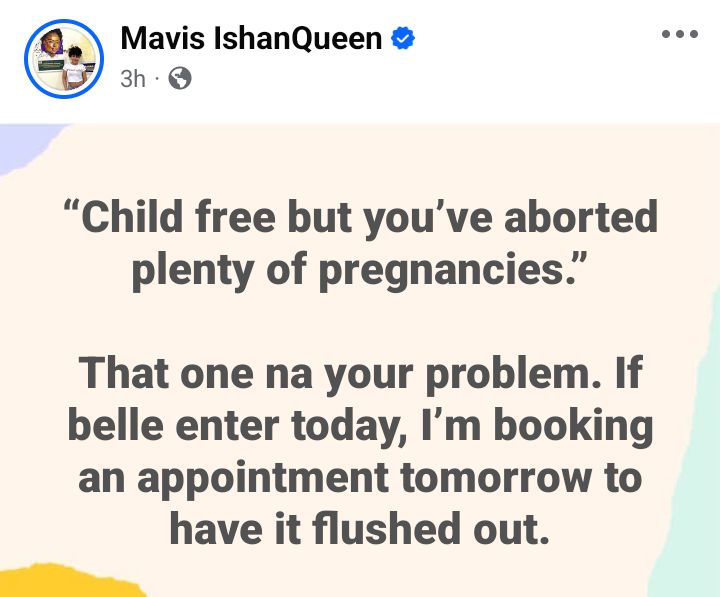
Her statement was particularly emphatic regarding the medical and personal measures she would take to maintain her status as child-free. She declared that should she discover she were pregnant, she would seek to terminate the pregnancy immediately, citing her rights under the legal frameworks of both Italy, where she holds citizenship, and the United Kingdom, where she maintains permanent residency. Both jurisdictions provide legal avenues for pregnancy termination, and Ishanqueen framed her position as an exercise of these legal rights.
Contextualizing the Social Media Reaction
The backlash and subsequent defense from Ishanqueen are reflective of a growing trend in digital discourse where individuals, particularly women, are increasingly pushing back against the "pronatalist" expectations prevalent in many African and diasporic communities. For many, the choice to remain child-free is often met with accusations of selfishness, cultural alienation, or an abandonment of traditional values.
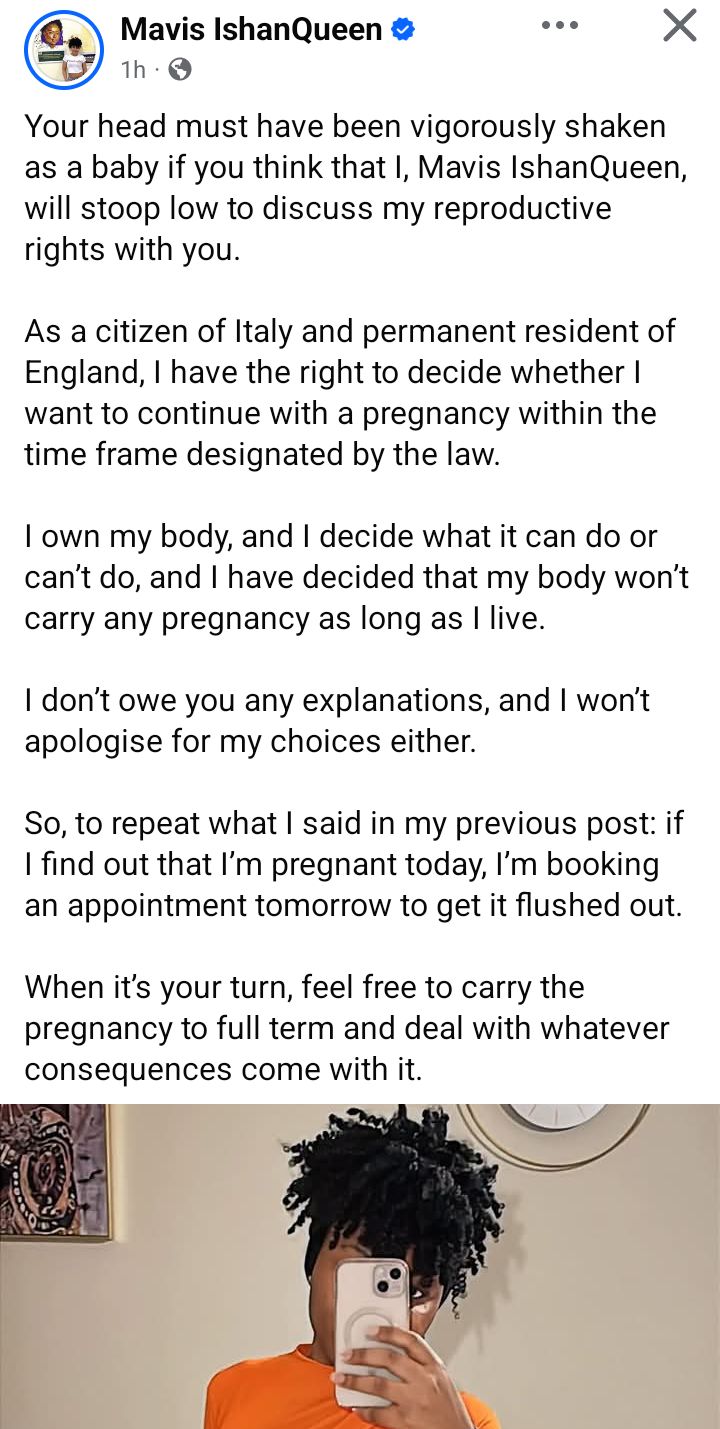
Sociologists observing these trends note that the rise of social media platforms has allowed women to challenge these traditional narratives, often resulting in polarized debates. In Ishanqueen’s case, her use of direct and confrontational language—specifically her dismissal of those who question her choices—has served to heighten the intensity of the online reaction. By framing the discourse around "reproductive rights" and "citizenship," she has shifted the conversation from one of personal preference to one of human rights and legal standing.

Global Trends in Reproductive Choices
The debate surrounding child-free living is not confined to the Nigerian diaspora; it is a global phenomenon. According to data from the Pew Research Center, there has been a steady increase in the number of adults who express no intention of having children. In the United Kingdom and across Europe, factors such as economic instability, shifting career priorities, and a re-evaluation of life goals have contributed to lower birth rates and a growing acceptance of child-free lifestyles.

However, the cultural tension remains significant. In many traditional societies, motherhood is viewed as the primary indicator of a woman’s maturity and success. When an individual from such a background chooses to deviate from this path, the reaction is often visceral. The clash between Western liberal interpretations of autonomy and traditional collectivist values often creates the friction observed in instances like this.

Legal Frameworks and Bodily Autonomy
Ishanqueen’s reference to her status as an Italian citizen and a UK permanent resident highlights the importance of geography in the exercise of reproductive freedom.

In the United Kingdom, the Abortion Act 1967 allows for the termination of pregnancy up to 24 weeks under specific conditions, regulated by the National Health Service (NHS). The legal structure is designed to prioritize the health and choice of the pregnant person. Similarly, Italy, while historically influenced by Catholic doctrine, legalized abortion in 1978 through Law 194. Despite periodic challenges from conservative political factions, the right to access termination services remains a protected component of Italian law.

By grounding her argument in these legal realities, Ishanqueen is effectively insulating her position from purely moral arguments. She is moving the goalposts from "should she have children" to "does she have the legal right to decide."

Implications for the Digital Discourse
The fallout from this incident raises questions about the future of online interactions regarding sensitive personal choices. Public figures and private individuals alike are increasingly finding themselves in the crosshairs of "digital mobbing," where thousands of users weigh in on personal matters.

Psychologists suggest that the intense interest in the reproductive lives of others may stem from a psychological projection, where individuals feel their own life choices are validated only when others conform to the same path. When an individual like Ishanqueen openly rejects this path, it can trigger a defensive reaction from those who have adhered to traditional expectations, leading to the aggressive comments she described.

Analysis of the Societal Divide
The divide highlighted by this event is multifaceted:

- Cultural Expectation vs. Personal Agency: The tension between the expectation that a woman’s primary duty is to family lineage versus the modern view that an individual’s life is their own to curate.
- The Impact of Migration: When individuals move from one cultural context (Nigeria) to another (the UK/Italy), they often find themselves navigating a "dual-reality." They carry the expectations of their culture of origin while living within the legal and social norms of their adopted home.
- The Role of Social Media: Platforms like Facebook and X (formerly Twitter) act as both echo chambers and battlegrounds, amplifying minority voices while simultaneously providing a platform for mass criticism.
Looking Ahead
As the world continues to grapple with shifting demographics and changing social norms, the "child-free" movement is likely to gain more visibility. For many, the focus will remain on personal fulfillment, career development, and environmental concerns, while others will continue to advocate for the traditional family structure as the foundation of society.

Marvis Ishanqueen’s declaration serves as a case study for the evolving nature of personal expression in the digital age. By refusing to apologize for her choices, she has signaled a shift in how some modern women are choosing to engage with critics. Rather than seeking understanding or attempting to justify her lifestyle to skeptics, she has opted for a stance of firm boundaries.

Whether this approach will lead to a more nuanced conversation about reproductive rights or simply deepen the existing divisions remains to be seen. However, it is clear that the discourse surrounding motherhood and bodily autonomy is becoming increasingly assertive, with more individuals choosing to define their lives on their own terms, regardless of the societal pressures that seek to dictate otherwise. The incident serves as a reminder that in an interconnected world, the collision between personal autonomy and traditional expectations is a reality that will continue to shape public debate for the foreseeable future.