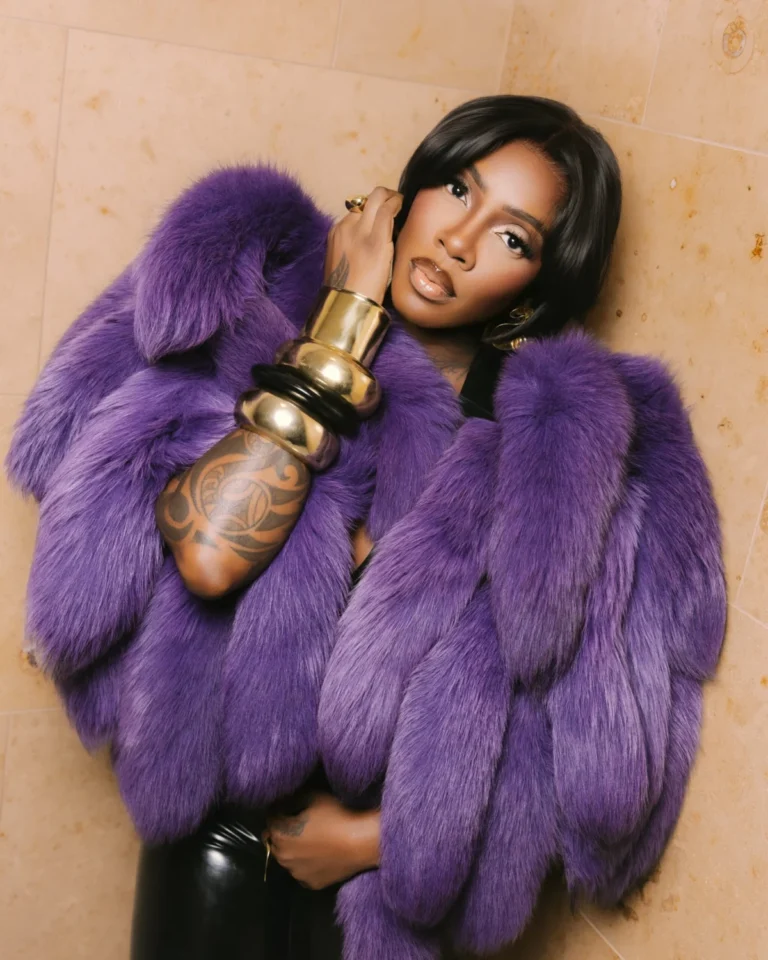
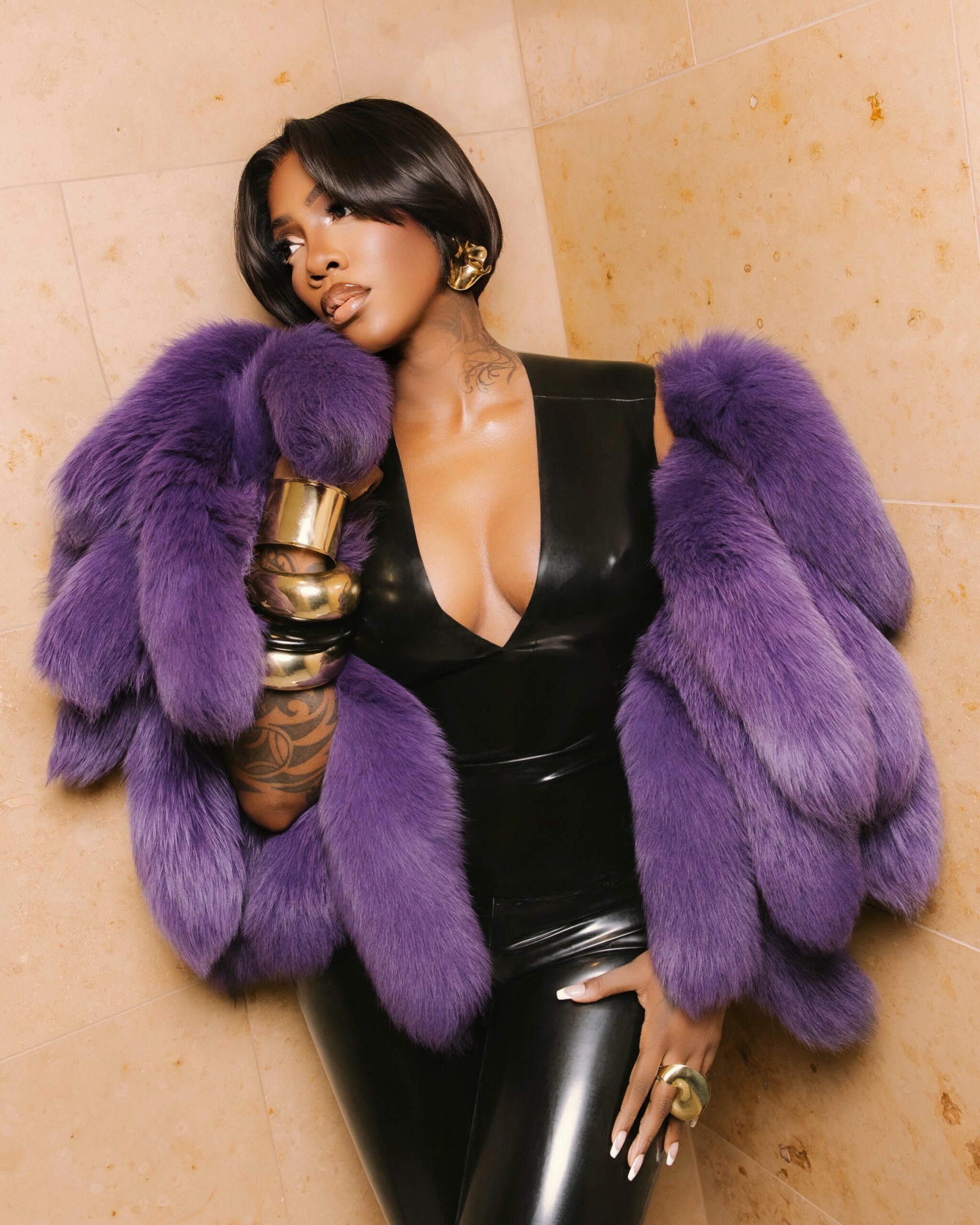
Afrobeats icon Tiwa Savage has once again commanded global attention, stepping out in a striking rock-chic ensemble featuring a glossy black latex catsuit and an oversized royal purple fur coat. The acclaimed singer-songwriter, known as the Queen of Afrobeats, shared the striking imagery across her verified social media platforms on October 27, 2026, instantly sparking widespread discussion among fashion critics, lifestyle journalists, and her millions of international followers. The look marks another high-profile stylistic pivot for an artist who has consistently blurred the lines between contemporary African music and high fashion on the world stage.
Main Facts of the Fashion Statement
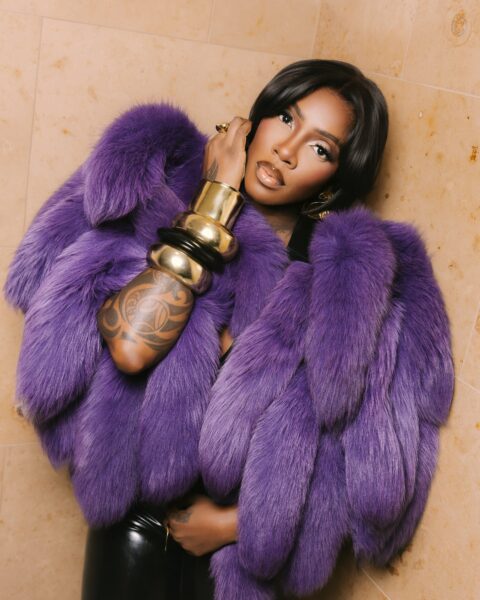
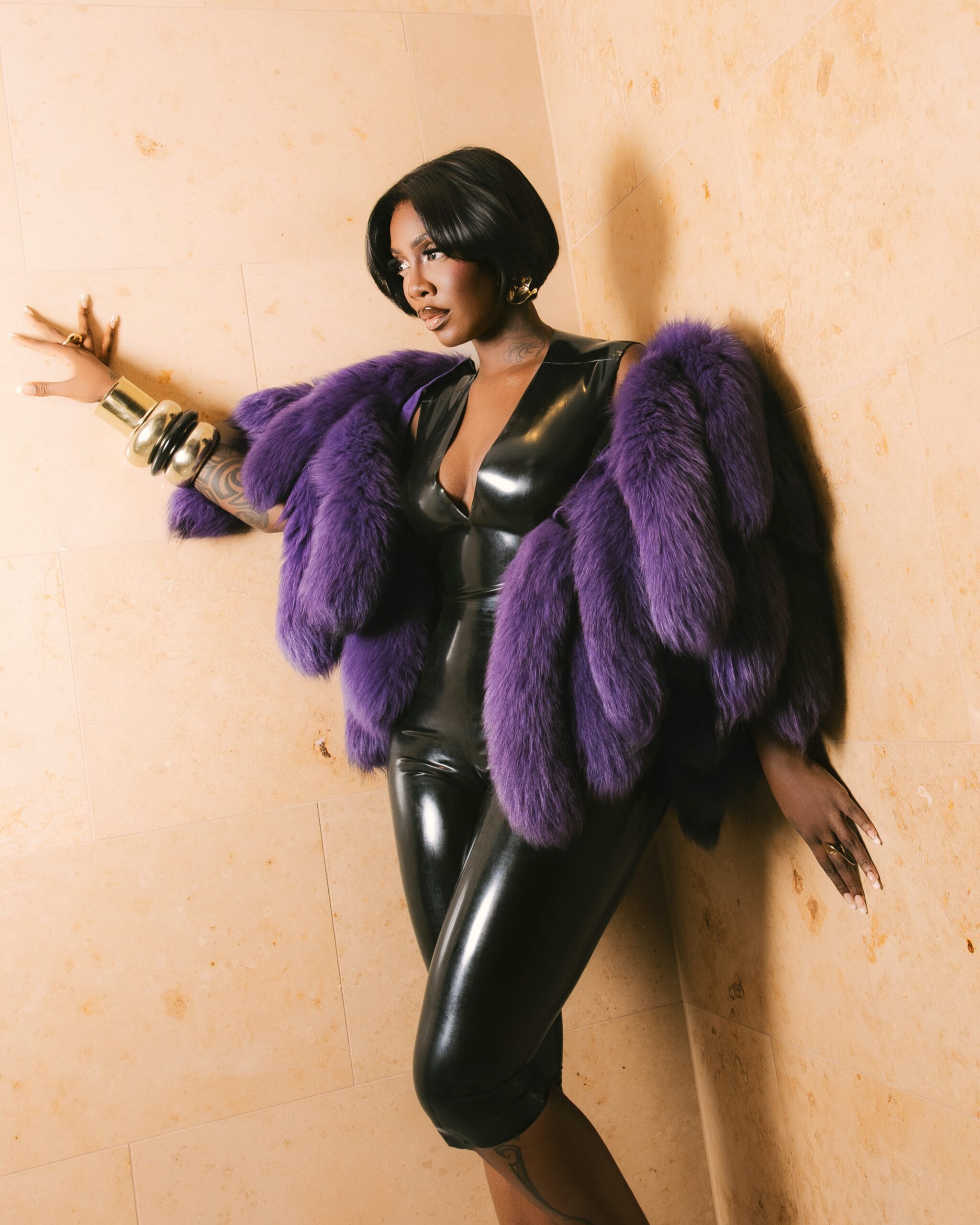
The ensemble, captured in a series of high-resolution studio and backstage photographs, showcases a masterclass in textural contrast and bold color blocking. At the foundation of the look is a form-fitting, plunging V-neckline black latex catsuit that accentuates a sleek silhouette. Layered over the catsuit is a voluminous, plush royal purple fur coat, creating a dramatic interplay between tight, reflective surfaces and soft, heavy fabric.
Accessorization played a critical role in cementing the rock-chic aesthetic. Savage adorned her wrists with stacked, heavy gold bangles and framed her face with sculptural gold earrings. Completing the transformation was a razor-cut, sharp black bob hairstyle, paired with polished, high-gloss makeup that elevated the visual impact of the hardware and textiles. The combination of black, royal purple, and heavy metallic gold details provided a cohesive yet rebellious palette, leaning heavily into classic rock-and-roll styling updated with modern haute couture sensibilities.
Evolution of Afrobeats Fashion and Global Cultural Impact
The intersection of Afrobeats music and high-end fashion has accelerated rapidly over the past decade, driven by artists who recognize that visual branding is inseparable from sonic identity. As African music commands larger shares of the global market, performers like Tiwa Savage have increasingly utilized major fashion houses, bespoke creations, and avant-garde styling to signal cultural power and artistic evolution.
Historically, stage and red-carpet aesthetics within the Nigerian entertainment industry have evolved from traditional Ankara and localized tailoring to a sophisticated hybrid of global luxury brands and localized streetwear. In recent years, artists have partnered directly with international designers, positioning themselves as front-row staples at Paris, Milan, and New York Fashion Weeks. Savage’s embrace of latex, heavy metals, and faux or luxury fur aligns with a broader global movement among musicians who use wardrobe choices to project strength, autonomy, and boundary-pushing creativity.
Style Breakdown and Technical Execution
From a technical styling perspective, the outfit offers several distinct lessons in silhouette management and color theory. Fashion experts note that pairing a hyper-fitted base—such as a latex catsuit—with an oversized outer layer creates an intentional architectural silhouette, preventing the outfit from looking flat or overly simplistic. The reflective quality of latex naturally catches light, a crucial element for stage performers and photographers alike, while the matte, dense texture of the royal purple fur absorbs light to create depth.
Furthermore, the choice of heavy gold jewelry over delicate or minimalist pieces reflects an understanding of scale. When working with high-impact primary textures like glossy black and saturated purple, subtle accessories risk getting lost. The chunky metallic cuffs and sculptural earrings anchor the look, providing a bridge between the dark tones of the catsuit and the vivid intensity of the coat.
Broader Implications and Industry Reception
The public reception of Savage’s latest look underscores her enduring influence as a cultural tastemaker. Beyond her musical output—which includes chart-topping albums, international collaborations, and historic performances at venues such as Wembley Arena and coronation concerts for British royalty—her fashion choices frequently trend across digital platforms, influencing consumer trends across Africa and the diaspora.
Industry analysts point out that visual statements of this nature serve distinct commercial purposes in the modern entertainment landscape. For established artists, maintaining a dynamic and unpredictable visual identity helps sustain media engagement between major musical releases. By continually reinventing her personal style, Savage reinforces her status not only as a musical pioneer but also as a definitive icon in contemporary global culture. As Afrobeats continues its institutional expansion into Western markets, artists functioning simultaneously as style icons and sonic ambassadors remain vital to the genre’s enduring global footprint.