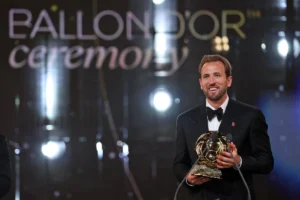
The global intersection of sports, high fashion, and African popular music reached a new milestone on October 28, 2026, as Nigerian singer-songwriter Adekunle Gold made a high-profile appearance at the 70th Ballon d’Or ceremony held at the historic London Palladium. Blending traditional black-tie elegance with contemporary Afrobeats culture, the artist—popularly known as AG Baby—turned heads on the red carpet before commanding the stage at the official post-event celebration.
The appearance underscores the rapidly expanding footprint of African artists at prestigious international events traditionally reserved for European football royalty and Western entertainment icons. By merging elite tailoring with distinct personal accessories, Adekunle Gold’s presence in the British capital highlighted the ongoing cultural exchange between the global music industry and premier athletic institutions.
A Masterclass in Modern Black-Tie Tailoring
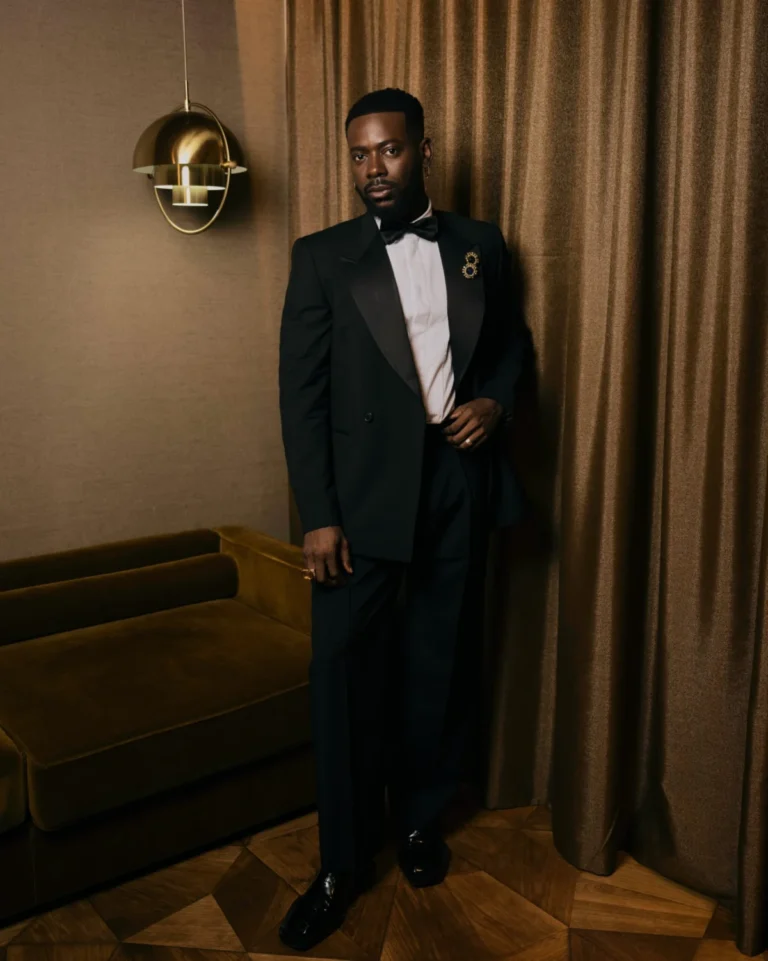
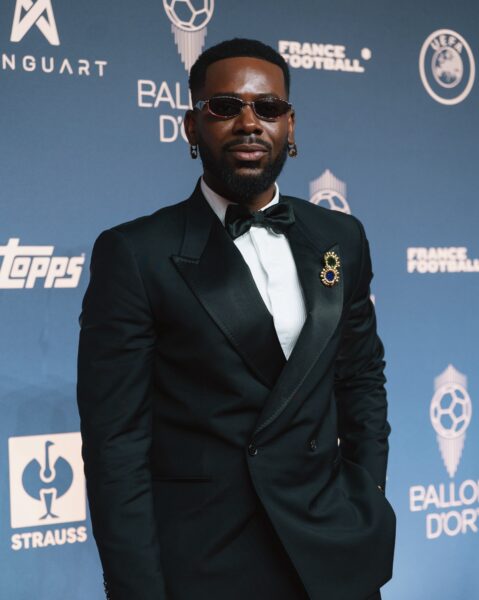
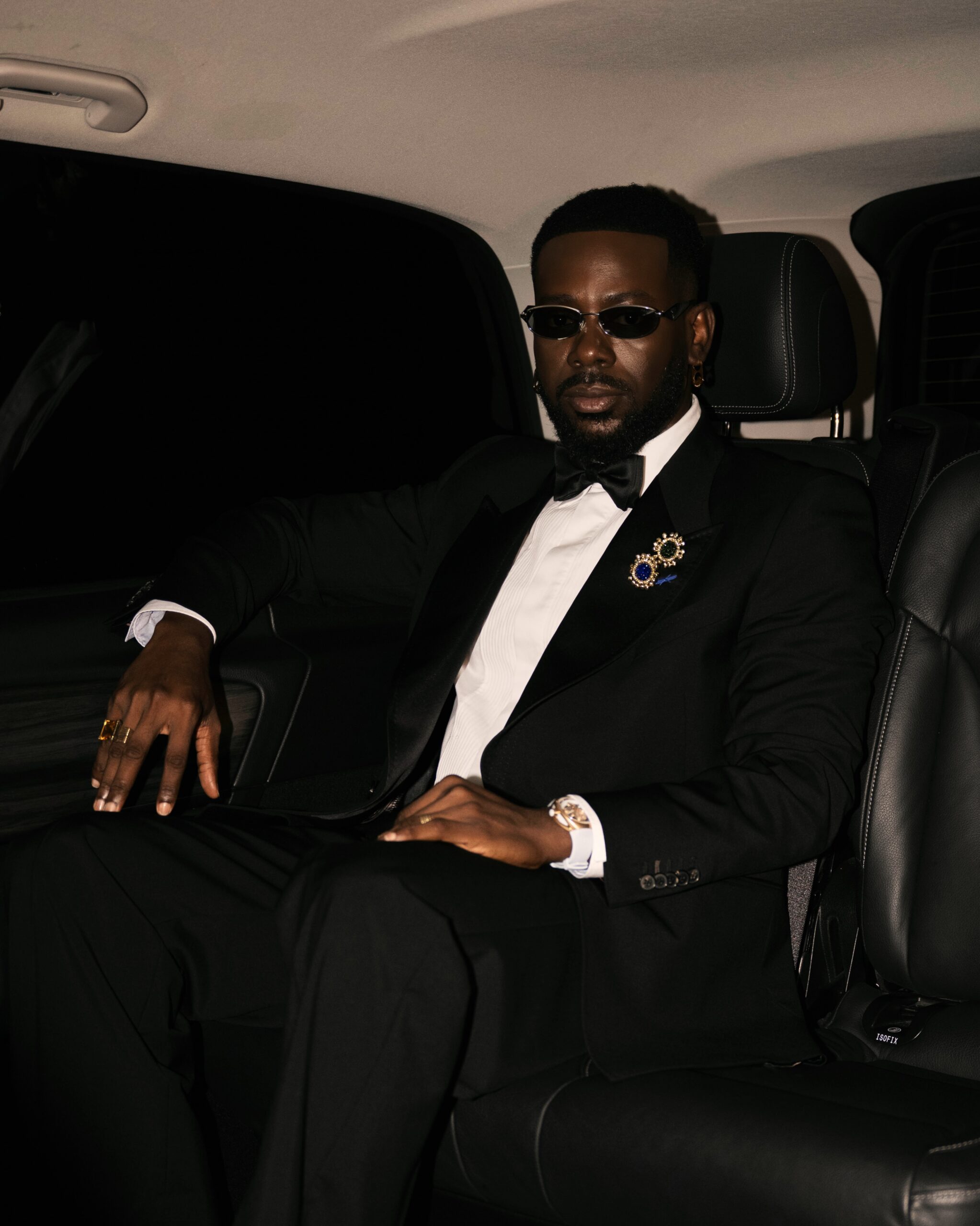
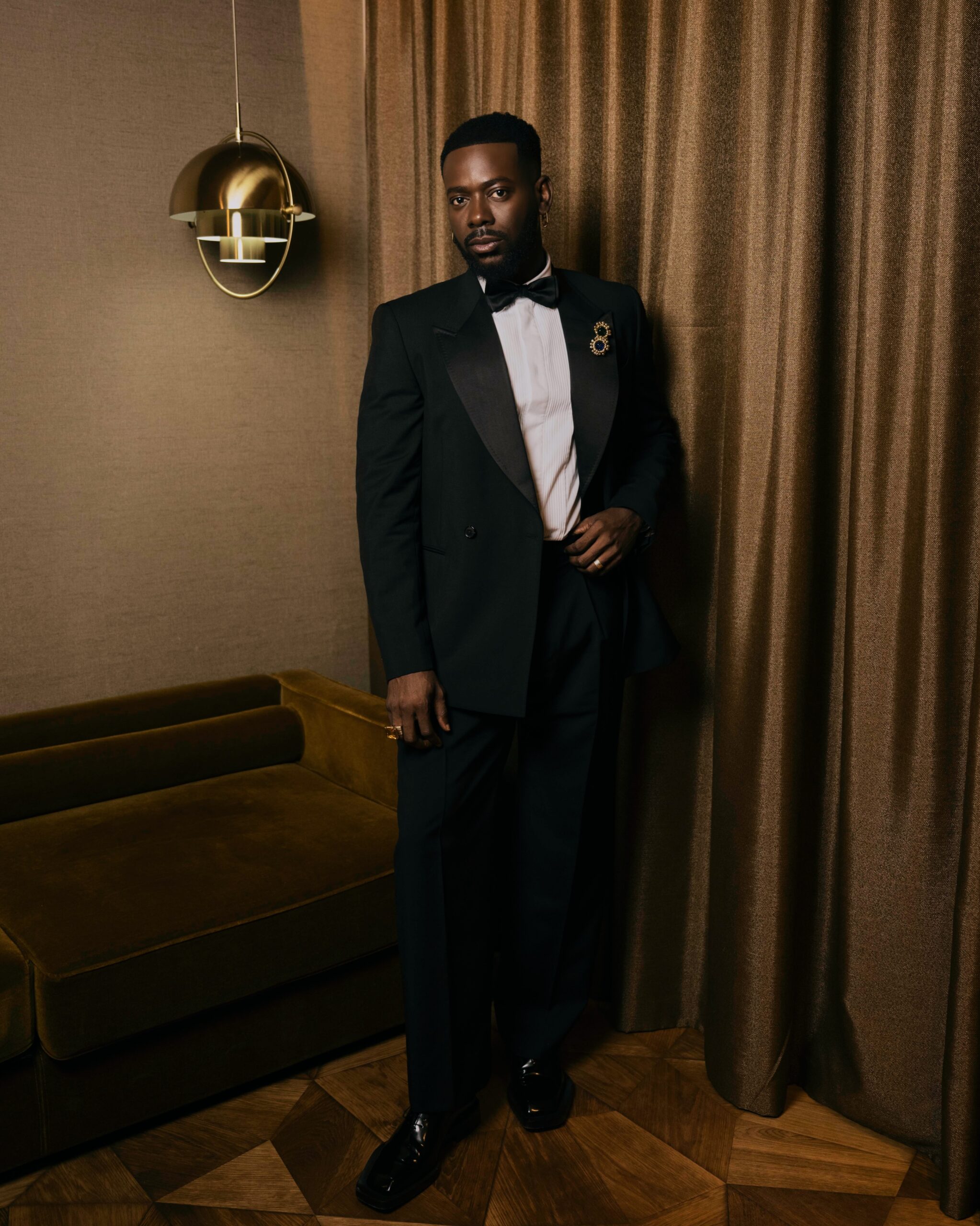
For the milestone 70th edition of football’s most coveted individual award ceremony, Adekunle Gold opted for a sophisticated sartorial approach that honored traditional formal wear while incorporating contemporary styling choices. The Nigerian star stepped out in a bespoke double-breasted black tuxedo featuring wide satin peak lapels, a classic structural element that accentuates a modern silhouette.
Underneath the jacket, he wore a crisp white pleated dress shirt, a staple of classic evening wear, fastened with a black satin bow tie. The monochrome foundation of the outfit was elevated through a carefully curated selection of accessories that reflected his signature aesthetic. Most notably, he pinned a striking circular lapel brooch featuring a vibrant blue center stone bordered by intricate gold detailing.
Further breaking up the stark contrast of the black-and-white tuxedo, Adekunle Gold incorporated statement gold jewelry, including a luxury wristwatch with a premium leather strap, a bold gold ring, and gold hoop earrings. To complete the ensemble, he wore dark oval sunglasses for his red-carpet arrival, transitioning to glossy black patent leather shoes. Fashion critics and style commentators quickly praised the look for successfully balancing conservative European formal codes with the vibrant personality characteristic of contemporary African pop stars.
Bridging Football and Afrobeats at the London Palladium
While the primary focus of the evening remained the celebration of the world’s top footballing talents, the cultural narrative of the night extended well beyond the pitch. As one of the marquee events on the international sporting calendar, the Ballon d’Or attracts athletes, celebrities, and cultural ambassadors from around the globe. Adekunle Gold’s invitation and subsequent performance served as a testament to the global commercial and cultural dominance of Afrobeats.
Following the formal presentation of awards inside the London Palladium, the celebrations shifted to the exclusive official Ballon d’Or after-party. Taking center stage, Adekunle Gold delivered a high-energy live performance of his chart-topping hit single, "Party No Dey Stop," alongside a selection of other fan favorites.
The performance electrified the room, bridging the gap between elite sports figures and the infectious rhythms of contemporary Nigerian music. Attendees, including prominent football stars and international celebrities, joined in the festivities, cementing the track as an international anthem of celebration.
The Evolution of the Ballon d’Or and Cultural Integration
The 2026 ceremony marked the 70th anniversary of the Ballon d’Or, an award established in 1956 by France Football magazine to honor the best male football player of the year, later expanded to include female athletes and various other categories, such as the Kopa and Yashin Trophies. Over the past decade, organizers have increasingly sought to integrate mainstream entertainment, fashion, and global music acts into the program to broaden its demographic appeal and transform the ceremony into a major pop-culture spectacle.
In recent years, the intersection of football and African music has grown increasingly pronounced. Nigerian superstars have frequently performed at high-profile sporting events across Europe and the Americas, reflecting the genre’s massive streaming growth in Western markets. By inviting artists like Adekunle Gold to participate in both the formal proceedings and the elite social gatherings surrounding the Ballon d’Or, event organizers have acknowledged the vital role that contemporary African culture plays in shaping global entertainment trends.
Broader Implications for the Afrobeats Export Market
Adekunle Gold’s appearance in London is part of a larger, systemic shift in how African creative talent is positioned on the global stage. No longer relegated solely to regional markets or specialized world-music festivals, top-tier Afrobeats artists are routinely integrated into mainstream Western lifestyle, fashion, and sporting events as primary VIP guests and headline performers.
This integration yields significant economic and cultural implications. For the fashion industry, collaborations and red-carpet appearances by African musicians drive substantial digital engagement and brand visibility across emerging markets in Sub-Saharan Africa. For the music industry, performing at events broadcast to hundreds of millions of viewers worldwide provides invaluable exposure to demographics that may not yet be core consumers of African popular music.
Furthermore, these crossovers foster diplomatic and cultural ties between Africa and traditional entertainment capitals like London, Paris, and New York. As artists continue to leverage their platforms to showcase distinct sartorial identities—such as Adekunle Gold’s fusion of classic tailoring with bespoke African-influenced accessories—they redefine the standards of international red-carpet fashion.
Conclusion
The 70th Ballon d’Or will be remembered not only for the athletes who claimed football’s highest honors inside the London Palladium, but also for the vibrant cultural moments that defined its periphery. Through his striking black-tie presentation and high-energy performance at the official after-party, Adekunle Gold demonstrated the undeniable synergy between elite sports and global music culture. As the boundaries between industries continue to dissolve, appearances of this caliber signal a permanent and influential role for African artistry at the very pinnacle of international entertainment.