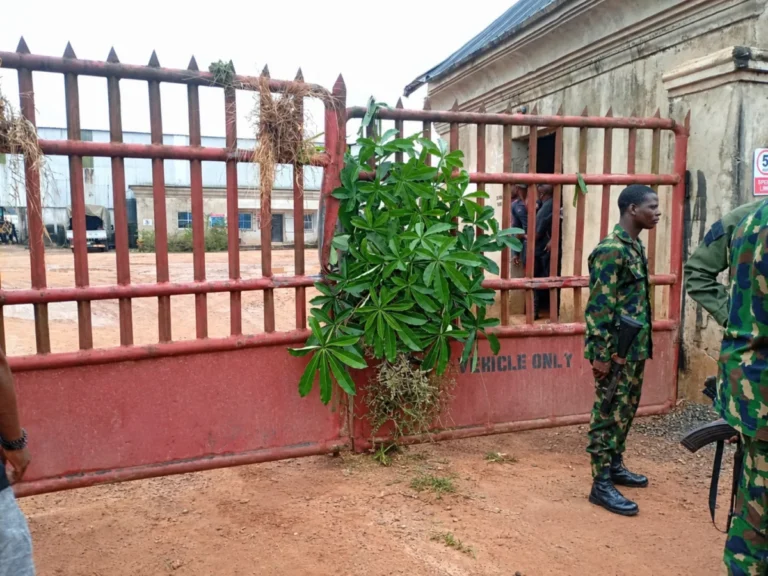
The ambitious Lagos-Calabar Coastal Highway project, a flagship infrastructure initiative of the Federal Government of Nigeria, is currently facing significant labor unrest at its Section 3B site in Cross River State. Approximately 600 employees engaged by the primary contractor, Hitech Construction Company, have launched a sustained protest to demand an immediate overhaul of their working conditions, alleging systemic intimidation, arbitrary salary deductions, and the denial of basic welfare amenities. The agitation, which reached a boiling point on Wednesday at the company’s Awi construction yard in Akamkpa Local Government Area, has brought to the forefront long-standing grievances regarding the treatment of local laborers compared to their expatriate counterparts.
A Chronology of the Dispute
The current impasse did not emerge in isolation. According to reports from the project site, the dissatisfaction among the workforce had been simmering for weeks prior to the formal commencement of the protest on October 26. Workers cite a consistent pattern of managerial high-handedness that culminated in a complete breakdown of communication between the workforce and the site leadership.
By the morning of Wednesday, October 30, the protest had matured into a full-scale demonstration, with hundreds of workers congregating at the Awi yard. The protesters, representing various cadres of the workforce—including earth-moving operators, laboratory technicians, and site drivers—demanded the immediate resignation or removal of three key figures: the Project Manager, Mr. Boutrous; the Site Manager, Mr. Tony; and the Earth-Moving Supervisor, Mr. Shabel. The workers allege that these individuals have fostered an environment of fear and have been the primary architects of the policies leading to salary suppression and poor welfare.
Allegations of Institutionalized Inequality
Central to the protest is a stark gender-based grievance. Female employees have voiced intense frustration over the complete lack of dedicated restroom facilities at the construction site. These workers contend that the absence of sanitary facilities is not merely an inconvenience but a severe violation of their dignity and health rights, especially considering the physical demands of road construction work.
Perhaps more inflammatory is the allegation of a two-tier system at the site. Female Nigerian workers claim that while they are forced to contend with an environment lacking basic sanitation, the expatriate staff enjoy access to multiple, well-maintained facilities. This perceived disparity has fueled accusations of institutionalized discrimination.
"The environment is inherently hostile," noted Ana Matthew, an earth-moving and level-checking worker. "We are forced to work under the blistering sun and through the night without adequate shelter or basic necessities. It is as if the contributions of local workers are viewed as expendable."
Economic Disenfranchisement and Wage Disputes
The financial grievances are equally profound. Several workers, including Esikere Peter, a quality control and laboratory technician, provided detailed accounts of how their earnings have been systematically eroded. Peter alleged that management has engaged in the unilateral reduction of billable hours.
"We are seeing a situation where labor that was previously accounted for as four to eight hours of work is now being slashed to two hours," Peter stated. "Furthermore, the night shifts, which are essential to meeting the project’s tight deadlines, are being scrubbed from our official logs, even when employees are on-site working until 11 p.m."
This sentiment is echoed by Stephen Oke, a trailer driver, who asserted that Nigerian employees bear the brunt of the most strenuous manual labor while being subjected to verbal intimidation and structural underpayment. The workers argue that these salary deductions are not only unethical but potentially illegal under the Nigerian Labour Act, which mandates transparency in compensation and the provision of safe working environments.
The Role of Local Liaison and Political Pressure
The crisis has drawn the attention of local stakeholders, including the Cross River State Liaison Officer, Mr. Asuquo Ukpayang. His involvement has become a focal point of the negotiation efforts. The protesting workers are demanding the reinstatement of Ukpayang to a more prominent role, alleging that he has been systematically sidelined by expatriate management because he has advocated for the rights of the local workforce.
Ukpayang, in a statement to the press, confirmed his awareness of the situation and noted that the issue of worker welfare had previously been brought to the attention of the Hitech management by high-ranking state officials, including the wife of the Cross River State Governor, Mrs. Eyoanwan Otu. Despite these interventions, the workers argue that the company has failed to implement meaningful changes.
"I am in solidarity with the workers," Ukpayang stated during the demonstration. "The reports of unpaid entitlements and poor working conditions are grave. I am prepared to engage with the senior management, the Federal Controller of Works, and the Minister of Works to ensure that this dispute is resolved through constructive dialogue rather than further confrontation."
Fact-Based Analysis: Implications for the Coastal Highway Project
The Lagos-Calabar Coastal Highway is a multi-billion dollar project intended to stimulate economic growth and connectivity across Nigeria’s coastline. However, such large-scale infrastructure projects are heavily reliant on the stability of their labor force. Persistent unrest of this magnitude poses several risks to the project’s timeline and reputation:
- Operational Delays: A strike involving 600 workers represents a significant portion of the site’s workforce. Any prolonged stoppage will inevitably lead to slippage in the project schedule, potentially triggering penalty clauses for the contractor and delaying the delivery of public infrastructure.
- Reputational Risk: For Hitech Construction Company, the allegations of discriminatory practices and poor labor standards could affect their future bidding capacity on government contracts, which are increasingly under scrutiny regarding local content and social responsibility.
- Legal and Regulatory Scrutiny: If the allegations of illegal wage deductions and violations of health and safety standards are proven, the company may face intervention from the Federal Ministry of Labour and Employment. The Nigerian Labour Act clearly outlines the employer’s duty of care, and non-compliance can lead to litigation and heavy fines.
- Local Community Relations: The project depends on the cooperation of host communities. When local workers feel exploited, the "social license to operate" is compromised, often leading to community-led blockades that can be more disruptive than formal labor strikes.
Path Toward Resolution
As of the latest reports, the workers have remained steadfast in their resolve, insisting that they will not return to their posts until concrete, written commitments are made regarding the removal of the aforementioned managers, the reversal of salary deductions, and the immediate installation of adequate sanitary facilities.
Mr. Ukpayang has advised the workers to adopt a formal approach by nominating representatives to sit at the negotiating table with the company’s senior management and government representatives. He has also issued a call for calm, urging the protesters to avoid actions that could lead to the destruction of property or physical confrontation.
The outcome of this dispute will serve as a bellwether for the management of future labor relations on the Lagos-Calabar Coastal Highway. As the Federal Government pushes for the accelerated completion of the highway, the tension between aggressive construction timelines and the protection of worker rights remains a critical bottleneck. Whether Hitech Construction Company chooses to prioritize a collaborative, transparent resolution or continues with its current management style will determine not only the immediate fate of the Section 3B project but also the broader standards of industrial relations on one of Nigeria’s most significant national projects. The eyes of the public and the relevant regulatory authorities remain fixed on the Awi construction yard, awaiting a resolution that restores both the dignity of the workers and the progress of the highway.