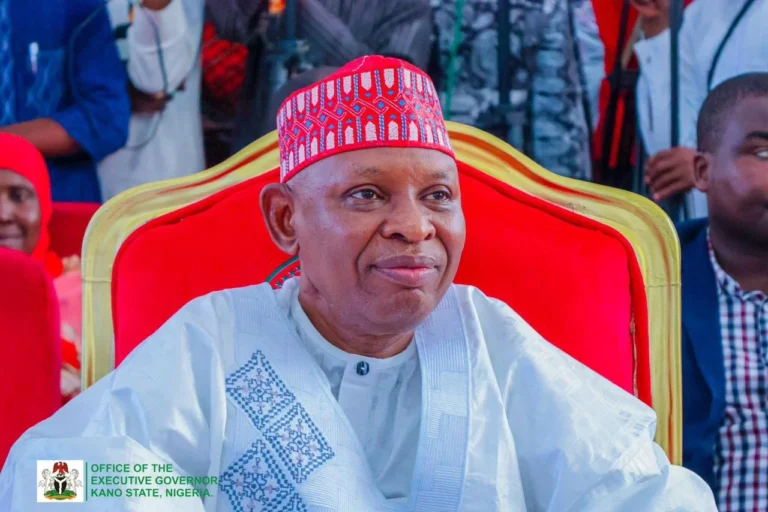
Kano State Governor Abba Kabir Yusuf has implemented a strategic restructuring of his administration, redeploying top-tier cabinet members and assigning portfolios to six newly minted commissioners. The administrative overhaul, finalized on Friday following a high-profile swearing-in ceremony at the Government House in Kano, also affected several special advisers and permanent secretaries.
The sweeping changes are designed to inject renewed vigor into the state’s executive machinery, bridge existing governance gaps, and accelerate the execution of the administration’s development agenda across critical sectors including education, commerce, internal security, and humanitarian services.
Strategic Cabinet Movements and Portfolio Allocations
The latest cabinet shakeup saw prominent cabinet members moved to different ministries to optimize their administrative capacities. Notably, the former Commissioner for Information and Internal Affairs, Abdullahi Ibrahim Waiya, has been redeployed to lead the Ministry of Youth and Sports. Waiya’s transfer marks a significant pivot for the youth-centric ministry, given his extensive background in public communication and internal affairs management.
Similarly, Hamza Kachaco, who previously steered the affairs of the Ministry of Solid Minerals Resources, has been moved to helm the Ministry of Environment. These strategic movements have temporarily left the Ministries of Information and Internal Affairs and Solid Minerals Resources without substantive commissioners, creating structural vacancies that government insiders suggest will be filled in subsequent administrative phases.
The focal point of Friday’s ceremony, however, was the official induction and portfolio assignment of six new commissioners. These appointments come on the heels of previous vacancies within the State Executive Council, necessitated by political realignments and earlier cabinet adjustments.
Governor Yusuf announced the specific assignments immediately following the oaths of office. Air Commodore Salisu Yusha’u (retd.), a retired senior military officer whose expertise is expected to bolster the state’s security architecture, has been assigned to the newly strategic Ministry of Internal Security and Special Services.
In the economic sector, Ibrahim Namadi Dala has been entrusted with the Ministry of Commerce and Investment, a pivotal portfolio aimed at reviving Kano’s historical status as a commercial hub in Northern Nigeria. To drive the administration’s human capital development initiatives, Professor Sani Lawan Manunfashi has been appointed as the Commissioner for Higher Education.
Furthermore, Muktar Ishaq Yakasai takes charge of the Ministry of Humanitarian Affairs and Poverty Alleviation, a critical ministry tasked with rolling out social intervention programs for vulnerable populations. Dr. Aminu Ibrahim Tsanyawa has been deployed to the Ministry of Science and Technology to drive digital inclusion and technological innovation in governance, while Idris Garba Mustapha takes over the Ministry of Special Duties to oversee cross-cutting governmental operations.
Comprehensive Swearing-In and Administrative Overhaul
The executive restructuring was not limited to the commissioners. During Friday’s ceremony, Governor Yusuf also administered oaths of office to three new special advisers and 19 permanent secretaries. This broader administrative sweep underscores the administration’s focus on revamping the civil service backbone of Kano State.
Permanent secretaries play a vital technical and administrative role in policy execution, acting as the bridge between political appointees and the civil service corps. By injecting 19 new permanent secretaries into the bureaucratic hierarchy, the Kano State government aims to eliminate red tape, enhance institutional memory, and foster greater transparency in the civil service.
Speaking to the newly sworn-in officials, Governor Yusuf emphasized that the appointments, redeployments, and administrative adjustments were executed after careful evaluation of institutional performance. He noted that the primary objective was to strengthen government institutions, improve overall administrative efficiency, and reposition key ministries for optimized service delivery.

“The six commissioners had been assigned ministries to fill vacancies in the State Executive Council,” Governor Yusuf stated during his address. He added that the continuous monitoring of government performance necessitated these structural adaptations to meet the rising expectations of the Kano populace.
Charge to Appointees: Integrity and Public Service
As the newly appointed officials assume office, the Kano State governor laid down strict parameters for their conduct. He urged the commissioners, special advisers, and permanent secretaries to discharge their constitutional and statutory responsibilities with unalloyed dedication, uncompromised integrity, and an abiding commitment to public service.
“I am urging the appointees to prioritize public interest, transparency, and accountability while working collectively to advance this administration’s development agenda,” the governor charged.
Yusuf reminded the appointees that their selection was a privilege entrusted to them by the people of Kano State. He admonished them to shun bureaucratic bottlenecks and self-serving tendencies, maintaining instead an open-door policy that aligns with the populist philosophy of the current administration.
The governor further stressed the importance of synergy within the executive council, calling on the veterans and the newly inducted members to foster a collaborative working environment. According to him, the ultimate metric of the administration’s success lies in its ability to deliver the tangible dividends of democracy to the grassroots.
Context and Background of the Kano State Executive Council
Since assuming office, Governor Abba Kabir Yusuf has periodically recalibrated his administration to respond to emerging socio-economic realities and political dynamics in Nigeria’s most populous state. Kano, with its massive urban and rural demographics, presents complex governance challenges ranging from infrastructural deficits and educational revitalizations to commercial revival and security management.
Cabinet reshuffles are a common executive tool used by subnational governments in Nigeria to address perceived sluggishness in specific ministries, manage political alliances, and inject fresh perspectives into governance. The inclusion of retired military personnel, such as Air Commodore Yusha’u, highlights a growing trend among Nigerian governors to integrate security experts directly into state-level internal security frameworks, particularly in the face of regional security challenges.
Similarly, the strengthening of the Ministry of Humanitarian Affairs and Poverty Alleviation reflects a deliberate policy response to economic pressures facing vulnerable households. With inflation impacting food security and the cost of living nationwide, state governments are increasingly leaning into targeted social protection frameworks.
Implications and Broader Political Impact
Political analysts view the recent cabinet adjustments in Kano State as a calculated move to consolidate political and administrative control ahead of upcoming policy milestones. By filling critical executive vacancies and moving seasoned administrators to high-priority sectors like youth, sports, environment, and internal security, the Yusuf administration is signaling a readiness to accelerate its governance deliverables.
The absence of substantive commissioners in the Ministry of Information and Internal Affairs and the Ministry of Solid Minerals Resources, following the redeployments of Waiya and Kachaco, is expected to be temporary. Industry watchers anticipate further announcements in the coming weeks to ensure that public communication and the solid minerals sector—a potential revenue driver for the state—do not experience prolonged administrative vacuums.
As the newly inaugurated commissioners settle into their respective ministries, the pressure will be on to demonstrate immediate impact. For the people of Kano State, the success of this administrative reshuffle will ultimately be judged by improvements in public service delivery, infrastructural expansion, economic empowerment, and enhanced security across the state’s 44 local government areas.