Preparations for the upcoming local government councils election in Oyo State reached a critical juncture on Friday as representatives of participating political parties converged on Ibadan to inspect and verify their respective party logos on ballot paper specimens. The verification exercise, held at the headquarters of the Oyo State Independent Electoral Commission, marks a significant step toward ensuring transparency, accuracy, and stakeholder confidence ahead of the December 29, 2026 polls.
The inspection process was coordinated by OYSIEC Commissioner, Chief Olukunmi Agboola, who stood in for the Commission’s Chairman, Dr. Afees Adeniyi. According to an official statement released by Dr. Adeniyi following the exercise, the program was designed to grant political stakeholders an unobstructed view of electoral materials before final mass printing commences. This proactive measure aims to preempt printing errors, misrepresentations, or omissions that could trigger post-election disputes or voter confusion at the polling booths.
Verification and Immediate Corrections
The venue buzzed with activity as party chieftains, administrative secretaries, and designated representatives meticulously cross-referenced the layout of the ballot sheets. Officials guided the process methodically, allowing each party to scrutinize the dimensions, color accuracy, and distinct features of their emblems.
The utility of the open-door policy was immediately underscored during the vetting process. According to reports from the venue, at least one political party representative flagged a discrepancy involving an outdated or incorrect logo assigned to his platform. Armed with the authentic party insignia, the representative drew the attention of OYSIEC officials, who promptly documented the observation and implemented the necessary rectification.
This real-time adjustment drew widespread applause from observers, who noted that catching such errors beforehand prevents costly logistical delays and preserves the integrity of the electoral process. Following the resolution of minor observations, the assembled representatives formally endorsed and approved the final ballot paper specimens, certifying that their respective platforms were accurately represented.
Stakeholder Reactions and Endorsements
The transparency of the exercise earned commendations from key figures within the state’s political landscape. Speaking to journalists shortly after confirming his party’s details, the Chairman of the Inter-Party Advisory Council in Oyo State, who also serves as the leader of the National Rescue Movement, Mr. Opeyemi Akinade, lauded the leadership of OYSIEC for institutionalizing inclusivity and communication.
Akinade expressed profound satisfaction with the commission’s meticulous approach to election administration. He highlighted the ballot paper examination initiative as a testament to the current OYSIEC administration’s commitment to credibility.

"I am pleased with this initiative. OYSIEC has done well by inviting party chairmen to examine and confirm that their respective party logos are correctly displayed," Akinade stated. "In fact, I witnessed a situation where a party representative observed that the wrong logo had been used for his party. He presented the correct logo, and OYSIEC officials duly noted the correction. This kind of responsiveness builds trust."
Highlighting the broader political climate, Akinade revealed that political parties across the board are intensifying campaigns and internal mobilization structures. He noted that the December 29 polls represent the third consecutive local government election conducted under the current administration in Oyo State, signaling a consistent effort to institutionalize grassroots democracy. On the readiness of his own platform, Akinade projected absolute confidence, declaring, "Let me say that my party is 98 per cent ready for the election."
Contextual Background and Electoral Timeline
The journey toward the December 29, 2026 local government elections has been anchored on a carefully structured timeline mapped out by OYSIEC. Local government elections in Nigeria serve as the foundational tier of representative governance, directly impacting grassroots development, infrastructural maintenance, community policing frameworks, and primary healthcare delivery at the municipal level.
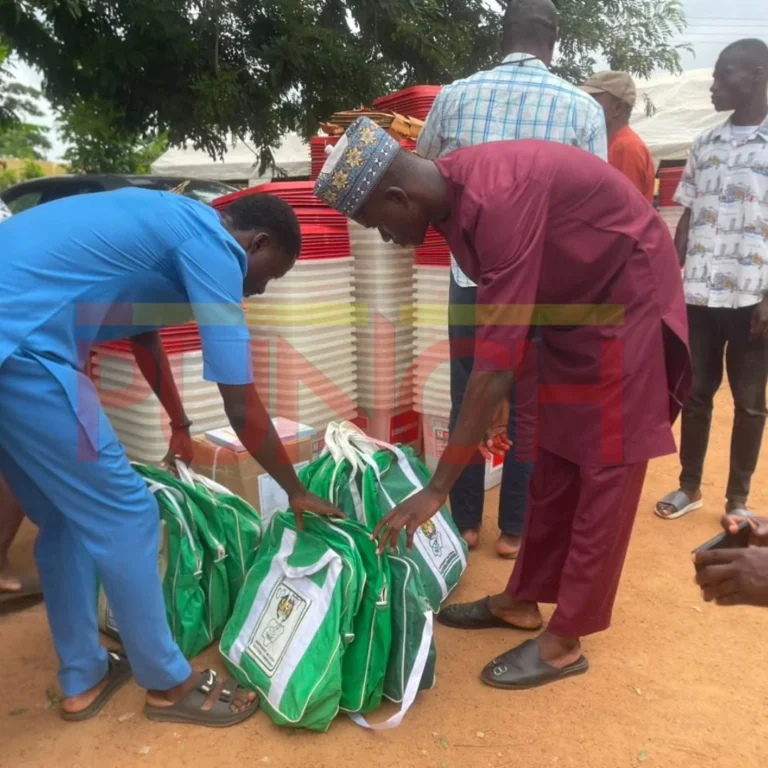
Over the past several months, OYSIEC has rolled out various electoral milestones, including stakeholder consultative meetings, the release of comprehensive guidelines and timetables, and interactive sessions with security agencies to map out deployment strategies. The distribution and verification of non-sensitive materials, alongside the recent ballot paper inspection, align with standard electoral best practices designed to test operational capacity well ahead of polling day.
Sub-national electoral bodies across Nigeria have increasingly faced pressure to deliver credible, transparent, and violence-free local council ballots. In Oyo State, the continuous conduct of council polls under the incumbent administration has been touted by supporters as proof of democratic consolidation, even as opposition parties maintain rigorous scrutiny over the independence and operational efficiency of the state electoral umpire.
Implications for Grassroots Democracy
The successful execution of the ballot paper verification exercise holds profound implications for the credibility of the forthcoming December polls. Historically, electoral friction in Nigeria often stems from administrative oversights, such as missing party logos, swapped symbols, or late deployment of materials. By involving political parties directly in the pre-printing verification phase, OYSIEC has effectively mitigated a major flashpoint for post-election litigation.
Furthermore, the active participation of IPAC and various opposition platforms demonstrates a collaborative approach to electoral administration. When political parties are treated as co-stakeholders rather than mere competitors, the general atmosphere of political tension tends to dissipate, paving the way for higher voter turnout and peaceful civic engagement.
As the December 29 election date draws closer, the focus is expected to shift toward the deployment of sensitive electoral materials, intensive voter education campaigns by both the commission and civil society organizations, and the finalization of security architectures across the 33 local government areas of the state. With non-sensitive logistics moving steadily according to schedule and political parties expressing high levels of preparedness, the stage is set for a fiercely contested yet orderly democratic exercise at the grassroots.