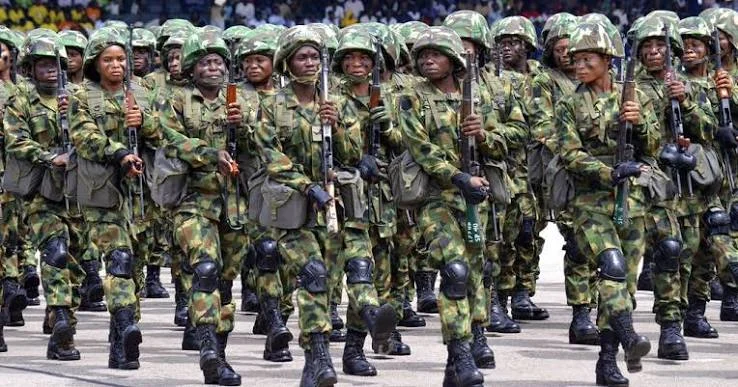
Gallant troops operating under Sector 3 of the Joint Task Force (JTF) Operation Whirl Stroke have successfully neutralized two suspected bandits during a precision, intelligence-led ambush along the volatile Adankolo–Apata Road in Kogi State. The decisive early-morning encounter on Saturday underscores the continued tactical push by the Nigerian military to secure flashpoint corridors connecting rural communities to urban centers in the North-Central region.
According to official operational disclosures, the successful engagement was the direct result of actionable intelligence gathered regarding the clandestine movement of heavily armed criminal elements traversing communities within the Kabba-Bunu and Lokoja Local Government Areas. By leveraging real-time surveillance and human intelligence assets, military strategists were able to anticipate the transit routes utilized by the suspects, ultimately intercepting them along a known logistics and supply pathway.
Chronology of the Adankolo–Apata Engagement
The sequence of events leading to the neutralization of the suspects began days prior, following a spike in intelligence reports regarding suspicious movements across the Kabba-Bunu and Lokoja axes. Residents in outlying farming and trading settlements had reported unusual sightings of armed individuals moving through forested terrain, raising concerns over potential bandit incursions, cattle rustling, and highway kidnapping syndicates operating within Kogi State and its contiguous borders.
In response to these emerging threats, the leadership of Sector 3, JTF Operation Whirl Stroke, formulated a proactive operational plan. Troops were deployed covertly to establish a strategic ambush along a suspected supply route utilized by the criminals.
At approximately dawn on Saturday, the troops made visual and physical contact with the armed group. Recognizing the military’s tactical advantage, the suspects attempted to engage the patrol but were quickly overwhelmed by superior firepower and disciplined tactical maneuvering. Faced with intense defensive and offensive volleys, the remaining members of the criminal gang broke formation and fled into the dense foliage of the Adankolo Forest, abandoning their casualties and logistical materials.
Later that same morning, a comprehensive follow-up search-and-clearance operation was conducted within the Adankolo Forest area. During this sweep, combat patrols recovered the bodies of two suspected bandits who had succumbed to injuries sustained during the firefight.
Weapons and Logistics Recovery
To piece together the operational capacity and threat level posed by the neutralized suspects, military explosive ordinance and forensic exploitation teams thoroughly cataloged the scene. The sweep yielded critical physical evidence pointing to the criminal syndicate’s operational capabilities.
Among the items recovered from the ambush and search site were one locally made pistol, one live cartridge, and one empty shell casing of 7.62mm special ammunition. While the weaponry may appear rudimentary compared to the sophisticated assault rifles often brandished by larger terror and bandit cells, security analysts note that locally fabricated firearms remain prevalent among localized criminal networks, rural bandits, and opportunistic kidnappers operating in the fringes of the North-Central zone. The recovery of standard military-grade 7.62mm ammunition casings further indicates potential exposure to, or illicit trafficking of, standard-issue rounds within underground criminal networks.
Official Reactions and Leadership Commendation
The swift and decisive action of the troops has drawn high-level commendations from the military hierarchy. The Force Commander of Operation Whirl Stroke and General Officer Commanding (GOC) the 5 Division of the Nigerian Army, Major General Moses Gara, lauded the officers and men of Sector 3 for their professionalism, vigilance, and execution of the intelligence-led ambush.
Major General Gara emphasized that the success of the operation reinforces the efficacy of proactive intelligence sharing and inter-agency cooperation. Addressing the broader security landscape within his area of responsibility, the GOC reiterated the military’s unwavering commitment to dismantling criminal networks, safeguarding critical economic corridors, and restoring absolute peace to communities plagued by insecurity.
Crucially, the military leadership renewed its appeal to the civilian population. Major General Gara urged residents of Kogi State and neighboring areas to maintain high levels of vigilance and to sustain the timely sharing of credible information with security agencies. According to military doctrine, community-level intelligence remains a vital force multiplier in the asymmetric warfare framework currently deployed across various theaters in Nigeria.
Broader Security Context in Kogi State and the North-Central Zone
Kogi State occupies a highly strategic geopolitical and economic nexus in Nigeria. Often referred to as the "Confluence State," it serves as a critical gateway connecting the northern and southern halves of the country. This geographic reality makes its federal highways, waterways, and expansive forests attractive corridors for commercial transit, but unfortunately, it also renders them vulnerable to exploitation by criminal syndicates seeking to move contraband, launch highway ambushes, or establish transit safe havens.
In recent years, the North-Central region—comprising Kogi, Benue, Nasarawa, Plateau, Niger, Kwara, and the Federal Capital Territory—has faced complex security challenges. These include localized banditry, farmer-herder conflicts, kidnapping-for-ransom operations, and the infiltration of displaced criminal elements fleeing intensive counter-terrorism and counter-insurgency operations in the North-East and North-West.
Operation Whirl Stroke, originally established to tackle violent conflicts and criminal proliferation in Benue, Nasarawa, and Taraba states, has progressively expanded its operational footprint and intelligence network to secure adjacent vulnerable zones, including parts of Kogi State. The success of the Adankolo–Apata ambush highlights the critical role of regional task forces in preempting attacks before they materialize into major security crises.
Implications for Regional Stability and Ongoing Operations
The neutralization of the two suspected bandits and the disruption of their supply route carry several important implications for security management in Kogi State:
- Disruption of Criminal Logistics: By successfully targeting a supply route, the military has dealt a blow to the operational sustainability of gangs operating in the Kabba-Bunu and Lokoja areas. Cutting off access to logistics, food supplies, and ammunition severely limits the mobility and longevity of rural criminal cells.
- Boost to Public Confidence: Incidents of highway banditry and kidnapping often generate widespread fear among commuters and local farmers. Successful military interventions reinforce public trust in the state’s security architecture, encouraging greater civilian cooperation and intelligence sharing.
- Enhanced Forest Sweeps: The utilization of the Adankolo Forest by criminal elements underscores the persistent challenge of ungoverned spaces. The follow-up search and subsequent clearance operations demonstrate an ongoing strategic shift toward denying criminals sanctuary in dense forestry and mountainous terrain.
- The Imperative of Inter-Agency Synergy: As security forces continue to press forward, the integration of human intelligence (HUMINT) gathered from local populations with tactical military execution remains the gold standard for mitigating asymmetric threats.
As the security situation continues to evolve, the military has assured residents that patrol and surveillance activities along the Adankolo–Apata corridor and surrounding flashpoints will be sustained and intensified. The ultimate objective remains the complete eradication of criminal elements, ensuring that citizens can travel, farm, and conduct their daily socioeconomic activities free from fear and intimidation.