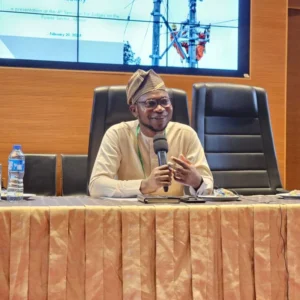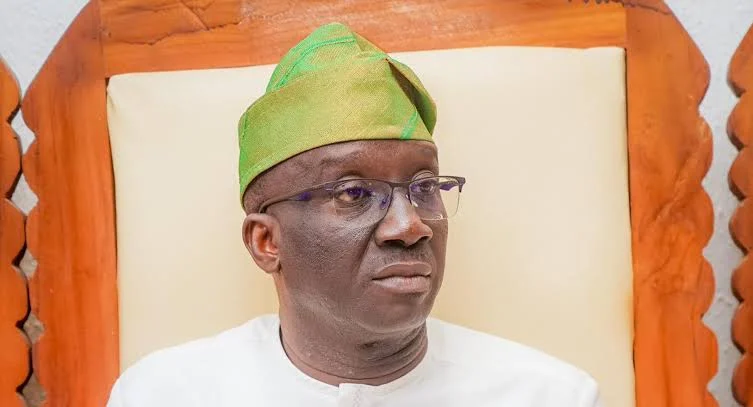
In a significant shift in public perception and political messaging, Edo State Governor, Monday Okpebholo, has revealed a transformation in how his constituents address him, marking a departure from his initial campaign-era moniker to a more personal and endearing title. Speaking during a live broadcast aired by ITV and Radio, the governor shared anecdotal evidence of his improved rapport with the public, highlighting a transition from the robust, action-oriented tag of "Akpako Rescue" to the more affectionate "Okpe’s baby." This change in nomenclature, according to the governor, reflects a growing sense of security and mutual goodwill between his administration and the people of Edo State.
The governor’s remarks, delivered during a weekend interaction, underscored a broader strategy of engaging directly with the electorate. By recounting a recent informal walk along Sapele Road, a major artery in the state capital, Governor Okpebholo emphasized his accessibility. He noted that the environment of governance has shifted from one of potential hostility—where public figures might fear being pelted with debris or facing physical protests—to one of genuine interaction. "I was on Sapele Road yesterday. They have even changed my name from Akpako Rescue to Okpe’s baby. These things give me joy because I walk freely on the street; instead of throwing pure water at me, they are giving me sweet names," the governor stated.
Political Context and Administrative Background
Governor Monday Okpebholo assumed office with a mandate to address the developmental challenges facing Edo State, a region characterized by its historical significance and complex socio-economic landscape. His initial moniker, "Akpako Rescue," was rooted in a narrative of urgent intervention and the necessity of structural rehabilitation, a common theme in local political discourse where candidates emphasize "rescuing" the state from previous administrative stagnation.
However, the transition to a more "relatable" public persona suggests an intentional pivot by the governor to soften his image and foster a sense of closeness with the grassroots. In political science, such shifts are often interpreted as a maturation of a leader’s relationship with the electorate, moving from the aggressive pursuit of power to the consolidation of public trust through visibility and perceived benevolence.
Aligning with Federal Economic Policy
Beyond local branding, the governor utilized the broadcast to signal his unwavering support for the federal government’s economic policies under President Bola Ahmed Tinubu. Governor Okpebholo’s defense of the administration’s reforms is particularly noteworthy, given the prevailing public sentiment regarding the cost of living crisis in Nigeria.
The governor identified the removal of the petrol subsidy and the unification of the foreign exchange market as the twin pillars of President Tinubu’s "Renewed Hope" agenda. These policies, while highly controversial and the subject of significant public debate due to the resulting inflationary pressures, were framed by Okpebholo as necessary surgical interventions to prevent national economic collapse.
"Why do I have confidence to talk about Mr. President? It’s because of many reforms this man has put in place that is yielding fruit for this country," he argued. The governor’s rhetoric suggests a belief that the long-term structural benefits of these reforms are beginning to outweigh the short-term pain, a narrative that his administration is clearly aiming to amplify across the state.
Economic Indicators and the Narrative of Stability
Governor Okpebholo specifically pointed to the volatility of the foreign exchange market as a barometer for success. He asserted that the naira, which has faced severe depreciation over the past eighteen months, is showing signs of stabilization. By contrasting the current situation with the traditional economic cycle in Nigeria—where prices of goods rarely, if ever, decline—the governor sought to challenge the prevailing public narrative of perpetual inflation.
"Those days we used to say something, prices that go up in Nigeria never come down. But you can see prices of dollars coming down gradually, and it’s not going back up," he stated.
From an economic standpoint, the stability of the naira is a critical factor for the Nigerian business community. Since the Central Bank of Nigeria (CBN) moved to float the currency and implement stricter monetary policy measures, importers and manufacturers have faced significant challenges in planning and capital allocation. The governor’s confidence that these prices are stabilizing serves as a public endorsement of the CBN’s recent fiscal interventions. However, independent analysts often point out that while the exchange rate may show pockets of stability, the cost of essential commodities and food items remains at historic highs, creating a disconnect between government messaging and the reality of the average household budget.
Addressing the Subsidy Removal
The removal of the petrol subsidy remains one of the most polarizing actions taken by the current federal administration. For years, the subsidy was viewed by many as a vital social safety net, despite the substantial fiscal burden it placed on the national treasury. Conversely, international financial institutions like the World Bank and the International Monetary Fund (IMF) have long lobbied for its removal, citing the potential for corruption and the diversion of funds.
Governor Okpebholo’s stance aligns with the latter view. He argued that the subsidy regime historically benefited only a small, elite group of individuals, often referred to as "the cabal," at the expense of the collective national interest. By framing the removal as a mechanism to end the hold of these few individuals over the nation’s resources, the governor is aligning himself with the federal government’s efforts to project the policy as an act of economic liberation rather than a punitive measure against the poor.
Implications for Governance in Edo State
The governor’s approach highlights a classic political dilemma: how to maintain popular support while simultaneously championing unpopular, albeit necessary, structural reforms. The success of this strategy in Edo State will likely depend on the government’s ability to deliver tangible dividends of democracy at the local level.
- Infrastructure and Social Services: If the savings from federal reforms are properly channeled into state-level development, the governor’s popularity will likely remain high.
- Economic Mitigation: The administration will face pressure to implement state-level palliatives or social support programs to cushion the impact of the ongoing inflationary trends.
- Political Stability: By fostering a "man of the people" image, Okpebholo is effectively creating a buffer against opposition criticism, particularly regarding the economic hardships experienced by residents.
Public Reception and Future Outlook
The shift in nickname from the combative "Akpako Rescue" to the more intimate "Okpe’s baby" is a clear indicator that the governor is successfully navigating the transition from a candidate to an incumbent. However, political analysts caution that public sentiment is notoriously fluid. While the governor may currently enjoy a favorable reception during his street engagements, the durability of this popularity will be tested by the ongoing economic realities of his constituents.
As the administration moves forward, the synergy between the governor’s local popularity and his alignment with federal economic policies will be a critical area to monitor. If the promised stability in the foreign exchange market and the mitigation of inflationary pressures translate into improved purchasing power for the residents of Edo State, Governor Okpebholo’s political capital is likely to increase significantly. Conversely, should the economic headwinds persist, the administration may find that the nickname "Okpe’s baby" offers little protection against the scrutiny of a public grappling with the high cost of living.
Ultimately, the governor’s broadcast serves as a case study in modern political communication. By humanizing his image and tying his political fate to the success of national economic reforms, Governor Okpebholo is attempting to build a narrative of stability and progress. Whether this narrative holds up under the scrutiny of the coming months will depend on the intersection of federal policy outcomes and the specific socio-economic needs of the people of Edo State.
The administration now faces the task of proving that the "joy" the governor feels from the public’s current reception is matched by the concrete results that will define his legacy in the state. For now, the governor appears satisfied with his current standing, confident that his administration is on the right track, and comfortable in the realization that his path to governance has evolved into something far more personal and, in his view, more sustainable.