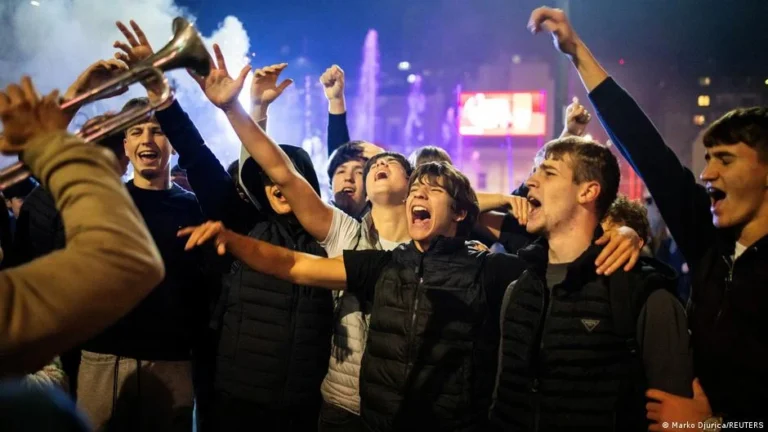
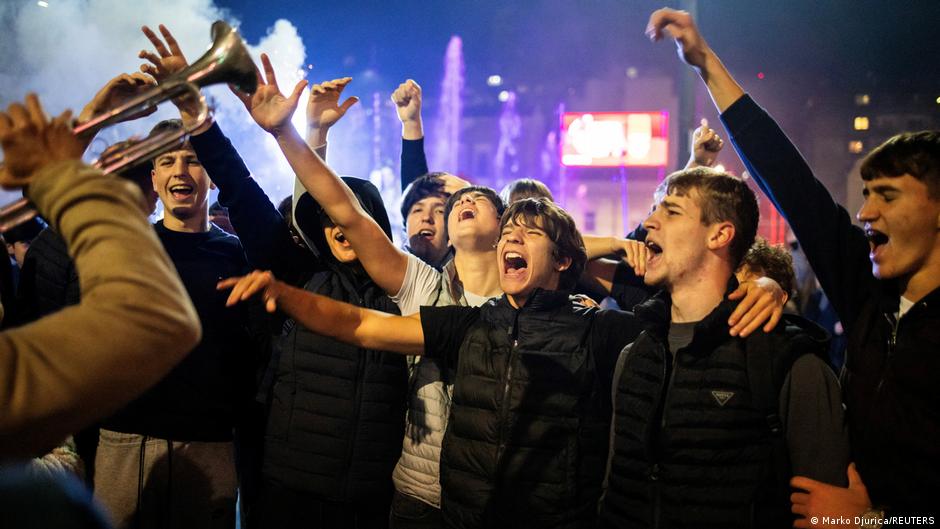
The political landscape of Serbia has undergone a seismic shift following the parliamentary elections on October 25, which saw the incumbent, Aleksandar Vucic, suffer a decisive defeat at the hands of the Student List. For years, Vucic and his Serbian Progressive Party (SNS) maintained a firm grip on the levers of state power, characterized by a centralized media environment and the marginalization of political dissent. The election results, in which the Student List secured 53% of the vote against the SNS’s 39%, signal not only a change in government but a profound challenge to the political architecture built over the past decade.
A Chronology of the Upheaval
The current transition is the culmination of years of mounting public frustration. The trajectory of the movement can be traced back through several critical junctures:
- 2023–2024: The "Serbia Against Violence" protests, triggered by tragic mass shootings, laid the groundwork for large-scale civil mobilization.
- November 2024: A concrete canopy collapsed at the Novi Sad railway station, killing 16 people. The tragedy, widely attributed to corruption and poor oversight in construction contracts, became the definitive catalyst for the student-led revolt.
- October 25, 2025: The parliamentary elections took place, resulting in a landslide victory for the Student List.
- Late October 2025: The immediate post-election period witnessed the removal of Vucic’s portraits from public buildings and the mass resignation of high-level state media officials.
- November 1, 2025: A scheduled repeat of voting in approximately 50 polling stations to address irregularities, marking the final stage of the electoral process before the convening of the new parliament.
The Mechanics of the Student Victory
The Student List is a heterogeneous coalition comprising academics, activists, and artists who coalesced around a platform of institutional reform and anti-corruption. Unlike the monolithic structure of the SNS, this movement represents a broad spectrum of political thought, ranging from pro-European integrationists to those with more conservative, traditionalist leanings.
The success of the List is largely attributed to its ability to mobilize younger, urban voters while simultaneously capturing the support of disillusioned citizens who felt excluded by the patronage networks associated with the previous administration. Dejan Bursac of the Institute for Philosophy and Social Theory at Belgrade University notes that the movement’s strength lies in its refusal to adopt the aggressive rhetoric of the past, opting instead for a message of systemic renewal.
Institutional Resistance and the Power Vacuum
As the new coalition prepares to assume governance, it faces the daunting task of dismantling the "deep state" infrastructure left behind by the SNS. The outgoing government continues to occupy key positions in the judiciary and law enforcement, creating what analysts describe as a "governance vacuum."
Vucic, currently operating from a diminished position, has framed the transition as "revolutionary terror," specifically citing the removal of directors at the state broadcaster, Radio Television of Serbia (RTS). Furthermore, the pressure on pro-government media outlets, such as Informer TV, has reached a fever pitch. Journalists’ associations are now lobbying the regulatory authorities to revoke the broadcasting licenses of outlets previously used to demonize opposition figures, arguing that these organizations functioned as propaganda tools rather than journalistic entities.
Transparency Serbia, an organization that monitors governmental conduct, has issued warnings regarding the potential for "scorched-earth" tactics by outgoing officials. There is a documented fear that in the final weeks of the transition, officials may attempt to finalize procurement contracts or destroy sensitive administrative documents, thereby saddling the new government with financial liabilities or evidentiary gaps.
Foreign Policy and Regional Stability
Despite the internal revolution, the Student List has been careful to signal a pragmatic approach to foreign policy. The new leadership appears intent on de-escalating tensions with neighbors, including Croatia, Bosnia and Herzegovina, and the government in Pristina.
Oliver Toskovic, a prominent figure in the Student List and a newly elected member of parliament, emphasized that the incoming government seeks to move away from using the European Union as a political prop. "Our plan is to stabilize and develop the country, not to destabilize it with some abrupt change of course," Toskovic stated. This approach includes a delicate balancing act regarding energy dependence on Russia. While the movement recognizes the need for eventual alignment with European norms, it remains wary of imposing immediate sanctions that could trigger an energy crisis or internal economic instability.
Implications for the Serbian Judiciary and Rule of Law
The most significant impact of the transition may be the restoration of the independence of the public prosecutor’s office. Under the Vucic administration, the judiciary was frequently criticized by international observers and NGOs for being a tool of the executive branch. The current, special commission examining the work of the Higher Public Prosecutor’s Office in Belgrade is a clear indicator that the new government intends to pursue accountability for past abuses of power.
The symbolic cleaning of Pioneers Park—a site previously occupied by pro-government encampments and, according to investigative reports, used as a staging ground for irregular security forces—serves as a metaphor for the broader "cleansing" of the political sphere.
Economic and Societal Challenges
Beyond the political optics, the new government faces an uphill battle to address the structural issues that plagued the Serbian economy for years. State contracts, which were frequently funneled toward businesses with close ties to the SNS, are expected to come under intense scrutiny.
The impatience of the electorate, noted by academics, poses a unique challenge to the Student List. Having campaigned on the promise of justice, the new government must deliver tangible results in the fight against corruption without descending into the very exclusionary tactics they once campaigned against. The challenge is to prove that a democratic, transparent system can function more efficiently than the authoritarian model of the past.
Looking Ahead
As the nation awaits the final vote count and the subsequent formation of the cabinet, the atmosphere in Belgrade remains tense yet optimistic. The transition of power in Serbia is being closely watched by the European Union, which views the potential for democratic renewal in the Western Balkans as a key regional development.
The "million-dollar question," as framed by Zlatko Minic, remains the extent to which the old guard can obstruct the new administration. With whistleblowers encouraged to come forward and the police and administration showing signs of internal shifts in loyalty, the Student List appears to have enough momentum to proceed. However, the path to a fully reformed, democratic Serbia will depend on the movement’s ability to maintain its broad coalition and avoid the pitfalls of the same exclusionary politics that led to the downfall of its predecessor.
The next few months will serve as a litmus test for the resilience of Serbia’s new political order. Should the Student List succeed in convening parliament and establishing a functioning government, it will mark one of the most significant democratic transitions in Eastern Europe in the 21st century. The era of the "feudal lord" style of governance appears to be waning, but the process of building a robust, institutionalized democracy in its place remains an arduous work in progress.