Across Nigeria, private primary and secondary school education has evolved into a complex financial labyrinth where tuition fees represent merely the entry point. From the Federal Capital Territory (FCT) to commercial hubs like Lagos and northern states such as Katsina, Kaduna, and Benue, parents are increasingly grappling with a cascade of ancillary expenses. These include mandatory graduation levies for non-terminal classes, compulsory textbook purchases tied to specific vendors, exorbitant feeding fees, and miscellaneous party contributions. As inflation continues to erode household purchasing power, these cumulative hidden costs are testing the resilience of families and forcing a national conversation about regulatory oversight in the educational sector.
The Burden of Non-Tuition Fees
For many Nigerian households, the financial shock of private schooling materializes most acutely at the end of academic sessions. On the final Saturday of July, parents, teachers, and pupils of Megaliy International School gathered at the Apo Resettlement Town Hall in Abuja for an end-of-session and graduation ceremony. For Mrs Kuburat, a parent with three children in the school, the celebration carried an additional bill of nearly N100,000. She was billed N20,000 for her child completing nursery school, N25,000 for the one finishing Junior Secondary School (JSS), and N50,000 for her eldest child completing Senior Secondary School (SSS). Even in years when none of her children graduate, she faces a flat N10,000 charge per child for end-of-session activities.
This scenario is replicated nationwide. In Lagos, Damilola Ojuolape, a caterer residing in Ojo, discovered that her nine-year-old daughter’s primary school graduation transformed into a major financial stressor. The school levied a N45,000 graduation charge, which was compounded by expectations to participate in specialized dance performances and purchase commemorative portraits. Beyond the school’s official bills, Ms Ojuolape spent an additional N154,000 preparing her daughter with a specific green dress matching the event’s theme, alongside accompanying accessories such as jewelry, a purse, sunglasses, and a wristwatch.
Similarly, Tolulope Eludini, a parent whose children attend Fluorescent Private School in Lagos, noted that fees for graduation ceremonies and textbooks are integrated directly into the beginning-of-term bills. Graduating students are expected to pay approximately N50,000 for graduation fees, alongside separate costs for bespoke attire like suits and dresses, plus contributions toward end-of-session parties.
In northern states, where baseline school fees are generally lower, supplementary charges still carry significant weight relative to household incomes. In Katsina, parents at institutions like Mariamoh Ajiri Memorial International School and Ayak Academy reported paying distinct levies for speech and prize-giving days, examination fees, and material packs. In Kaduna, parents at Wusasa Children’s School, St Francis Academy, and ECWA Nursery and Primary School reported facing similar demands ranging from N3,000 to N8,000 per child for terminal activities.
The Fine Line Between "Optional" and Compulsory

A central point of contention between parents and school administrators is whether these ancillary activities are genuinely voluntary. While several school officials maintain that graduation ceremonies, year-end parties, and extra-curricular events are optional, parents argue that social and psychological pressures make opting out nearly impossible for the children.
Mr Murtala Gidado, a parent with children in Katsina schools, pointed out that while non-payment of graduation fees at a local community-run secondary school was technically classified as optional, the consequence was outright exclusion from the event. "The child will not attend the programme," he said. "Socially, he might be affected emotionally while his contemporaries are celebrating and he is not celebrating."
At Mariamoh Ajiri Memorial International School, the Head of Quality Assurance, Ugwu Chinedu, confirmed that payment determined whether a pupil received a school-provided refreshment package during speech and prize-giving events. While pupils whose parents did not pay were permitted to attend, they were required to bring their own food, creating a visible social stratification within the school grounds.
Conversely, some institutions have opted to cancel events entirely when voluntary contributions fell short. Abubakar Yunus Abubakar, proprietor of Ayak Academy in Katsina, explained that when proposed N10,000 contributions for primary graduation proved insufficient due to low parental participation, the school cancelled the ceremony rather than coerce struggling families.

Textbooks and Learning Materials as Revenue Centers
Beyond ceremonies, the procurement of educational materials has become another financial flashpoint. Numerous private schools mandate that parents purchase textbooks, exercise books, and learning packs directly from the school premises, frequently shutting out independent bookstores.
Lois Ugbede, an assistant editor at DUBAWA whose children attend a Catholic private school in Abuja, noted that parents are strictly prohibited from sourcing notebooks or textbooks externally. Similar policies are enforced at Fluorescent Private School in Lagos and Mariamoh Ajiri in Katsina, where kindergarten and nursery pupils are required to purchase pre-packaged learning materials supplied exclusively by the school.
School administrators have defended these mandates by citing quality control and the threat of intellectual property theft. Mr Chinedu argued that internal procurement protects parents from purchasing substandard or pirated copies circulating in the open market. Bernard Ogwuche, head teacher at St Martin’s Nursery and Primary School in Katsina, echoed these sentiments, explaining that newly revised curricula feature specialized textbooks that are difficult to find in local commercial markets, thereby necessitating direct purchase from the school.

However, other administrators maintain a more flexible approach. Mr Abubakar stated that Ayak Academy permits parents to buy prescribed textbooks from any vendor, provided they acquire the correct editions and titles. Some proprietors even supply direct contacts of publishers to facilitate independent purchasing.
Chronology of Regulatory Interventions and State Responses
The mounting financial pressures on households have triggered coordinated pushbacks from both federal and state governments seeking to regulate non-state educational practices.
In January, the Federal Government, through the Ministry of Education led by Minister Tunji Alausa, announced major reforms aimed at curbing recurrent expenses. These reforms restricted school graduation ceremonies exclusively to students completing Primary Six, Junior Secondary School 3 (JSS3), and Senior Secondary School 3 (SSS3). Additionally, the government introduced a reusable textbook policy designed to allow learning materials to pass between siblings across multiple academic sessions.

Several states have enacted even stricter legislative and executive measures:
- Ogun State: In June, the state government prohibited graduation ceremonies and end-of-session parties for nursery, kindergarten, and non-terminal classes across all public and private schools. Terminal classes were directed to keep ceremonies modest and entirely free of financial burdens for parents, banning customized attire and extravagant social displays.
- Anambra State: On July 24, the state government issued a directive exempting only SSS3 students from a broader ban on graduation ceremonies. The directive emphasized that even permissible ceremonies must be strictly optional and conducted without any form of levy or financial demand on parents, warning that non-compliant institutions face closure.
- Benue State: In August 2025, Benue State implemented sweeping bans against compulsory nursery graduations, customized textbooks that lack reusability, and mandatory after-school lessons conducted without parental consent. Despite these edicts, subsequent journalistic visits to institutions such as Towering Tots School, NADI Schools, and Tender Feet School in Makurdi revealed that textbook charges remained integrated into fee structures at the start of the academic term.
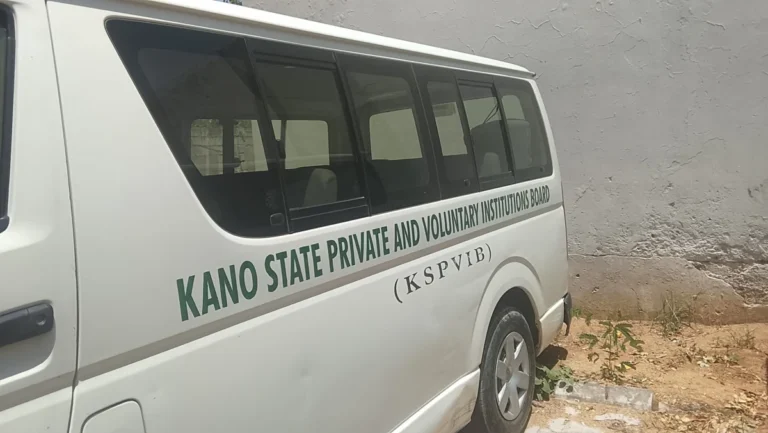
- Kano State: In August, the Kano State House of Assembly passed the Kano State Private and Voluntary Institutions Board (Amendment) Bill, introducing rigorous oversight on school fee increments. The law mandates formal consultation with parents through Parent-Teacher Associations (PTAs) before any upward review of school fees can be implemented.
Economic Realities and the Defense of Private School Operators
From the perspective of private school proprietors, the additional charges are not arbitrary profit-seeking measures, but rather survival mechanisms in a challenging macroeconomic environment. A private school proprietor in Kaduna, speaking on condition of anonymity, highlighted the crushing overhead costs facing the sector.
"Some private schools operate from rented buildings and have to pay rent. They also pay government taxes which are becoming overwhelming, buy school supplies, and pay staff salaries," the proprietor explained. "The running cost of a private school in Nigeria is very high. These schools receive no government funding; they fund themselves."

Similarly, Mary Odiba, proprietress of Wusasa Children’s School, defended graduation charges as essential for covering basic logistics, such as renting canopies, securing chairs, purchasing refreshments, and providing prizes for academic excellence. Mansir Sani, the Katsina State chairperson of the National Association of Proprietors of Private Schools (NAPPS), asserted that excessive, compulsory graduation fees are not standard practice among the majority of member institutions, noting that most schools rely on standard examination fees instead.
Implications for the Future of Private Education
Despite the rationalizations provided by school administrators, the structural mismatch between rising school-related expenses and stagnant household incomes is creating a palpable squeeze in middle- and low-income Nigerian households. While parents readily challenge sweeping tuition hikes—as demonstrated by successful parental petitions in Lagos—fragmented costs such as graduation levies, uniform updates, feeding fees, and localized book purchases remain difficult to resist collectively.
As regulatory bodies across various states attempt to enforce compliance through inspections and threatened sanctions, school administrators face difficult operational choices. Some schools have adapted by scaling back celebrations or making contributions truly optional. However, as long as non-state institutions remain entirely self-funded in the face of high operational overheads, the hidden costs of private education will likely remain a persistent financial burden for Nigerian families navigating the school year.