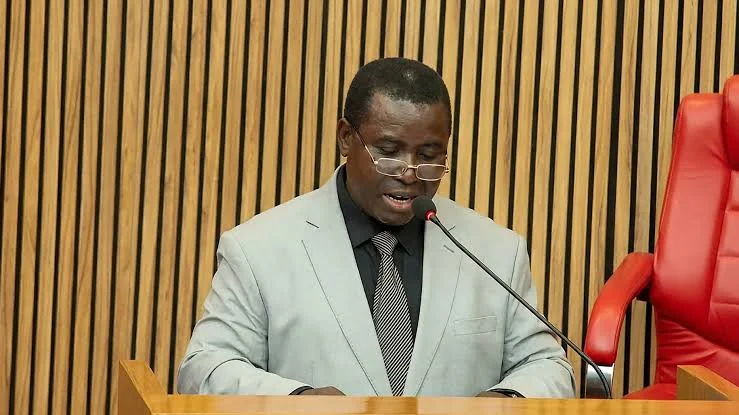
The Chairman of the Independent National Electoral Commission (INEC), Professor Joash Amupitan, has issued a definitive stance regarding the electoral calendar for the 2027 general elections, categorically dismissing any possibility of a schedule adjustment. Speaking during a high-level strategic engagement in Port Harcourt, Rivers State, Professor Amupitan emphasized that the commission is operating under a strict statutory timeline that precludes any deviation, regardless of political or logistical pressures. This declaration serves as a crucial signal to stakeholders, political parties, and the international community that the commission is committed to maintaining the sanctity of the constitutionally mandated election cycle.
The interactive session in Port Harcourt brought together key electoral officers from the six states of the South-South geopolitical zone. The primary objective of the meeting was to conduct a comprehensive audit of regional readiness, identify potential bottlenecks, and ensure that the administrative machinery required for a national exercise of this magnitude is functioning at peak capacity.
The Statutory Imperative and Electoral Integrity
Professor Amupitan’s insistence on the immutability of the 2027 election dates is rooted in the Electoral Act, which mandates specific windows for the transition of power. By publicly confirming that "the election must hold as scheduled," the INEC Chairman is aiming to mitigate the uncertainty that often precedes national polls in Nigeria. Historically, electoral uncertainty has been a catalyst for market volatility and political instability. By providing this early clarity, the commission seeks to anchor the expectations of the electorate and the political class.
The Chairman’s remarks are also a response to the growing discourse surrounding the management of logistical challenges. In previous cycles, last-minute postponements—often attributed to the late arrival of sensitive materials or incomplete distribution of Permanent Voter Cards (PVCs)—have severely damaged public trust in the commission. Amupitan’s firm stance suggests a strategic pivot toward proactive planning rather than reactive crisis management.
Strategic Focus on the South-South Zone
A significant portion of the commission’s briefing was dedicated to the voter demographics of the South-South region. As the economic heartbeat of the nation’s energy sector, the region’s electoral participation is viewed by political analysts as a bellwether for national trends. Professor Amupitan highlighted that Rivers State occupies a central position in the commission’s operational strategy, not only due to its strategic economic importance but because it boasts the highest concentration of registered voters in the zone.
The breakdown of registered voters across the South-South states paints a clear picture of the scale of the logistical deployment required:
- Rivers State: 3,736,434
- Delta State: 3,525,988
- Edo State: 2,865,263
- Akwa Ibom State: 2,566,198
- Cross River State: 1,928,978
- Bayelsa State: 1,200,691
Given these figures, the commission has indicated that it will allocate additional resources to Rivers State to ensure that the polling environment remains secure and that the sheer volume of voters does not lead to disenfranchisement through operational failures. The mandate to the state’s electoral officers is clear: minimize waiting times, ensure the functionality of Bimodal Voter Accreditation Systems (BVAS), and maintain strict oversight at every polling unit.
Data Accuracy and the Voters’ Register
In the months leading up to the 2027 cycle, the integrity of the voters’ register has been a top priority for INEC. Professor Amupitan provided an update on the ongoing verification exercise, noting that the commission has already processed more than 5,000 claims for corrections—ranging from simple name misspellings to date-of-birth adjustments—and addressed over 600 formal objections.
The commission has set a firm deadline of December 15 for the release of the final, sanitized voters’ register. This timeline is critical, as it provides political parties and civil society organizations sufficient time to audit the list for anomalies before the commencement of the final campaign phase. Amupitan revealed that while he had initially contemplated a comprehensive revalidation of the register, he ultimately discarded the idea. His reasoning was pragmatic: such an exercise would have been too close to the election date, potentially creating administrative chaos and providing fodder for litigation that could derail the electoral process.
Lessons from the Off-Cycle Elections
A recurring theme in Professor Amupitan’s address was the importance of "learning by doing." He pointed to the recent off-cycle gubernatorial election in Osun State as a foundational case study. Despite initial apprehension regarding security threats and technical performance, the Osun exercise was widely regarded as a success, recording the highest voter turnout for an off-cycle election in the state’s history.
For the INEC leadership, the Osun model serves as a proof of concept. The ability to deploy technology, manage security, and process results efficiently in a localized setting provides the commission with the confidence to scale those operations for a nationwide event. "Osun State elections gave us the confidence that we can achieve this despite the noise," Amupitan noted, emphasizing that these interim exercises are not just about choosing governors, but about stress-testing the national system.
Security, Technology, and the AI Factor
Security remains the most formidable hurdle for INEC. The commission is actively coordinating with the Nigeria Police Force, the Department of State Services (DSS), and other security apparatuses to create a "secure perimeter" around the electoral process. Amupitan was unequivocal about the responsibility of the state: voters cannot be encouraged to collect their PVCs if they cannot be guaranteed safety at the point of casting their ballots.
Furthermore, the Chairman addressed the growing public anxiety regarding the role of technology in the 2027 polls. With the global rise of artificial intelligence and deepfake technology, there has been widespread speculation about whether algorithms could influence or manipulate election results. Amupitan dismissed these concerns as speculative, reaffirming that the core of the democratic process remains human-centric.
"It is the people of Nigeria that will decide the outcome of the elections and not AI or any algorithms," he stated. However, he acknowledged the reality of modern cybersecurity threats. He confirmed that INEC is currently upgrading its digital infrastructure, with a particular focus on firewalls and threat detection systems to prevent external interference. While the vote-counting process will remain transparent and subject to manual verification, the digital backend that supports the transmission of data is receiving significant security hardening.
Broader Implications and Stakeholder Reactions
Political analysts observing these developments suggest that Amupitan’s assertive leadership style is intended to project a sense of stability. By setting clear deadlines and refusing to entertain the prospect of delays, the INEC Chairman is attempting to shift the narrative from "electoral skepticism" to "procedural accountability."
However, civil society groups have cautioned that the commission’s success will ultimately depend on its ability to maintain neutrality. While the internal readiness of INEC is a prerequisite for a credible election, external factors—including the conduct of security agencies and the adherence of political parties to the Peace Accord—will play equally decisive roles.
The commitment to hold the election as scheduled is seen as a positive development by the international observer community, which has long advocated for predictable electoral cycles as a cornerstone of democratic consolidation in West Africa. As the December 15 deadline for the final voters’ register approaches, all eyes will be on the commission to see if it can meet its self-imposed targets.
A Mandate for Diligence
The concluding message to INEC personnel across the South-South was one of professional rigor. The Chairman emphasized that the credibility of the entire commission rests on the performance of officials at the micro-level—the polling units, the ward collation centers, and the local government offices.
As Nigeria prepares for the 2027 general elections, the pressure on the commission is immense. Professor Amupitan’s roadmap—focused on rigid adherence to timelines, technical security, and proactive logistical management—represents a significant effort to stabilize the democratic process. Whether this approach will result in a watershed moment for Nigerian democracy remains to be seen, but the commission has set the stage for a process that it insists will be "for the nation’s progress."