
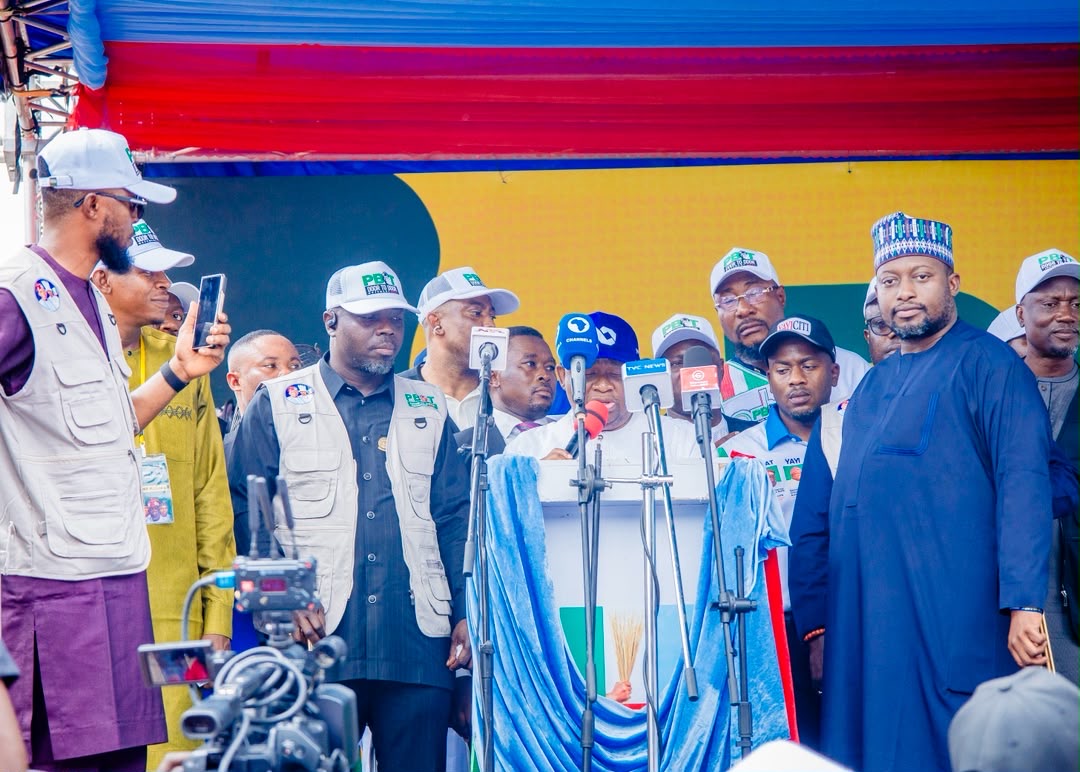
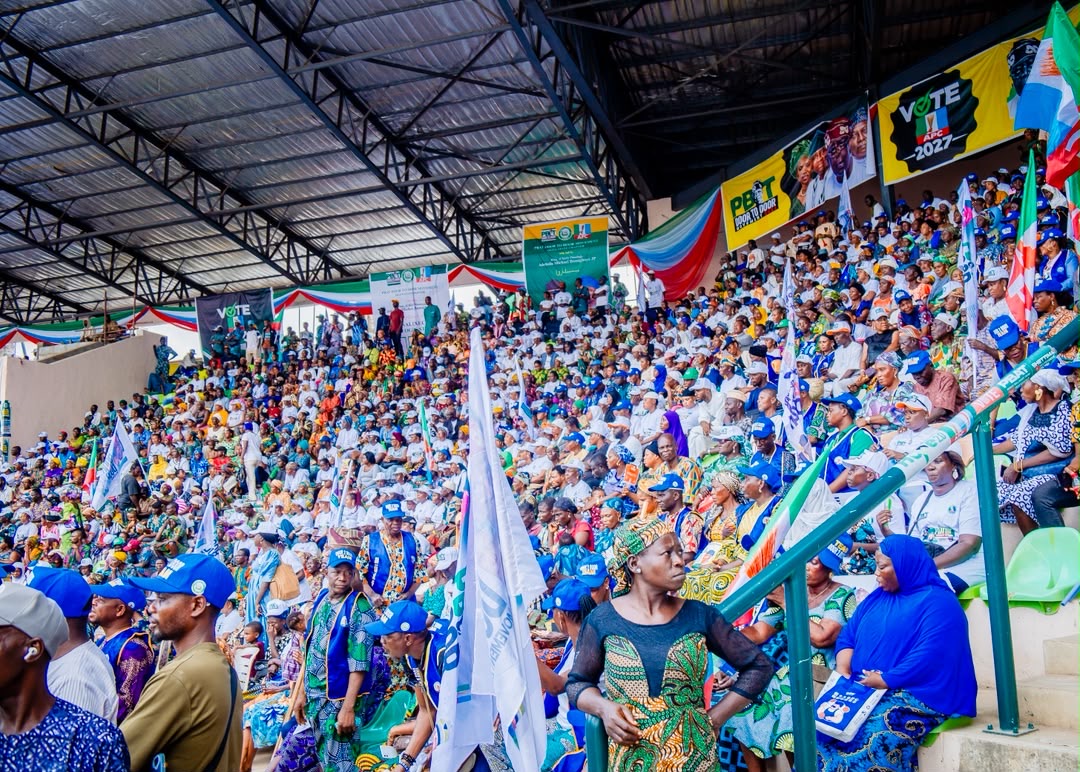
The political landscape in Ogun State witnessed a significant shift on Friday, October 30, 2026, as the PBAT Door-to-Door Movement officially inaugurated its state chapter. The event, which took place at the historic Ake Palace Arcade in Abeokuta, was marked by a substantial show of support for President Bola Ahmed Tinubu’s administration. High Chief Government Oweizide Ekpemupolo, widely known as Tompolo, served as the primary benefactor, donating 26 campaign vehicles to bolster grassroots mobilization efforts ahead of the highly anticipated 2027 general elections.

The ceremony was attended by a broad spectrum of political heavyweights, including representatives of the Ogun State government, legislative leaders, and vocal supporters of the All Progressives Congress (APC). This launch signals a strategic intensification of political outreach efforts as the nation edges closer to the next electoral cycle, emphasizing a localized, person-to-person engagement strategy aimed at consolidating the President’s support base in the South-West region.
Mobilizing the Grassroots: The Logistics of the Campaign
The donation of 26 vehicles is more than a symbolic gesture; it represents a tactical infrastructure investment designed to permeate the 26 state constituencies of Ogun. By providing specialized transportation for campaign staff and volunteers, the PBAT Door-to-Door Movement intends to overcome the logistical hurdles that often impede effective communication in rural and semi-urban districts.
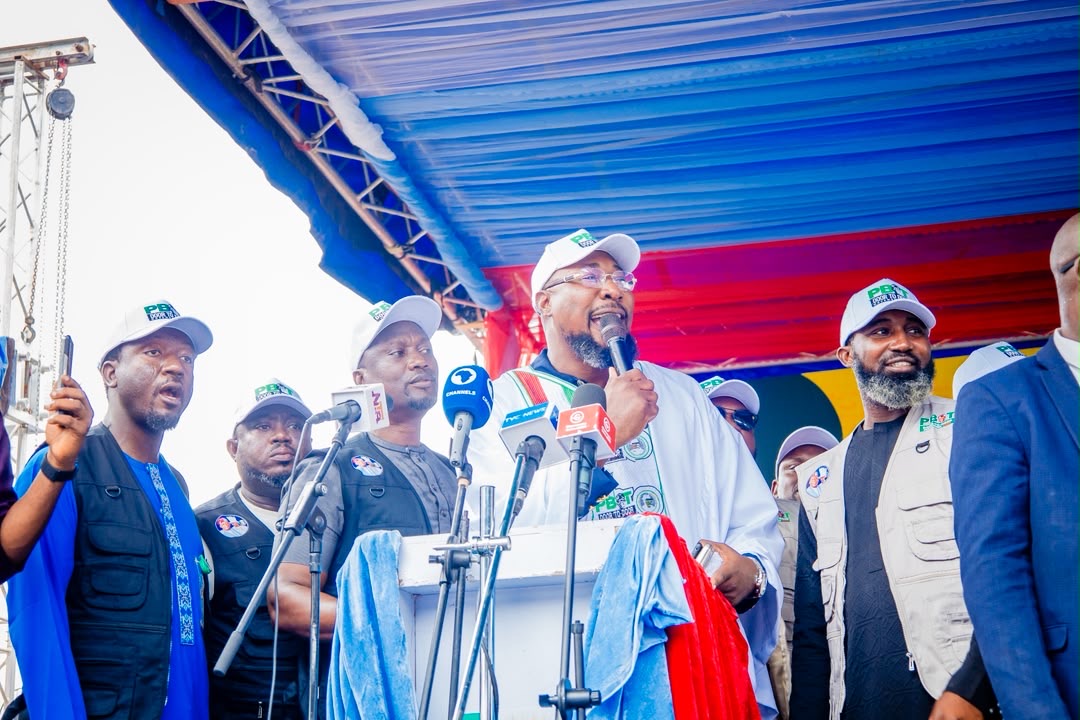
High Chief Kestin Pondi, the Managing Director of Tantita Security Services Nigeria Limited, represented Tompolo at the event. In his address, Pondi underscored that these assets are intended to facilitate a comprehensive, street-by-street engagement strategy. The objective is to bridge the information gap between the federal government’s policy initiatives and the daily realities of the Nigerian electorate. Pondi emphasized that despite the prevailing economic headwinds, the administration remains committed to long-term national development, and the movement’s role is to ensure that these policy trajectories are clearly communicated to the citizens.
Strategic Context and Political Significance
The decision to launch this initiative in Ogun State is strategically significant. As a pivotal state in the South-West, Ogun often serves as a bellwether for regional political sentiment. The involvement of Tompolo—a figure historically associated with the Niger Delta—in a major political movement in the South-West highlights the cross-regional nature of the coalition supporting President Tinubu.

This development follows months of internal party discussions regarding the necessity of a grassroots-focused approach to the 2027 polls. Political analysts note that as economic policies, such as subsidy removal and foreign exchange reforms, continue to impact the cost of living, political support groups are moving away from traditional mass rallies toward more direct, intimate voter contact methods. This "door-to-door" approach is designed to mitigate public frustration by allowing campaign agents to explain the rationale behind federal reforms directly to households.

Official Responses and Stakeholder Vision
During the inauguration, the Ogun State government expressed its appreciation for the logistical support. Prince Dapo Abiodun, the Governor of Ogun State, was represented by his Deputy, Engr. Noimot Salako-Oyedele. In her address, she noted that the movement’s commitment to grassroots engagement aligns with the state government’s own developmental agenda. She encouraged the members of the movement to maintain a peaceful and issue-based campaign as the 2027 election season approaches.

Perhaps the most ambitious target of the day came from Senator Solomon Olamilekan Adeola, the APC’s gubernatorial candidate, who set a clear benchmark for the movement’s operations in the state. Senator Adeola declared that political stakeholders are aiming to secure a minimum of two million votes for President Tinubu in the upcoming presidential election. This figure represents an aggressive push to maximize the APC’s electoral margins in the state, signaling that the ruling party is not leaving its electoral prospects to chance.

The National Coordinator of the PBAT Door-to-Door Movement, Sunday Asuku, reaffirmed that the organization is actively seeking to build synergy with other support groups. Asuku emphasized that the unity of these groups is vital to the success of the President’s agenda, noting that the Ogun State chapter is part of a broader, nationwide strategy that will be replicated across all 36 states and the Federal Capital Territory.

Chronology of the Movement’s Growth
The trajectory of the PBAT Door-to-Door Movement reflects the evolution of political support structures in Nigeria.

- Early 2026: Initial planning and identification of key regional coordinators for the nationwide mobilization effort.
- Q2 2026: Development of the "Door-to-Door" strategy, focusing on voter education and data collection.
- September 2026: Preparations for the formal launch of state-level chapters, with a specific focus on high-voting states.
- October 30, 2026: Official launch of the Ogun State chapter at Ake Palace Arcade, marked by the handover of 26 vehicles to district representatives.
- Future Outlook (2027): Execution of the "Two Million Votes" project across Ogun state, accompanied by continuous voter engagement programs.
Economic Policy and Public Sentiment
The movement’s outreach is occurring at a critical juncture in the Nigerian economy. The administration of President Tinubu has embarked on significant fiscal reforms, which have been lauded by international financial institutions for their necessity but have also placed short-term pressure on the purchasing power of the average citizen.

The rhetoric from the PBAT movement leaders suggests a twofold narrative: acknowledging the difficulty of current economic times while promising that these sacrifices are necessary foundations for future prosperity. By deploying volunteers to interact directly with citizens, the movement aims to counter narratives of discontent and replace them with a focus on the structural, long-term benefits of the current administration’s policies.

Implications for the 2027 General Elections
The infusion of resources into local political mobilization suggests that the 2027 election will be highly contested, with a heavy emphasis on voter turnout. The move by the PBAT Door-to-Door Movement to centralize logistics—exemplified by the donation of 26 vehicles—indicates a professionalization of political support groups.

This model of engagement shifts the burden of voter mobilization from the party structure to specialized, well-funded advocacy groups. If successful, this strategy could set a precedent for future election cycles in Nigeria, where the "ground game" becomes just as important as national media campaigns.

The focus on Ogun State is also a clear indicator that the APC intends to hold its ground in the South-West. With the involvement of high-profile political figures and the support of influential stakeholders like Tompolo, the movement is positioning itself to be a formidable force in the electoral landscape.

Analysis of the Political Landscape
The participation of figures from different geopolitical zones in the promotion of a national candidate is often viewed as a strategy for national cohesion. However, in the context of the 2027 elections, it also serves to consolidate disparate political interests under a single banner. By integrating regional influencers into the campaign, the PBAT movement is attempting to build a resilient, cross-cultural political base.

As the movement continues its nationwide rollout, observers will be watching to see how other political support groups respond. The current strategy of the PBAT movement is heavily reliant on resource-intensive, boots-on-the-ground tactics. This requires not only vehicles but also a sophisticated network of trained personnel capable of articulating complex economic policies in simple terms to a diverse populace.

The success of the PBAT Door-to-Door Movement in Ogun will likely be measured by its ability to convert the presence of these campaign vehicles into tangible voter registration and, ultimately, turnout. With the target set at two million votes, the margin for error is slim. The coming months will be crucial for the movement as it transitions from the excitement of the launch to the day-to-day grind of political canvassing.

In conclusion, the launch of the PBAT Door-to-Door Movement in Ogun State, supported by the donation of 26 vehicles, marks a significant escalation in pre-election activity. It reflects a shift toward more deliberate, grassroots-level political engagement. As the political temperature continues to rise, the effectiveness of this door-to-door approach will be a defining feature of the electoral contest, offering a glimpse into the sophisticated methods political campaigns are now employing to capture the attention and support of the Nigerian electorate.