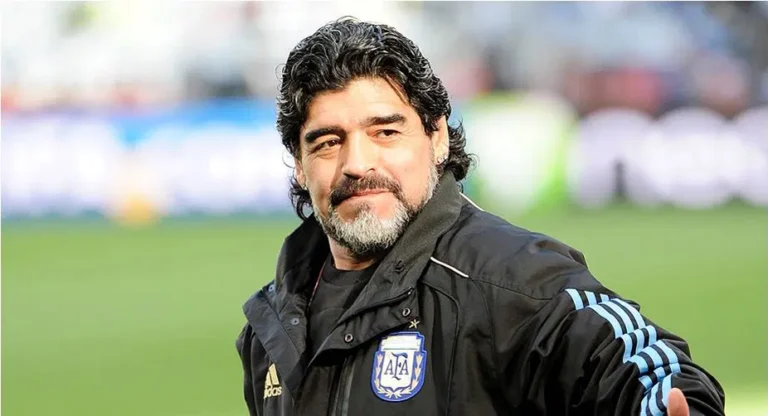
A new judicial chapter has opened in the protracted legal saga surrounding the death of Argentine football icon Diego Maradona, as a trial commenced Tuesday for seven members of his medical team. These individuals stand accused of negligent homicide, a charge that casts a long shadow over the final days of the man universally hailed as one of the greatest footballers of all time. This renewed legal scrutiny arrives less than a year after a previous attempt to prosecute these same individuals was halted due to a mistrial, highlighting the complex and often frustrating nature of the legal proceedings.
The court in San Isidro, a suburb of Buenos Aires, is now tasked with examining the alleged negligence that led to the passing of the 1986 World Cup champion. The upcoming trial is expected to be extensive, with nearly 100 witnesses slated to provide testimony. The gravity of the charges and the stature of the deceased have ensured that this case has captivated public attention, both within Argentina and across the global sporting community. The defendants, a group comprising medical professionals who were part of Maradona’s care team, have consistently denied any wrongdoing, asserting that they acted within the bounds of their professional responsibilities.
The seven individuals facing this new trial are: psychiatrist Agustina Cosachov, neurosurgeon Leopoldo Luque, psychologist Carlos Angel Diaz, physician Nancy Edith Forlini, nurse Ricardo Almiron, head nurse Mariano Ariel Perroni, and physician Pedro Pablo Di Spagna. Their collective involvement in Maradona’s final care is at the heart of the prosecution’s case. An eighth defendant, nurse Dahiana Madrid, will face a separate jury trial at a later date, as no specific date has yet been set for her proceedings. This bifurcation of trials suggests a strategic approach by the prosecution or the court to manage the complex evidence and testimony.
A Chronology of Legal Setbacks and Renewed Hope
The path to this current trial has been fraught with obstacles. The initial trial, which began in March of the previous year, was abruptly declared a mistrial after just two months. The proceedings were derailed by an unforeseen and significant breach of judicial protocol. One of the three judges presiding over the case, Julieta Makintach, resigned after a video emerged documenting her engaging in interviews with a camera crew within the courthouse corridors and her own office. This conduct, part of a documentary project, was deemed a violation of judicial rules, casting doubt on the impartiality of the proceedings and necessitating a complete restart.
The declaration of a mistrial has compelled both the prosecution and the defense teams to re-evaluate and potentially recalibrate their strategies. The initial trial had already brought to light a substantial volume of evidence, including photographs, video recordings, audio files, and forensic reports. This wealth of material, having been aired publicly, now forms the foundation for the renewed prosecution. Many key witnesses, including Maradona’s children and his former wife, Claudia Villafane, have already provided their accounts, offering crucial insights into the circumstances surrounding his final months.
The Prosecution’s Narrative: A "Theatre of Horror"
During the initial trial, prosecutors laid out a compelling argument, asserting that the medical professionals involved had failed to adhere to established treatment protocols. They painted a grim picture of the environment in which Maradona was recovering from surgery, describing the house where he resided as a "theatre of horror." This characterization underscored their assertion that essential medical care was demonstrably absent or grossly inadequate during his critical post-operative period. The prosecution’s stance suggests a belief that the defendants’ collective actions or inactions directly contributed to a deterioration of Maradona’s health that could have been prevented.
The Defense’s Counterargument: Inevitability of Death
Conversely, the defense has consistently maintained that Maradona’s death was an unavoidable outcome, given his pre-existing and severe health issues. The football legend had battled addiction to cocaine and alcohol for decades, a struggle that significantly impacted his overall well-being and likely exacerbated his underlying medical conditions. The defense’s argument centers on the idea that regardless of the quality of care provided, Maradona’s chronic health problems had reached a point where his death was inevitable. This perspective shifts the focus from the alleged negligence of the medical team to the overwhelming and long-standing nature of his illnesses.
The Genesis of the Negligence Charges
The negligence charges themselves were formally brought forward in 2021, following a comprehensive investigation initiated by prosecutors. A specially appointed medical board was tasked with scrutinizing the circumstances of Maradona’s death. The board’s subsequent findings were damning, concluding that the actions of Maradona’s medical team were "inappropriate, deficient, and reckless." This expert opinion provided the crucial foundation upon which the prosecution built its case, suggesting a systemic failure in the care provided to the football icon.
Supporting Data and Expert Opinions

The investigation into Maradona’s death involved a multidisciplinary panel of experts who meticulously reviewed his medical history, the treatment he received, and the conditions under which he was cared for. Their report, a cornerstone of the prosecution’s evidence, detailed specific instances where protocols were allegedly breached. These included issues related to medication management, monitoring of vital signs, and the overall coordination of care. The board’s conclusion that the team acted in a "reckless" manner implies a disregard for the fundamental principles of patient safety and medical responsibility.
While specific details of the "inappropriate, deficient, and reckless" actions are likely to be elaborated upon during the trial, the broad categorization suggests issues that could range from improper prescribing of medication to inadequate response to deteriorating health. The defense, however, is expected to challenge these findings by presenting alternative medical interpretations and highlighting the inherent complexities of treating a patient with Maradona’s extensive medical history and addiction issues.
Broader Impact and Implications
The ongoing trial carries significant implications beyond the immediate legal ramifications for the defendants. It serves as a stark reminder of the immense pressure and scrutiny that high-profile individuals, particularly those with complex health needs, face within the medical system. The case also raises questions about the responsibilities of medical professionals when caring for public figures, and the potential for public opinion and media attention to influence legal proceedings.
For the Maradona family and his legion of fans, this trial represents another attempt to find closure and accountability for the death of a beloved national hero. The legal process, though protracted, is seen by many as a necessary step in understanding the full truth of his final days. The outcome of this trial could also set precedents for future cases involving alleged medical negligence, particularly concerning individuals with chronic health conditions and addiction issues.
The complexity of the case lies in balancing the alleged failures of the medical team with the known health challenges faced by Maradona. Expert testimony will be critical in determining whether the care provided fell below the accepted standard of medical practice and whether any such failures directly contributed to his death. The defense will likely focus on establishing that the natural progression of Maradona’s severe health problems, exacerbated by his lifelong struggles with addiction, was the primary determinant of his fate.
The judicial system in Argentina faces the difficult task of navigating these competing narratives and reaching a verdict based on the evidence presented. The retrial, despite the setback of the mistrial, underscores a commitment to ensuring that all relevant evidence is thoroughly examined and that a fair and impartial judgment is rendered in the case of Diego Maradona’s untimely death. The world watches, hoping for a resolution that honors the memory of a sporting legend and upholds the principles of justice.