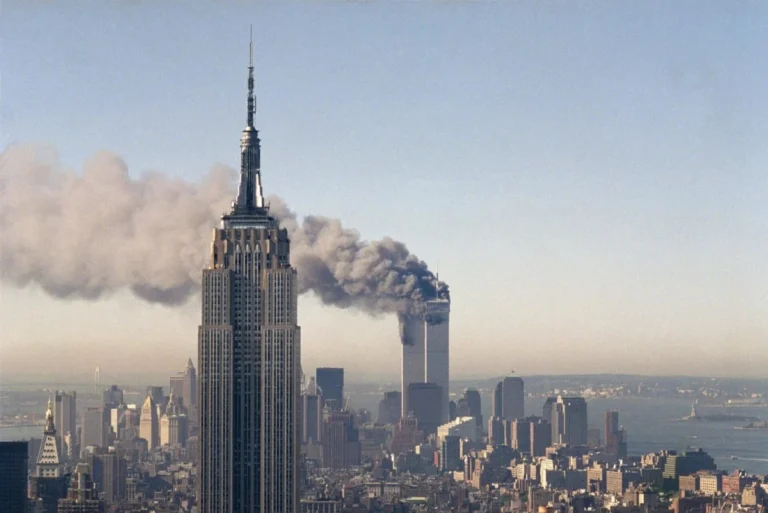
Twenty-five years have passed since a clear Tuesday morning in September was violently shattered by the deadliest foreign attack on American soil in modern history. The events of September 11, 2001, claimed the lives of nearly 3,000 innocent individuals, leaving an indelible scar on the national consciousness, fundamentally altering global geopolitics, and transforming the daily realities of security, travel, and civic life in the United States. Today, communities across the nation pause in solemn remembrance, hosting memorial ceremonies, reading the names of the lost, and reflecting on a quarter-century defined by resilience, profound loss, and sweeping institutional transformation.
The multi-site coordinated assault, executed by the extremist group al-Qaeda, targeted the economic, military, and political heart of the United States. Two commercial airliners struck the Twin Towers of the World Trade Center in New York City, leading to their catastrophic collapse. A third hijacked aircraft crashed into the Pentagon just outside the nation’s capital, while a fourth plane, United Flight 93, was thwarted from reaching its intended target—believed to be the U.S. Capitol or the White House—thanks to the extraordinary heroism of passengers and crew members who fought back before the aircraft crashed into a reclaimed strip mine in Shanksville, Pennsylvania.
As the nation observes this milestone 25th anniversary, the passage of time has transformed an acute national trauma into a historical epoch. Yet, for the families of the victims, the survivors, and the first responders still grappling with chronic health consequences, September 11 remains an enduring, deeply personal daily reality.
The Anatomy of a Tragedy: A Timeline of September 11, 2001
The morning of September 11 unfolded with terrifying speed, overwhelming emergency systems and forever changing how the world understood asymmetric warfare.
At 8:46 a.m. Eastern Time, American Airlines Flight 11, a hijacked Boeing 767 flying from Boston to Los Angeles, crashed into the North Tower of the World Trade Center in lower Manhattan. The impact tore a gaping hole in the upper floors of the skyscraper, igniting thousands of gallons of jet fuel and trapping hundreds of office workers above the impact zone.
Just seventeen minutes later, at 9:03 a.m., United Airlines Flight 175—also a hijacked Boeing 767 originating from Boston—slammed into the South Tower of the World Trade Center. Broadcast live on global television networks, the second impact instantly confirmed to a stunned world that the United States was under a coordinated, unprecedented attack.
At 9:37 a.m., American Airlines Flight 77 struck the western facade of the Pentagon, causing a structural collapse of a portion of the building and killing 125 military personnel and civilians inside, in addition to all 59 people aboard the aircraft.
Meanwhile, in the skies over Ohio and Pennsylvania, passengers and crew on United Flight 93 learned via phone calls of the attacks in New York and Washington. Recognizing that their plane was part of a similar suicide mission, a group of passengers resolved to storm the cockpit. At 10:03 a.m., the aircraft crashed into an open field in rural Shanksville, Pennsylvania, preventing the hijackers from reaching their primary target and saving countless lives at the cost of all 40 passengers and crew members on board.
Back in New York City, the structural integrity of the World Trade Center towers could not withstand the intense, fueled infernos. At 9:59 a.m., the South Tower collapsed in a thunderous cloud of dust and debris, just 56 minutes after being struck. At 10:28 a.m., the North Tower followed, pancaking into a massive pile of smoldering rubble that would soon be known globally as Ground Zero.
Human Toll and the Ultimate Sacrifice
The statistics of September 11 tell a story of immense human devastation. Across the three attack sites, 2,977 victims lost their lives, not including the 19 al-Qaeda hijackers. The dead hailed from more than 90 countries, representing a cross-section of humanity united only by their presence in the wrong place at the exact wrong time.
Among the most poignant symbols of sacrifice were the emergency personnel who rushed into the burning towers as thousands of civilians fled downward. The Fire Department of New York (FDNY) suffered the heaviest loss of life in its history, with 343 firefighters perishing at the World Trade Center. The New York City Police Department (NYPD) lost 23 officers, and the Port Authority Police Department lost 37 officers. Dozens of emergency medical technicians, paramedics, and private-sector security workers also gave their lives to help others escape.
The grief extended far beyond the immediate moment. In the decades that followed, thousands of first responders, recovery workers, and downtown residents developed severe, chronic illnesses—including respiratory diseases and aggressive forms of cancer—linked directly to the toxic plume of pulverized concrete, asbestos, heavy metals, and jet fuel that hung over lower Manhattan for months. The James Zadroga 9/11 Health and Compensation Act eventually provided vital medical monitoring and financial relief, but the rolling toll of post-9/11 illnesses has claimed hundreds of additional lives, blurring the boundary between the day of the attacks and its long-tail consequences.
Institutional Transformation and the War on Terror
The shock of September 11 catalyzed an immediate and sweeping overhaul of United States domestic governance, foreign policy, and national security architecture. Within weeks, the federal government enacted the USA PATRIOT Act, significantly expanding the surveillance and investigative powers of law enforcement and intelligence agencies in the name of counterterrorism.
In November 2001, President George W. Bush signed legislation creating the Transportation Security Administration (TSA), fundamentally transforming civil aviation. Long gone were the days of walking loved ones to airport boarding gates without a ticket; in their place came a standardized, rigorous system of baggage screening, metal detectors, and identity verification that became a permanent fixture of global travel.
On a broader administrative level, the Homeland Security Act of 2002 established the Department of Homeland Security (DHS), consolidating 22 disparate federal agencies—including the Immigration and Naturalization Service, the Coast Guard, and the Secret Service—into a single cabinet-level department dedicated to protecting the nation against future threats.
Externally, the attacks redrew the geopolitical map. Invoking Article 5 of the North Atlantic Treaty, NATO rallied behind the United States for the first time in its history. In October 2001, U.S. and allied forces invaded Afghanistan to dismantle the Taliban regime that had harbored Osama bin Laden and al-Qaeda leadership. This was followed in 2003 by the U.S.-led invasion of Iraq, conflicts that consumed trillions of dollars, cost thousands of American military lives, tens of thousands of allied and civilian lives, and shaped American foreign policy and military doctrine for the next two decades.
Commemorating the 25th Anniversary: Ceremonies and National Reflection
Today, twenty-five years after the towers fell, the nation observes the milestone anniversary with solemn, deeply rooted rituals of remembrance.
At the National September 11 Memorial & Museum in New York City, families gather at the twin reflecting pools set within the footprints of the original towers. In accordance with tradition, the reading of the names of the victims is accompanied by moments of silence marking the precise times the planes struck and the towers collapsed. President Donald Trump is scheduled to attend the national memorial ceremony at the Pentagon, while Vice President JD Vance will participate in the observance in New York City. Parallel tributes and reading ceremonies will take place at the Flight 93 National Memorial in Shanksville and in communities across all fifty states.
For younger generations of Americans who were not yet born or were too young to remember the events of 2001, the 25th anniversary represents a pivot from living memory to historical legacy. Educational institutions, museums, and civic organizations emphasize the importance of oral histories, archival preservation, and public service days—encouraging citizens to turn grief into community action.
As the United States marks a quarter-century since that fateful Tuesday, the legacy of September 11 remains complex and multifaceted. It stands as a profound reminder of human vulnerability in the face of violent extremism, balanced eternally against the extraordinary courage, selflessness, and unity displayed by ordinary people when tested by history.