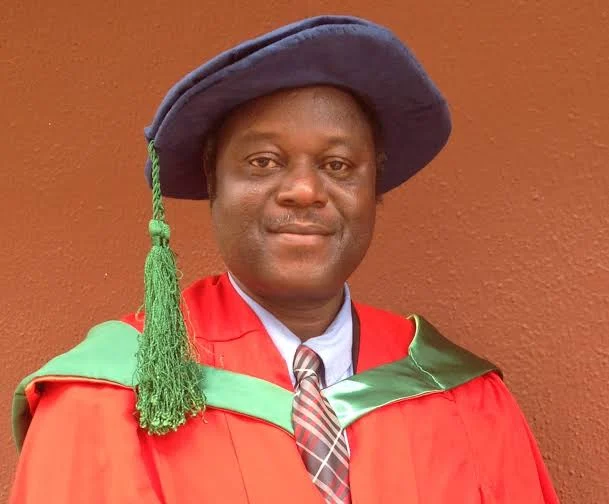
Osun State Governor, Ademola Adeleke, has formally justified the strategic decision to extend the tenure of the Vice-Chancellor of Osun State University (UNIOSUN), Professor Clement Adebooye, citing a remarkable trajectory of infrastructural expansion, academic stability, and enhanced staff welfare. The announcement, delivered on behalf of the Governor by his deputy, Kola Adewusi, during the university’s 16th convocation ceremony in Osogbo, marks a pivotal moment in the governance of the state-owned institution. The extension, which is set to take effect on January 4, 2027, is designed to preserve the continuity of the current administrative momentum, which the state government views as vital for the university’s long-term growth.
The decision to extend Professor Adebooye’s tenure is not merely an administrative action but a calculated move to solidify the gains made during his stewardship. Governor Adeleke emphasized that the administration’s focus has been on merit-driven leadership and the systematic transformation of the university’s physical and academic landscape. By aligning the extension with recent legislative amendments to the Osun State University Law (2006), the government has sought to provide a robust legal framework for its policy, ensuring that the transition remains insulated from potential litigation or institutional friction.
A Legacy of Infrastructural Transformation
The rationale behind the tenure extension is anchored in the quantifiable progress achieved under Professor Adebooye’s leadership over the past four years. According to the state government, the campus has undergone a metamorphosis, with over 40 major building projects initiated and commissioned. This development drive has been a hallmark of the current administration’s partnership with the university management.
The scale of this expansion is evident in the recent commissioning of several landmark facilities in August 2026. These include an ultra-modern FIFA-standard sports complex, a 3-in-1 science laboratory complex, and two major lecture theatres. These projects are designed to meet the growing demands of a burgeoning student population and to align the university with global standards of research and athletic competition. Furthermore, the administration has prioritized the maintenance of existing structures, implementing over 30 complementary projects, ranging from large-scale renovations to the deployment of sustainable solar energy solutions across the campus.
Academic Stability and Industrial Harmony
Perhaps the most significant achievement highlighted by Governor Adeleke is the unbroken academic calendar maintained by the university over the last five years. In an era where many public universities in Nigeria have been frequently plagued by strikes, funding disputes, and student unrest, UNIOSUN has managed to maintain industrial peace. This stability has enabled the institution to consistently graduate its students on schedule, a feat that has bolstered the university’s reputation among prospective students and parents.
This peace is not incidental; it is the result of a deliberate policy to prioritize staff welfare and institutional responsiveness. UNIOSUN stands out as one of the few state-owned universities to achieve full implementation of the 2025 Federal Government-Staff Union agreement. By ensuring that salary structures, pension obligations, and working conditions are addressed with urgency, the university management has successfully forestalled the cycles of labor disputes that have historically disrupted the academic activities of similar institutions.
Legislative Support and Strategic Governance
The legal foundation for the tenure extension was solidified earlier this month when the Osun State House of Assembly passed an amendment to the Osun State University Law of 2006. This legislative act provides the Governor with the prerogative to extend the tenure of the Vice-Chancellor, a move that the state government insists is rooted in the "overall best interest of the university."
Governor Adeleke was unequivocal in his stance regarding the autonomy of the state government in determining the leadership of the institution. Addressing potential opposition from labor unions or interest groups, he stated, "We are not bound by any law or tradition to accept the dictates of any staff union regarding what we think is the best for our university." This assertion signals a shift toward a more centralized administrative oversight, where the state government takes an active role in strategic decision-making to ensure that the university remains competitive and progressive.
Revitalizing the Medical School
A critical point of pride for the administration is the resuscitation of the university’s College of Health Sciences. When Professor Adebooye assumed office, the medical school was described by the government as "half-alive," struggling with accreditation challenges and infrastructure deficits. Through a focused intervention, the management successfully met all the rigorous accreditation requirements mandated by the Medical and Dental Council of Nigeria (MDCN).
The success of this intervention was demonstrated by the recent graduation and induction of 90 pioneer MBBS students. This milestone serves as a testament to the university’s capacity to overcome institutional stagnation and emerge as a center of excellence in medical training. The government has further indicated that the current management has secured five additional signature projects from the Federal Government, which are slated for completion by December 2027.
Implications for Higher Education Governance
The tenure extension of Professor Adebooye carries broader implications for the governance of state-owned universities in Nigeria. Firstly, it highlights the increasing emphasis on "results-based tenure," where administrative longevity is tied directly to the successful completion of infrastructure projects and the maintenance of an uninterrupted academic calendar. By moving away from rigid, time-bound terms, the state government is experimenting with a model that prioritizes the continuity of development projects.
Secondly, the move underscores the evolving relationship between state governments and university governing councils. By dissolving and reconstituting the governing council, the Adeleke administration has demonstrated a willingness to overhaul institutional oversight bodies to ensure they align with the government’s development agenda. While this ensures a unified vision, critics often point to the potential risk of eroding university autonomy. However, the government argues that such interventions are necessary to prevent bureaucratic inertia and to accelerate the pace of institutional reform.
Future Outlook and Challenges
As the university moves toward the 2027 academic year, the focus will likely shift to the sustainability of these recent gains. While the infrastructure is impressive, the long-term challenge remains the maintenance of these facilities and the continued funding of staff welfare packages. With the 2025 FGN-Staff union agreement fully implemented, the fiscal pressure on the state government and the university’s internal revenue-generating mechanisms will be significant.
Furthermore, the appointment of new leadership for the university—specifically the Chancellor, identified as "Mama BOVAS"—has been met with global acclaim, according to the Governor. This suggests that the government is leaning toward appointing high-profile, influential figures to lead the university’s governing organs, potentially to leverage their influence for fundraising and institutional partnerships.
The government’s message to the university community is one of continued collaboration. Governor Adeleke has urged both staff and students to embrace the ongoing changes and to work in tandem with the governing board to maintain the current trajectory. By framing the tenure extension as a cornerstone of "academic and administrative excellence," the administration has effectively signaled that its interventionist approach is the new standard for the state’s tertiary institutions.
As UNIOSUN continues to expand its footprint in the Nigerian academic space, the success or failure of this model will undoubtedly serve as a case study for other state governments grappling with the challenges of funding and managing public universities in an increasingly competitive educational landscape. For now, the administration’s strategy remains clear: prioritize stability, reward performance, and maintain a firm grip on the levers of institutional governance to ensure that the university continues to serve as a beacon of academic progress in the region.