Africa’s richest man, industrialist Aliko Dangote, has announced an ambitious strategy to redirect major capital toward resolving the continent’s chronic electricity deficit. In a recent interview with Al Jazeera, the chairman and majority shareholder of the Dangote Group revealed plans to invest upwards of $10 billion into Africa’s power sector over the next few years. This massive infrastructure pivot comes alongside the historic launch of the initial public offering (IPO) for the Dangote Refinery on the Nigerian Exchange (NGX), marking a watershed moment for African capital markets and industrial self-reliance.
The Power Crisis as Africa’s Primary Economic Bottleneck
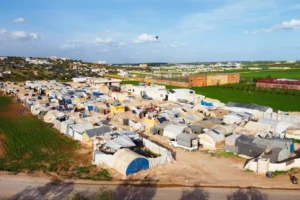
For decades, inadequate electricity generation and unreliable grid infrastructure have crippled productivity, stifled manufacturing, and driven up operational costs across Sub-Saharan Africa. According to international energy monitors, more than 600 million people across the continent still lack access to reliable electricity. For entrepreneurs and industrialists like Dangote, this energy poverty is not merely a social issue, but the single greatest impediment to sustainable economic growth.
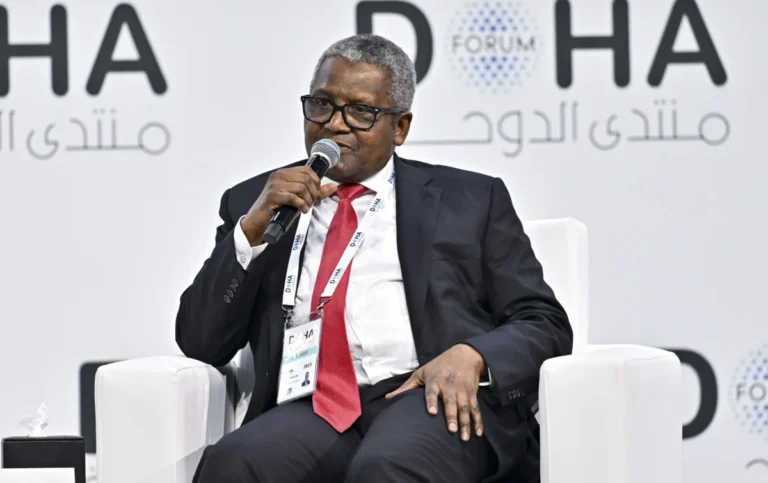
During his discussion with Al Jazeera, Dangote underscored the fundamental link between electrification and national development, framing reliable energy as a prerequisite for modern governance and economic expansion. "In the next three to four years, there will be a major transformation in Africa, and that’s why we are looking at power," Dangote stated. "It is something that we Africans should not really allow—over 600 million of our people to remain in darkness."
To finance this sweeping energy initiative, the Dangote Group intends to deliberately divest from non-core or capital-intensive industrial segments. Most notably, Dangote pointed to planned retreats from sectors like steel production, funneling those redirected funds directly into power generation projects designed to fortify regional grids and power industrial clusters.
Strategic Realignment and Corporate Divestment
The decision to pivot away from traditional heavy industries like steel in favor of power generation highlights a strategic shift within the conglomerate. While steel remains a critical component of industrial development, Dangote emphasized that the immediate bottleneck to continental progress is power.
"There are one or two businesses we might cancel, like steel, and we will put the money into power. We want to invest over $10 billion in power alone," Dangote explained.
By prioritizing power, the Dangote Group aims to establish a reliable foundation that will subsequently lower production costs for its other industrial ventures, including cement, fertilizers, and petroleum products. Analysts suggest that decentralized and captive power solutions spearheaded by private conglomerates could bypass the bureaucratic and financial failures historically plaguing state-run power utilities across West Africa and beyond.
Dangote drew a direct parallel between infrastructural delivery and political stability, suggesting that tangible improvements in everyday life—such as constant electricity—outweigh traditional political campaign promises. "You know, as some politicians, if they work hard, they have a plan; when you deliver power, you don’t need to go for a campaign when you’re going for the election. So power is key. We will never, ever create growth without power. So that’s why they say, electricity is growth."
The Dangote Refinery IPO: A Historic Milestone in Lagos
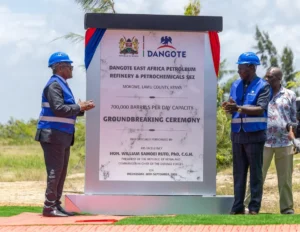
The announcement of the $10 billion power investment closely follows another monumental milestone for the Nigerian economy: the official launch of the Dangote Refinery’s initial public offering in Lagos. The listing makes the colossal facility—the largest single-train oil refinery in Africa—the first of its kind to be listed on the Nigerian Exchange, opening institutional and retail participation to the public.
To mark the commencement of the public offering, Aliko Dangote formally sounded the NGX gong in Lagos, initiating a multi-week trading window for prospective buyers. The offering comprises 4.1 billion newly issued ordinary shares priced at N525 per share. Designed to be accessible to a wide demographic of investors, the minimum purchase requirement was set at a modest 10 shares, translating to an entry cost of N5,250.
The subscription window is scheduled to run through October 13, giving domestic investors a limited timeframe to secure equity in the multi-billion-dollar refining asset. Upon full subscription, the issuance of the 4.1 billion ordinary shares is expected to generate approximately N2.15 trillion (roughly $1.6 billion), representing approximately 3.3% of the refinery’s total equity value.
Valuation and Global Financial Implications
The sheer scale of the Dangote Refinery has continuously drawn international financial scrutiny. Recent equity valuations place the enterprise at roughly N63 trillion, equating to approximately $47.59 billion, with premier financial publications like the Financial Times rounding the enterprise valuation closer to $49 billion.
By floating a fraction of the equity through the local bourse, Dangote is executing a dual strategy: raising capital for ongoing balance sheet optimization and wealth creation, while deepening the liquidity of the Nigerian capital market. While the initial phase of the IPO is restricted to the Nigerian market due to regulatory and structural frameworks, Dangote has repeatedly stressed that the long-term vision for the refinery—and its broader economic benefits—extends to the wider African continent.
The refinery, which began releasing refined petroleum products to the domestic and regional markets amid much anticipation, is expected to drastically alter the macroeconomic landscape of West Africa. For decades, Nigeria—despite being one of Africa’s leading crude oil producers—relied heavily on imported petroleum products due to a lack of functional domestic refining capacity. The operationalization of the Dangote Refinery, coupled with its public listing, seeks to reverse this paradox by retaining value within the continent, stabilizing foreign exchange reserves, and curbing imported inflation.
Broader Economic Impact and Future Outlook
The dual announcements—allocating $10 billion to power infrastructure while executing a historic equity offering for the continent’s premier refinery—signal a transformative phase for African corporate leadership. Economists and market analysts view Dangote’s moves as a blueprint for indigenous industrialization, where private capital steps in to bridge structural deficits left by decades of public sector underfunding.
The implications of a $10 billion injection into Africa’s power sector cannot be overstated. By alleviating energy poverty, the continent stands to unlock massive manufacturing potential, enhance digital infrastructure, improve agricultural storage through cold-chain logistics, and create millions of sustainable jobs for a rapidly growing youth demographic.
As the October 13 closing date for the Dangote Refinery IPO approaches, market observers will be closely monitoring subscription rates as a barometer of domestic investor confidence. Simultaneously, the early-stage planning for the upcoming power sector investments will test the conglomerate’s ability to execute mega-projects outside its traditional stronghold of manufacturing and petroleum refining. Together, these initiatives position Aliko Dangote not just as a titan of industrial manufacturing, but as a central architect of Africa’s twenty-first-century economic transformation.