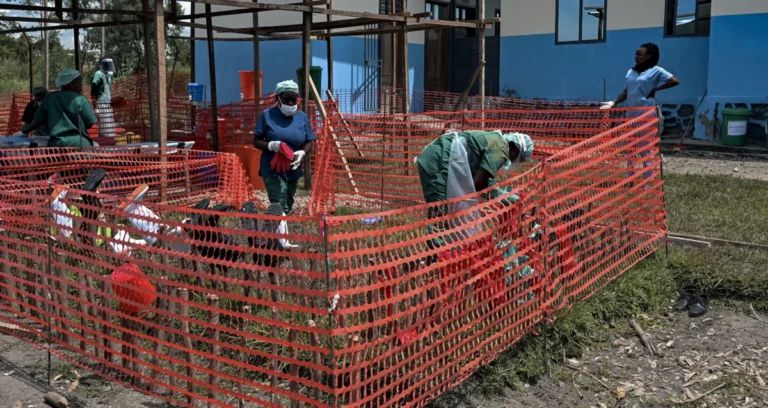
The lethality of the seventeenth Ebola outbreak in the Democratic Republic of Congo (DRC) extends far beyond the pathogen’s genomic structure. While the country’s persistent internal instability, violence, and underfunded health infrastructure have severely complicated containment efforts, the unprecedented scale of the current crisis raises critical questions about global health governance. Epidemiologists, humanitarian leaders, and policymakers are increasingly asking whether the international community allowed the virus to outsmart established surveillance systems by overlooking lessons learned from previous epidemics.
The trajectory of the DRC’s current outbreak has taken on tragic proportions, prompting comparisons to classic literary downfalls. Observers note that the crisis highlights deep vulnerabilities not only within localized health systems but also across the architecture of global epidemic intelligence and response coordination. As infections continue to climb, public health experts are systematically re-evaluating the intersection of local conflict, international aid cuts, diagnostic bottlenecks, and institutional sluggishness.
Unpacking the Drivers: Conflict, Aid, and Systemic Strain

Disentangling the primary drivers behind an out-of-control epidemic is a complex task. Analysts frequently point to the DRC’s volatile security landscape—marked by armed conflict over resources, population displacement, and damaged infrastructure—as a primary impediment to public health interventions. However, empirical studies present a more nuanced picture.
Historical data from the 2018–2019 North Kivu epidemic indicates that conflict-related disruptions significantly hampered public health delivery, yet epidemiological modeling suggests that conflict directly accounts for only a modest fraction of overall transmission dynamics. For instance, quantitative estimates for related crises, such as DRC cholera outbreaks, attribute roughly twelve percent of spread directly to active conflict.
While researchers acknowledge that aid-defunded health systems bear substantial responsibility for response delays, combining these constraints still fails to fully account for the magnitude of the current failure. Comparable regions facing severe geopolitical and economic hurdles have historically achieved more rapid containment, pointing to broader structural shortcomings in how international alerts are processed, prioritized, and acted upon.
Early Warning Signs and the Timeline of Detection
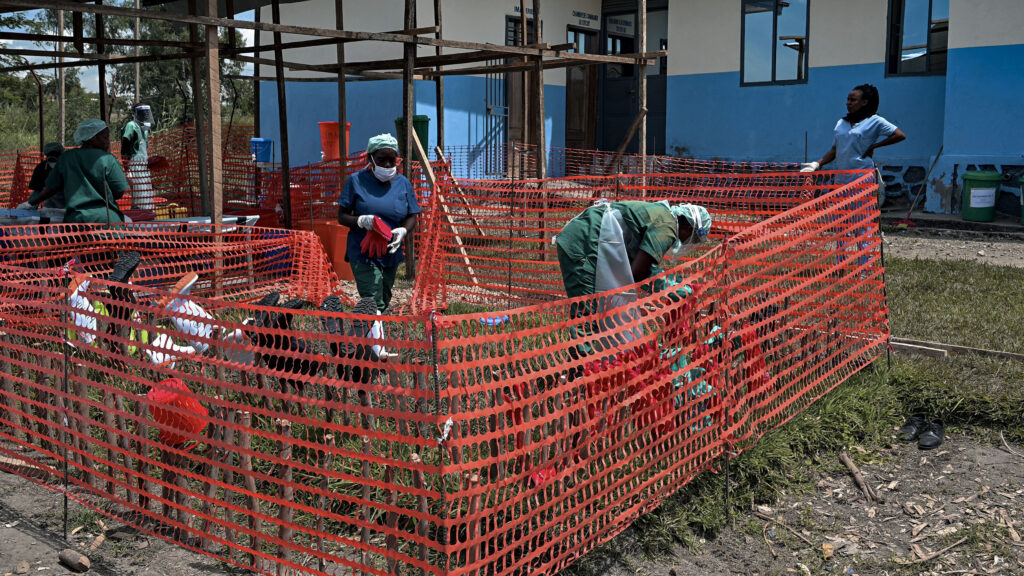
Understanding why the outbreak outpaced containment requires examining the earliest sentinel signals. The warning signs emerged in April in Mongbwalu, a bustling gold-mining town located in Ituri province, where four healthcare workers died over a four-day span. In epidemiological terms, a short serial interval cluster among healthcare personnel serves as a classic indicator of a viral hemorrhagic fever. Unlike endemic conditions such as malaria, typhoid, or yellow fever—which predominantly affect patients rather than their clinical attendants—a cluster of staff deaths offers a distinct signal of a high-consequence pathogen.
Despite these warning indicators, initial alerts processed through regional and international networks failed to immediately trigger high-level emergency mobilization. Reports reached the World Health Organization (WHO) in Geneva on May 5, yet bureaucratic friction across multiple nodes—including WHO headquarters, regional offices in Brazzaville and Kinshasa, and the Pandemic and Epidemic Intelligence Hub in Berlin—slowed the integration of multi-source data feeds.
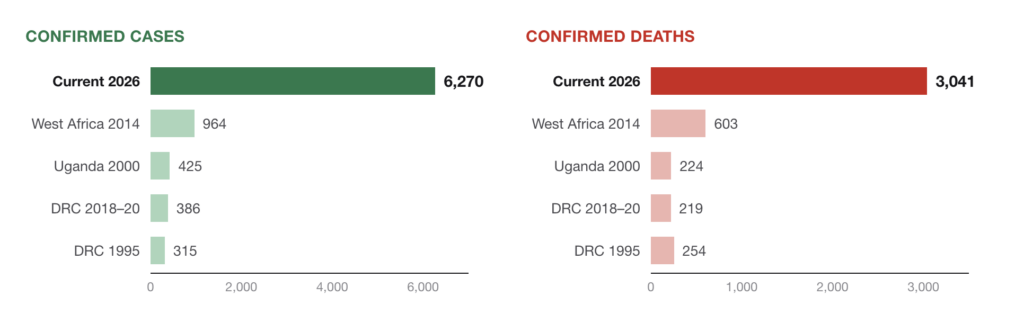
The DRC officially declared the outbreak on May 15, with the Africa Centres for Disease Control and Prevention (Africa CDC) following three days later. By the time of the formal announcement, authorities had recorded 246 suspected cases and 80 deaths—an initial footprint five times larger than that of the West African epidemic at its equivalent announcement milestone in March 2014. Subsequent phylodynamic reconstructions suggest sustained community transmission began around February 22, making this the largest late detection in the history of Ebola surveillance.
Diagnostic Bottlevenecks and the Bundibugyo Challenge
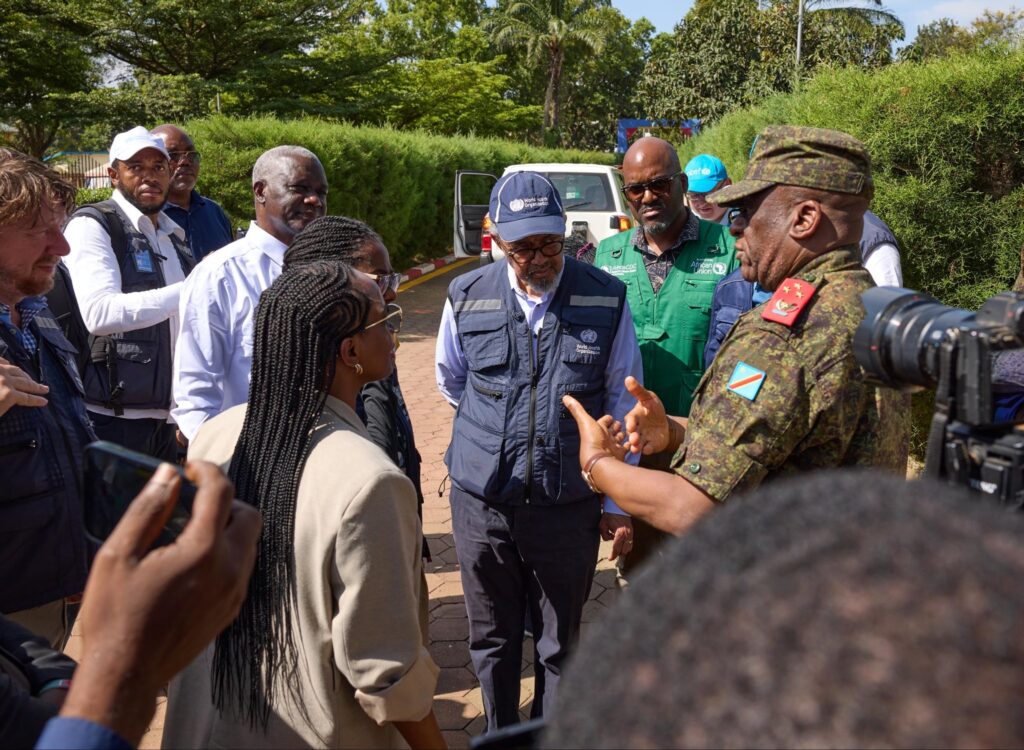
A significant factor contributing to the delayed response was a mismatch in diagnostic capabilities. Laboratories in Bunia were initially equipped with reagents tailored specifically for the Zaire Ebola species. The outbreak, however, was driven by the Bundibugyo virus species, generating false initial reassurance while infections multiplied undetected.
First identified in 2007, the Bundibugyo strain has historically exhibited lower case fatality ratios than the Zaire species, resulting in nearly two decades of relative neglect. Consequently, the strain lacked dedicated bedside rapid tests, approved vaccines, or specialized therapeutics at the onset of the epidemic. This gap underscores a persistent structural flaw in global health preparedness: commercial markets rarely invest in countermeasures for pathogens perceived as lower threats, leaving health authorities dangerously underequipped when those variants reemerge.
Data, Dashboards, and Operational Scorecards
Operational data collected through early September 2026 illustrates the staggering scale of the epidemic. Cumulative figures show thousands of confirmed cases and thousands of deaths spanning multiple provinces. The crude case fatality ratio has fluctuated significantly across regions, serving as a direct proxy for local system performance. For instance, fatality ratios in North Kivu have remained markedly higher than those in Ituri, reflecting disparities in early case detection—where one region predominantly identifies patients post-mortem while the other successfully engages living patients for treatment.
Independent operational scorecards utilizing critical public health indicators—including case detection alerts, contact tracing efficiency, laboratory testing turnaround, isolation capacity, and safe burials—reveal ongoing systemic strains. While contact follow-up rates have improved significantly, meeting the stringent targets required for progressive outbreak elimination remains a challenge. Affected health zones continue to face shortages of dedicated safe burial teams and specialized pediatric formulations for countermeasures, leaving vulnerable demographics highly exposed.
Logistical Scale-Up and Organizational Challenges
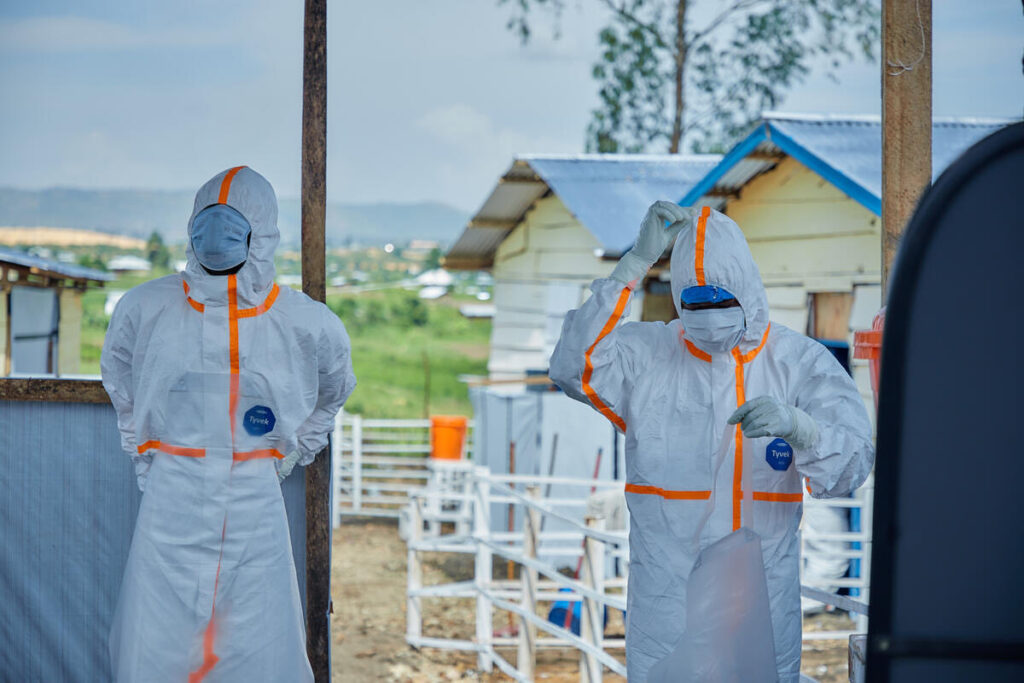
Despite early missteps, the international response has achieved massive logistical mobilization. The WHO and partner organizations have shipped hundreds of tonnes of emergency supplies, deployed hundreds of field experts, expanded national laboratory networks, and established thousands of treatment beds across dozens of specialized centers. Global health officials describe this as one of the fastest operational scale-ups in recent history, reflecting substantial improvements over the response deficiencies witnessed during the 2014–2016 West African crisis.
Nevertheless, rapid logistical deployment cannot entirely compensate for early surveillance blind spots and institutional friction. Longstanding organizational challenges regarding the division of labor between global headquarters, regional offices, and country teams have frequently resulted in crossed wires and delayed decision-making. Analysts emphasize that emergency responses to existential threats require seamless coordination models that transcend bureaucratic hierarchies and political fragmentation.
Broader Regional Implications and Future Preparedness
As the outbreak approaches its seventh month, the geographic expansion of the virus poses an escalating threat to neighboring nations in Central Africa. While countries with robust health systems have successfully managed imported cases, fragile neighboring states remain highly vulnerable as transmission draws closer to major urban centers and international borders.
The trajectory of the epidemic underscores the urgent need for institutional memory, real-time evaluations, and proactive investments in medical countermeasures for neglected pathogen strains. With global health leaders convening for high-level discussions on pandemic preparedness and equity, the lessons drawn from the DRC’s seventeenth Ebola outbreak will serve as a critical test of the international community’s capacity to translate hindsight into resilient, anticipatory action.