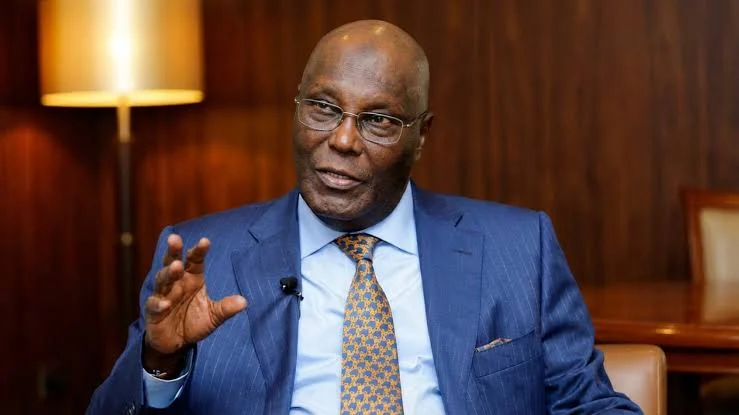
Former Vice President and a prominent presidential candidate of the African Democratic Congress (ADC), Atiku Abubakar, has issued a forceful call to the National Assembly, urging its members to transcend partisan divisions and initiate an immediate, thorough, and line-by-line investigation into every allocation made under the Service-Wide Vote (SWV) in the recently scrutinized 2026 Appropriation Act. His demand places particular emphasis on the staggering ₦2.19 trillion provision earmarked for personnel within this opaque vote, a figure that has raised significant alarm among fiscal transparency advocates and the public alike.
Contextualizing the Service-Wide Vote: A History of Scrutiny
The Service-Wide Vote is a budgetary allocation intended to provide flexibility for the federal government to meet unforeseen or unbudgeted expenditures that arise during the fiscal year. Historically, it serves as a contingency fund for emergencies, across-the-board salary adjustments, or critical expenditures that cannot be neatly placed under specific Ministries, Departments, and Agencies (MDAs) during the initial budgeting process. While a necessary component of fiscal management, the SWV has long been a subject of controversy in Nigeria due to its discretionary nature and a perceived lack of transparency and accountability in its utilization. Critics argue that its broad scope often makes it a conduit for opaque spending, susceptible to abuse and diverting funds from critical development projects.
In previous administrations, the SWV has been highlighted by civil society organizations and international bodies as an area prone to corruption and a hindrance to effective public financial management. The absence of detailed line items and beneficiaries at the point of appropriation makes it challenging for legislative oversight bodies, let alone the general public, to track how these funds are ultimately disbursed. This persistent lack of transparency has fueled public mistrust and undermined efforts to instill fiscal discipline in a nation grappling with severe economic challenges.
The Alarming Figures: A Deeper Dive into the 2026 Budget
Atiku Abubakar, speaking through his Senior Special Assistant on Public Communication, Phrank Shaibu, characterized the 2026 federal budget as an unprecedented assault on transparency and fiscal responsibility in Nigeria’s democratic history. This assertion stems from what he described as shocking revelations surrounding the scale and concentration of allocations concealed under the Service-Wide Vote.
According to Atiku’s analysis, the 2026 budget reveals that a staggering 84 per cent of its entire sum is concentrated within just 10 Ministries, Departments, and Agencies (MDAs). More critically, an astounding ₦12.8 trillion has been warehoused under the Service-Wide Vote within the Ministry of Budget and Economic Planning. This concentration, he argued, exposes what appears to be a deliberate architectural design for opaque and unaccountable spending.
The former Vice President highlighted a stark comparison: while the Service-Wide Vote stood at ₦638 billion in the 2025 budget, it has inexplicably ballooned to ₦12.8 trillion in the 2026 Appropriation Act. This represents an astonishing increase of approximately 1,918 per cent in just one year, a growth rate that defies conventional economic or administrative justification without comprehensive explanation. To put this into perspective, ₦12.8 trillion is roughly equivalent to the entire annual budgets of several small African nations combined, or a significant portion of Nigeria’s projected national revenue for a given year. Such an astronomical leap in a single, largely discretionary budget head raises profound questions about the government’s fiscal priorities and its commitment to transparency.
Atiku’s Indictment and Demands for Full Disclosure
Atiku Abubakar minced no words in his critique, stating, "A government that cannot explain where trillions of naira are going has forfeited the moral authority to demand sacrifice from its citizens. It is time to open the books, expose the truth and restore integrity to Nigeria’s budgeting process. The Nigerian people deserve nothing less." This powerful declaration underscores the growing public skepticism regarding government spending at a time when ordinary Nigerians are grappling with high inflation, rising cost of living, and economic hardship brought on by recent reforms.
He demanded that parliament insist on full disclosure of the beneficiaries, the legal basis, and the precise spending framework for every single kobo appropriated under the Service-Wide Vote. Atiku directly challenged President Tinubu, asserting, "President Tinubu owes Nigerians a detailed explanation. No responsible government can expect citizens to accept a nineteen-fold increase in a notoriously opaque budgetary provision without disclosing exactly who will spend the money, what it will be spent on, and under what legal authority."
A particularly perplexing aspect highlighted by Atiku is the comparison between the personnel allocations of key ministries. He queried how the Federal Ministry of Finance, the nation’s principal treasury institution responsible for managing the entire national treasury, has a personnel allocation of only ₦54.8 billion, while the Ministry of Budget and Economic Planning is carrying an eye-watering ₦2.19 trillion personnel provision under the Service-Wide Vote. This vast disparity prompts fundamental questions: "Who exactly are the workers earning ₦2.19 trillion? Where are they? What offices do they occupy? What agencies do they belong to? This is not budgeting; it is budgetary absurdity. Nigerians deserve to see the payroll." Such an allocation suggests a personnel base orders of magnitude larger than typically found within a ministry, or a mechanism for significant discretionary payments disguised as personnel costs.
Atiku further warned that should the Tinubu administration fail to provide satisfactory explanations for this unprecedented ₦12.8 trillion Service-Wide Vote, Nigerians would be justified in suspecting that these enormous sums are being stashed away to bankroll the ruling All Progressives Congress (APC)’s political machinery and President Tinubu’s re-election bid in 2027. He emphasized that "A government with nothing to hide does not conceal trillions behind opaque budgetary headings."
The Role of the National Assembly: Guardians of Fiscal Prudence
Atiku’s call places the onus squarely on the National Assembly, particularly the Senate and House of Representatives Committees on Appropriation, Public Accounts, and Finance. The Nigerian Constitution empowers the National Assembly with significant oversight responsibilities over public funds. They are mandated to scrutinize budget proposals, approve appropriations, and monitor the implementation of the budget to ensure accountability. This includes the power to summon officials, demand documents, and conduct investigations.
The current situation presents a critical test for the legislative arm of government. Rising above partisan considerations, as Atiku suggested, would mean members from across the political spectrum uniting to exercise their constitutional duty to ensure fiscal probity. An investigation would typically involve detailed hearings, requiring officials from the Ministry of Budget and Economic Planning, the Ministry of Finance, and other relevant agencies to provide granular details on the proposed expenditures under the Service-Wide Vote. Without robust legislative oversight, the democratic principle of checks and balances is severely undermined, and public funds risk being mismanaged or diverted. The integrity of the budget process itself depends on the National Assembly’s willingness to demand full accountability for these colossal figures.
Government’s Stance and Potential Defenses
While the original article provides a link to a statement from the Presidency asserting that "Tinubu has done well to deserve second term," this general defense of performance does not directly address the specific allegations of budgetary opacity. Historically, governments facing scrutiny over Service-Wide Vote allocations often offer a range of justifications:
- Flexibility and Contingency: Arguing that the SWV is crucial for responding to unforeseen national emergencies, security threats, or economic shifts that cannot be predicted during budget formulation.
- National Security: Citing sensitive security expenditures that cannot be publicly itemized for strategic reasons.
- Ongoing Reforms: Explaining that certain funds are necessary to implement critical government reforms or new policies that cut across multiple sectors.
- Special Interventions: Justifying allocations for specific social intervention programs or infrastructure projects that require central coordination.
- Technical Adjustments: Explaining that large figures might be a result of technical accounting adjustments or consolidation of previously fragmented allocations.
However, the sheer scale of the ₦12.8 trillion SWV and the 1,918% increase from the previous year would require exceptionally robust and detailed explanations to assuage public and legislative concerns. The ₦2.19 trillion personnel provision, in particular, would need a breakdown that identifies the roles, agencies, and necessity of such a massive workforce not accounted for under standard MDA budgets. Without such clarity, these figures will continue to fuel speculation and distrust.
Wider Economic and Social Implications
The implications of such an opaque and massive Service-Wide Vote extend far beyond mere budgetary technicalities. Nigeria is currently grappling with a severe cost-of-living crisis, high inflation (exceeding 30%), record national debt, and widespread poverty. The removal of fuel subsidies and the floating of the naira, while deemed necessary economic reforms, have imposed significant hardship on ordinary citizens. In this context, any perception of profligacy, lack of transparency, or potential diversion of public funds is met with intense public anger and cynicism.
Atiku highlighted this disparity, noting that the combined allocations to critical sectors like education, defence, and agriculture fall below the amount hidden under the Service-Wide Vote. Education, which is vital for human capital development, often receives inadequate funding. Defence, crucial for combating insecurity, requires substantial and transparent allocations. Agriculture, the backbone of food security, is in dire need of investment. If trillions of naira are parked under vague and discretionary headings, it means these funds are effectively diverted from essential public services and investments that could uplift millions of Nigerians.
Such unprecedented concentrations of unmarked funds inevitably raise serious questions about their intended use and demand the highest level of public scrutiny. The potential for corruption, embezzlement, and patronage is significantly amplified when such vast sums are not tied to specific, auditable projects or beneficiaries. This undermines not only fiscal discipline but also the government’s credibility and the integrity of democratic governance. International partners and investors also closely watch Nigeria’s fiscal transparency, and such controversies can negatively impact foreign investment and development aid.
Historical Precedent and Ongoing Challenges
Nigeria’s history is replete with instances where opaque budgetary allocations and extra-budgetary spending have been linked to corruption and mismanagement. The Service-Wide Vote, in various forms, has often featured in reports by anti-corruption agencies and civil society groups as a high-risk area. Past administrations have faced similar calls for transparency regarding these funds, though perhaps never for such an extraordinarily large sum relative to the overall budget.
The challenge lies in balancing the executive’s need for some degree of flexibility in managing national finances with the legislature’s constitutional mandate for oversight and the public’s right to accountability. The current revelations underscore the urgent need for comprehensive reforms in Nigeria’s budget process, including more detailed justifications for SWV allocations, stricter criteria for its use, and real-time public tracking mechanisms.
Conclusion and Outlook
Atiku Abubakar’s strident call for a full-scale investigation into the ₦12.8 trillion Service-Wide Vote in the 2026 budget represents a significant challenge to the current administration’s fiscal transparency credentials. The extraordinary increase in the SWV, particularly the ₦2.19 trillion personnel provision, demands immediate and exhaustive explanations.
"The 2026 Appropriation Act is fast becoming a document that reeks of fiscal manipulation," Atiku warned. "At a time when Nigerians are being asked to endure hardship, government cannot simultaneously hide trillions behind budgetary euphemisms and expect public trust. Every unexplained trillion is a trillion diverted from classrooms, hospitals, security, food production and economic growth."
The National Assembly now faces a pivotal moment to demonstrate its commitment to its oversight duties and to the Nigerian people. Its response to this call for investigation will not only shape public perception of the current government’s integrity but also set a precedent for fiscal accountability in Nigeria’s democratic future. The resolution of this controversy will be a critical determinant of public trust, good governance, and the nation’s ability to navigate its severe economic challenges with transparency and accountability.