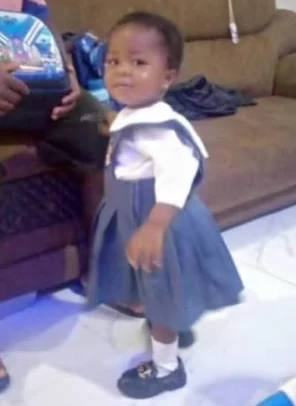
The Bayelsa State Police Command has officially launched a comprehensive investigation into the mysterious disappearance of a toddler who was abducted from the children’s department of a Catholic church in Bayelsa State on June 21, 2026. The incident, which has sent shockwaves through the local community and raised urgent questions regarding child safety protocols in places of worship, remains an active case as law enforcement agencies work to track the whereabouts of the missing child.
The case gained public attention following reports that the child had been under the care of designated church staff before vanishing during a Sunday service. While the police have confirmed the receipt of a formal complaint, the lack of immediate breakthroughs has led the grieving family to escalate their plea for justice to higher authorities in Abuja, the nation’s capital.
Chronology of the Disappearance
The timeline of the abduction begins on the morning of June 21, 2026. According to the statements provided by the child’s father during interviews with activists and community leaders, the parents arrived at the Catholic church for a scheduled service. Following standard procedures for families with young children, they entrusted their toddler to the care of the teacher stationed at the church’s children’s department.
This arrangement, intended to provide a safe and supervised environment for the child while parents attended the main service, turned into a nightmare by the conclusion of the liturgy. Upon returning to collect their daughter, the parents were met with confusion and eventually the realization that the toddler was no longer on the premises. The teacher, who had initially accepted the child into the department’s care, was reportedly unable to provide a coherent explanation for the child’s absence, confirming only that the toddler had indeed been in his custody at the start of the service.
In the hours and days that followed, the family reported the incident to the local police station. Initial investigative efforts saw several individuals connected to the church’s children’s department taken in for questioning. However, these individuals were subsequently released, a development that caused significant frustration for the family and led to their decision to petition senior police authorities and oversight bodies in Abuja to ensure the investigation received the necessary resources and attention.
Official Police Response and Stance
DSP Musa Mohammed, the Police Public Relations Officer (PPRO) for the Bayelsa State Command, addressed the media regarding the ongoing investigation. Speaking to reporters, DSP Mohammed confirmed that the command is treating the disappearance as a priority case.
"I have confirmed that the matter is true," DSP Mohammed stated. "It was formally reported, and the police are actively working on it."
When pressed for specific details regarding the status of the investigation, including whether the police have identified any suspects or determined the toddler’s current location, the PPRO maintained a stance of confidentiality. He emphasized that the complexity of the investigation necessitated a degree of discretion to prevent the compromise of sensitive leads.

"You know if a matter is under investigation, the police are not allowed to release all information to the public that might jeopardize our work," Mohammed explained. "But what I can assure you is that we are working tirelessly to rescue the toddler and to arrest and possibly arraign the suspects behind this."
Contextualizing Child Safety in Public Spaces
The abduction of a child from a church setting brings to the forefront a critical conversation regarding security infrastructure in religious institutions. In many parts of Nigeria, churches and mosques serve as hubs for community activity, yet these spaces are rarely equipped with the high-level security protocols—such as CCTV surveillance, mandatory sign-in/sign-out registries, or background-checked volunteers—that are common in secular educational or care-giving facilities.
Data regarding child abduction in Nigeria remains difficult to aggregate precisely, as many cases go unreported or are handled within traditional or local community structures. However, child rights organizations have frequently highlighted that the vulnerability of children in public spaces is a growing concern. The kidnapping of children, whether for ransom or human trafficking, is a persistent criminal threat in several regions, and the infiltration of supposedly "safe" spaces like schools and religious centers has become a disturbing trend that law enforcement must address with increased vigilance.
Implications and Public Concern
The disappearance of the toddler has elicited deep concern from child advocacy groups and the local community in Bayelsa. Activist Livinus Nwosu, who has been assisting the family in their advocacy efforts, has highlighted the psychological toll the incident has taken on the parents. The family’s decision to appeal to authorities in Abuja suggests a lack of confidence in the initial local response, highlighting the common challenge of resource allocation in rural and state-level investigations.
From a sociological perspective, this incident raises significant questions about institutional accountability. When a parent entrusts a child to a church’s department, there is an implicit social contract regarding the safety of that child. When that contract is broken, the institution faces not only a crisis of faith but also potential legal liability. Legal analysts suggest that if negligence is proven—such as the failure to verify the identity of those picking up children or a failure to maintain adequate staffing ratios—the church as an entity could face civil litigation.
Furthermore, the case underscores the need for standardized safety policies across all religious institutions. Experts suggest that the following measures could help mitigate such risks in the future:
- Visitor Management Systems: Implementing electronic check-in systems that record the contact details of parents and the specific volunteers assigned to each child.
- Staff Vetting: Mandating rigorous background checks for any volunteers working with minors.
- Surveillance: Installing CCTV cameras in high-traffic areas, including entrances and children’s activity zones.
- Child-Release Protocols: Ensuring that children are only released to individuals who present a matching identification card or a pre-authorized security token issued at the start of the service.
The Path Forward: Seeking Resolution
As the investigation enters its fourth month, the family’s appeal to the Nigerian public and to security agencies remains urgent. They are calling for renewed efforts to track down those responsible for the abduction and to secure the safe return of their daughter.
For the Bayelsa State Police Command, the resolution of this case is vital for maintaining public trust. The ability of the police to solve high-profile cases involving the abduction of minors serves as a barometer for the efficacy of the state’s security apparatus. As the investigation continues, observers are watching closely to see if the pressure applied by the family and the involvement of higher-level authorities will yield the breakthrough necessary to bring the child home.
In the meantime, the incident serves as a somber reminder to families and community leaders alike. It highlights the necessity of constant vigilance, even in environments perceived to be safe. As the police continue their "tireless" efforts, the family remains in a state of suspended hope, waiting for the news that their child has been found and that the perpetrators have been brought to justice. The case of the missing toddler in Bayelsa is a tragedy that continues to unfold, serving as a call to action for improved child protection measures across the country.