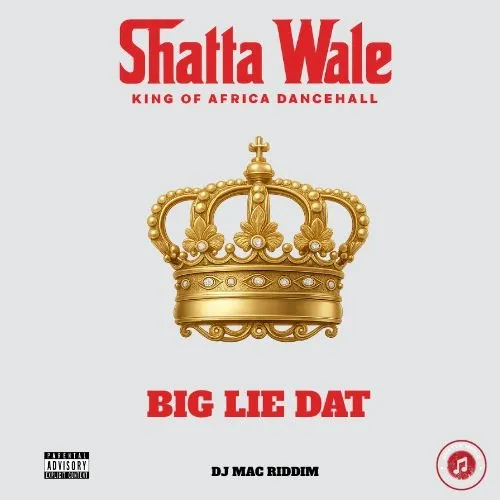
Shatta Wale, the Ghanaian dancehall luminary, has ignited the music scene with his latest release, "Big Lie Dat." This potent track is not merely a song; it is a bold declaration, a meticulously crafted indictment of perceived imposters and unearned accolades within the contemporary music landscape. Wale positions himself as the undisputed architect of African dancehall, a pioneer whose influence is undeniable, yet often appropriated without due credit. The song serves as a scathing critique of artists he contends have built their careers on the foundation of his innovations, styling themselves as kings while allegedly walking in his borrowed footsteps.
The Core Message: Authenticity Versus Appropriation
At its heart, "Big Lie Dat" is a fervent defense of authenticity and a direct challenge to what Shatta Wale perceives as a pervasive culture of false kingship. The lyrics are a masterful blend of braggadocio, a hallmark of the dancehall genre, and incisive, personal jabs aimed at rivals and critics. Wale asserts that his influence is not confined to ephemeral online trends or superficial hype. Instead, he anchors his claim to legitimacy in tangible achievements and a demonstrable impact on the music industry, both domestically and internationally. He argues that the "so-called kings" are merely imitators, their claims to originality a "big lie" that crumbles under the weight of evidence.
The song’s narrative is built on a stark contrast between Wale’s own journey and the perceived shortcuts taken by others. He emphasizes his personal struggle, the sweat, the pain, and the relentless hard work that have characterized his ascent. This dedication, he implies, is what separates true greatness from manufactured popularity. For Wale, genuine success is not measured by fleeting social media trends or staged photo opportunities, but by a lasting legacy and, crucially, financial prosperity – indicators he believes are absent in the careers of those he criticizes. "Big Lie Dat" functions as both a preemptive strike and a triumphant assertion of dominance, resonating with listeners who have experienced the sting of having their hard work and creativity co-opted without acknowledgment.
Background and Context: The Ever-Evolving Dancehall Arena
Shatta Wale, born Charles Nii Armah Mensah Jr., has been a central figure in the Ghanaian music industry for over a decade. His rise to prominence was marked by a distinctive fusion of reggae, dancehall, and traditional Ghanaian rhythms, creating a sound that resonated deeply with a global audience. He has consistently advocated for the recognition and elevation of African music on the international stage, often positioning himself as a vanguard for the genre.
The dancehall genre itself, originating in Jamaica, has seen a significant global expansion, with artists from various continents adapting and innovating within its framework. In Ghana, Shatta Wale has been a leading force, consistently pushing boundaries and influencing a new generation of musicians. His career has been punctuated by periods of intense rivalry, public feuds, and highly publicized musical clashes, all of which have contributed to his larger-than-life persona and his enduring relevance. "Big Lie Dat" can be understood as the latest chapter in this ongoing narrative of artistic competition and self-affirmation.
Chronology of Influence: Tracing Shatta Wale’s Footprint
Shatta Wale’s impact on the Ghanaian music scene can be traced back to his early career. His breakthrough hit, "Dancehall King," released in 2013, solidified his position as a dominant force and is often cited as a pivotal moment in the popularization of dancehall music in Ghana. This period marked the beginning of a trajectory where his unique style, stage presence, and lyrical content began to be emulated by emerging artists.
Over the years, Wale has released a prolific catalog of music, collaborated with both local and international artists, and garnered numerous awards and nominations. His consistent output and his ability to reinvent himself while staying true to his core sound have cemented his status as a veteran artist. The narrative he presents in "Big Lie Dat" suggests that this sustained influence has inevitably led to imitation, with some artists allegedly capitalizing on his established blueprint without acknowledging its origin. The song’s release can be seen as a strategic intervention to reclaim his narrative and remind the industry of his foundational role.
Supporting Data: Chart Performance and Industry Recognition
While "Big Lie Dat" is a recent release, Shatta Wale’s career is replete with evidence of his significant impact. His music has consistently topped local charts and gained traction on international streaming platforms. For instance, his album "Reign" (2018) achieved considerable success, with tracks receiving millions of streams across various digital music services. His collaborations with international acts like Beyoncé on "Already" (2019) further underscore his global reach and influence.
Industry recognition, while not always quantifiable in terms of direct sales in the digital age, can be gauged through awards and media coverage. Shatta Wale has been a recipient of numerous accolades, including multiple Ghana Music Awards and nominations for BET Awards. His consistent presence in the media, both for his music and his public pronouncements, indicates a sustained level of engagement and relevance that few artists can match. The song’s assertion of being an "authentic pace-setter" is supported by this long-standing track record of innovation and influence.
Analysis of Implications: Redefining Musical Lineage
The implications of "Big Lie Dat" extend beyond a simple musical diss track. It touches upon broader conversations about artistic integrity, intellectual property, and the ethics of influence within the music industry. In an era where viral trends and online popularity can sometimes overshadow substance, Wale’s emphasis on "real-world results" and a tangible legacy is a pertinent critique.
The song also highlights the challenges faced by pioneering artists in ensuring their contributions are recognized. As genres evolve and new artists emerge, it can be difficult to draw clear lines of influence. However, Wale’s direct approach in "Big Lie Dat" forces a reckoning with this issue, encouraging a more conscious acknowledgment of artistic lineage. His assertion that true greatness is reflected in one’s legacy and financial standing, rather than staged popularity, provides a benchmark for evaluating artistic success that moves beyond superficial metrics.
Potential Reactions and Industry Discourse
While direct responses from the artists Shatta Wale might be implicitly targeting are yet to be widely documented, the release of "Big Lie Dat" is likely to spark considerable debate within the music fraternity. Such lyrical confrontations are not uncommon in the dancehall and hip-hop genres, often serving to generate buzz and solidify artistic positioning.
Industry observers might analyze the song as a strategic move to reassert dominance in a competitive market, particularly as new artists gain traction. Music critics and fans will likely dissect the lyrics for specific references and interpret the veiled accusations, further fueling public discourse. The song’s strong message and the artist’s reputation suggest that it will be a significant talking point, potentially influencing how artists approach issues of influence and originality in their own work.
The "Big Lie Dat" Phenomenon: A Call for Credibility
Shatta Wale’s "Big Lie Dat" is more than just a musical offering; it is a cultural statement. It is a potent reminder that in the often-glamorous world of music, authenticity, hard work, and genuine impact should be the ultimate arbiters of success. The song challenges the notion that fame can be manufactured through imitation and underscores the value of originality and the lasting power of an artist’s true contribution. As the music industry continues to evolve, "Big Lie Dat" stands as a bold assertion of artistic identity and a powerful call for credibility, resonating with anyone who believes their achievements deserve genuine recognition.