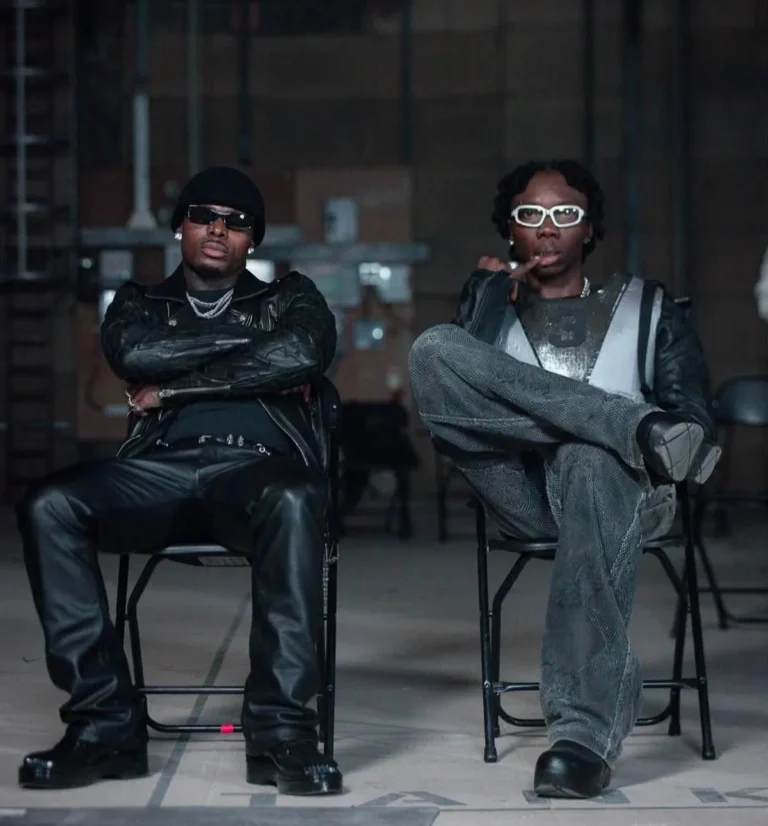
The collaborative synergy between Nigerian rapper BlaqBonez and Afro-fusion powerhouse Asake has emerged as one of the most commercially successful partnerships in contemporary African music. Through a series of candid revelations shared via the music-documentation platform Memories FM, BlaqBonez has peeled back the curtain on the creative processes behind two of his most definitive hits: "Chanel" and "Ikebe 3000." These records, which have dominated streaming charts and airwaves, were not the product of rigid corporate planning, but rather the result of spontaneous artistic exploration, cross-continental logistics, and the raw energy of underground nightlife.
The Genesis of a Hit: The "Chanel" Story
The narrative surrounding "Chanel" serves as a masterclass in how modern music discovery functions. Initially tracked in Lagos in February 2026, the song was initially relegated to the vast archive of demos that a prolific artist like BlaqBonez naturally accumulates. By his own admission, the rapper did not immediately perceive the record’s potential. In the high-velocity world of Nigerian pop, where artists frequently produce multiple tracks in a single week, "Chanel" was initially just another entry in a growing catalog.
The pivot point occurred in April 2026 during a promotional visit to London. Seeking a departure from the high-pressure environment of standard industry after-parties, BlaqBonez opted for an intimate gathering at Doña, an underground venue in Dalston. The event, facilitated by his cousin, provided a controlled environment to test unreleased material on an audience of approximately 20 industry peers and fans.
As the track played through the club’s sound system, the reaction was immediate and undeniable. The attendees’ repeated requests for the song served as a qualitative data point for the artist, signaling that the track possessed the "it factor" required for a mainstream breakthrough. Leveraging this momentum, BlaqBonez documented his own enthusiastic reaction to the track the following day and disseminated the footage across social media. The resulting digital engagement validated the offline response, leading the rapper to finally share the demo with Asake via Instagram. Following a formal recording session in Nigeria, the duo finalized the track, subsequently traveling to London to film the high-production music video that would cement the song’s visual identity.
A Study in Contrast: The Completion of "Ikebe 3000"
If "Chanel" was a product of organic discovery, the development of "Ikebe 3000" was a testament to the efficiency of modern remote collaboration. The track’s inception dates back to June 2026, within the walls of a friend’s studio in Lagos. The environmental conditions were, by any industry standard, challenging; a lack of climate control in the studio forced the creative team to work in extreme heat, shedding professional decorum—and their shirts—to endure the session.
The project gained traction in August 2026. Following the sustained success of "Chanel," the two artists engaged in a dialogue regarding the potential for a follow-up. Their creative directive was specific: they sought a more aggressive, dance-floor-oriented sound that diverged from the vibe of their previous effort. They experimented with the rhythmic patterns of South African Gqom, a genre known for its heavy, repetitive basslines and high-tempo percussion.
The logistical turnaround was remarkably swift. At the time of the collaboration, Asake was in Los Angeles following a performance. BlaqBonez transmitted the draft to the singer, and within a 24-hour window, the song was completed. The process was finalized with a phone call, during which Asake played the newly recorded verse for BlaqBonez, effectively closing the loop on the project. This rapid-fire creative cycle reflects the increasing capability of Afrobeats artists to maintain international workflows despite geographical separation.
Data-Driven Success: Chart Performance and Market Impact
The commercial performance of these two collaborations highlights the significant market share commanded by the BlaqBonez-Asake partnership. "Chanel" successfully climbed to the No. 1 spot on the Apple Music Nigeria Top Songs Chart and currently maintains a robust presence on global streaming platforms with over 25.7 million streams on Spotify.
"Ikebe 3000" achieved even more rapid traction upon its release. It secured the top position on both the Spotify Nigeria Songs Chart and the Apple Music Nigeria Songs Chart. Furthermore, its reach extended into the international market, debuting at No. 5 on the Billboard U.S. Afrobeats Songs chart. This data underscores a critical trend in the music industry: the movement of Nigerian music from a regional specialty to a central component of the global pop lexicon.
The Strategic Importance of Collaboration
In the context of the current music business, the partnership between BlaqBonez and Asake is not merely about the music itself but the strategic alignment of two distinct fan bases. BlaqBonez, known for his lyrical agility and social media savvy, brings a certain "rap-star" credibility, while Asake’s meteoric rise is built upon his ability to fuse indigenous Yoruba sounds with global production standards.
The fact that both artists chose to maintain total secrecy regarding these records until their official release dates suggests a calculated approach to marketing. By avoiding "leaks" or premature teasers, they ensured that the audience’s first encounter with the music was a finished, high-quality product. This approach effectively built anticipation, allowing the music to stand on its own merits rather than relying on social media hype cycles that often dissipate before a song is even released.
Industry Implications and Future Trajectories
The anecdotes provided by BlaqBonez offer a rare glimpse into the "un-glamorous" side of hit-making. From recording in sweltering, non-air-conditioned studios to finding inspiration in small, underground bars in London, the process remains grounded in the human element of music creation. These stories serve to humanize the artists for their audience, shifting the perception of their success from that of "overnight phenomena" to the result of consistent, iterative work.
Moreover, the success of these tracks has set a new benchmark for BlaqBonez’s career. As he continues to evolve as an artist, the collaborations with Asake stand as defining markers of his versatility. For Asake, who has previously described "Ikebe 3000" as his favorite of the two collaborations, the partnership represents a successful creative outlet that allows him to step outside his typical soundscape and engage with more experimental rhythmic structures.
As the industry looks toward the next cycle of releases, the "Chanel" and "Ikebe 3000" model provides a roadmap for other independent and established artists. It emphasizes the importance of agility, the value of testing material in real-world environments, and the power of leveraging international networks to expedite production. The continued growth of these songs on streaming platforms indicates that their cultural resonance is likely to persist, securing their place as significant contributions to the 2026 musical calendar.
In conclusion, the partnership between BlaqBonez and Asake is a case study in effective collaboration. By combining their unique artistic sensibilities with a willingness to embrace both the technical and the spontaneous, they have produced a body of work that resonates deeply with audiences across Nigeria and abroad. Whether through the viral success of "Chanel" or the high-energy, dance-centric "Ikebe 3000," the duo has successfully demonstrated that even in a data-driven industry, the most impactful hits are often those born from genuine creative chemistry.