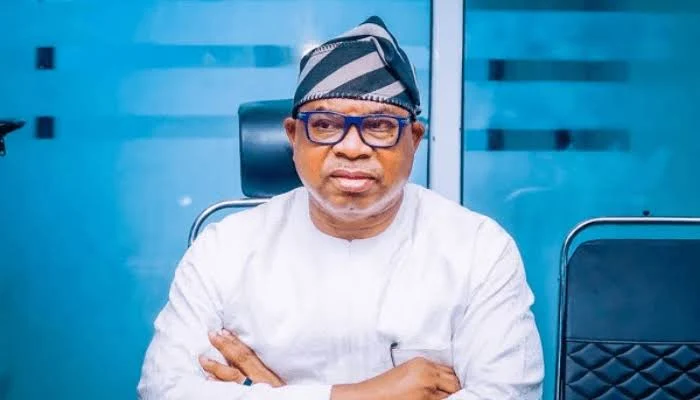
Bola Oyebamiji, the All Progressives Congress (APC) governorship candidate for the upcoming August 15, 2026, Osun State election, has publicly declared an ambitious policy agenda, vowing to prioritize critical sectors such as power generation, education, healthcare, and security if elected. Speaking in Osogbo on Sunday during a pivotal meeting with the leadership of the Osun Muslim Community, Oyebamiji underscored the intrinsic link between a robust security apparatus and sustainable economic growth, positioning safety as a cornerstone for commercial prosperity and overall development within the state. His campaign is set to be a significant contest in Nigeria’s political landscape, drawing attention to Osun’s unique socio-economic challenges and opportunities.
I. A Vision for Osun’s Future: Comprehensive Policy Initiatives
Oyebamiji, a former Managing Director of the National Inland Waterways Authority (NIWA), revealed that his team of experts has meticulously crafted comprehensive policy initiatives designed to invigorate the state’s economy and significantly enhance the quality of life for its residents. These proposals are strategically focused on a multi-sectoral approach, identifying key areas for immediate and long-term intervention. The candidate highlighted that these core sectors include not only education, healthcare, and power generation but also agriculture and the critical aspect of workers’ welfare.
“My decision to contest for the governorship seat was deliberate and intentional, and as I have stated in various fora, we have assembled a dedicated team to thoroughly examine the diverse sectors with the aim of implementing immediate and impactful interventions,” Oyebamiji affirmed. He emphasized a particular focus on "power generation, education, healthcare delivery, and agriculture, among others, with the overarching intention to engender robust economic growth." His commitment extends beyond policy formulation to ensuring equitable governance: “We will be fair, just, and ensure equitable distribution of resources across the various towns of the state.” Highlighting his personal convictions, he added, "I am a bonafide Muslim who has never mixed anything with Islam, and I am confident in Him that I will emerge victorious come August 15th, 2026."
II. Deep Dive into Policy Pillars: Addressing Osun’s Core Needs
Osun State, like many Nigerian states, grapples with a myriad of developmental challenges. Oyebamiji’s proposed policy pillars aim to provide strategic solutions to these pressing issues, promising a transformative impact across several fronts.
A. Power Generation: Fueling Economic Growth
Nigeria’s chronic power deficit is a well-documented impediment to industrialization and economic growth. For Osun, a state with significant agricultural and commercial potential, a stable power supply is not merely a convenience but an economic imperative. Oyebamiji’s pledge to prioritize power generation suggests a commitment to exploring sustainable and reliable energy solutions. This could involve fostering investments in independent power projects (IPPs), leveraging renewable energy sources such as solar and small hydro, or advocating for improved grid infrastructure from the national electricity companies. Enhanced power supply would directly reduce operational costs for small and medium-sized enterprises (SMEs), attract new industries, and significantly improve the daily lives of citizens, boosting productivity and fostering a more vibrant commercial environment. The ability to guarantee even a few additional hours of reliable electricity can be a game-changer for local artisans, farmers processing their produce, and tech startups.
B. Education: Building Human Capital for the Future
The state of education is often a direct reflection of a society’s future prospects. Osun State has historically faced challenges in educational infrastructure, teacher welfare, and curriculum relevance. Oyebamiji’s focus on education implies a holistic approach, likely encompassing improved funding for public schools, timely payment of teachers’ salaries, professional development programs for educators, and investment in modern learning facilities. Beyond basic literacy, a progressive education policy would also emphasize technical and vocational training to equip the youth with marketable skills, thereby reducing unemployment and fostering local entrepreneurship. This commitment aligns with the broader national goal of human capital development, ensuring that Osun’s young population is prepared for the demands of a 21st-century economy.
C. Healthcare Delivery: Prioritizing Citizen Well-being
Access to quality healthcare remains a significant challenge across Nigeria, particularly in rural areas. Oyebamiji’s pledge to prioritize healthcare delivery suggests a focus on strengthening primary healthcare systems, improving maternal and child health outcomes, and enhancing the availability of essential medicines and qualified personnel. This would entail upgrading existing health centers, establishing new ones where needed, and potentially exploring innovative financing mechanisms to ensure affordability for all citizens. A robust healthcare system is fundamental not only for reducing mortality rates but also for maintaining a healthy and productive workforce, which is crucial for economic development. The COVID-19 pandemic further highlighted the critical need for resilient public health infrastructure, a lesson that likely informs such policy pronouncements.
D. Strengthening Security: Foundation for Prosperity
Security concerns, ranging from banditry and kidnapping to cultism and communal clashes, have plagued various parts of Nigeria, impacting investment and daily life. Osun State, while relatively stable compared to some other regions, is not immune to these threats. Oyebamiji’s emphasis on strengthening security across the state underscores the understanding that peace and stability are prerequisites for any meaningful economic activity. His approach could involve enhancing support for law enforcement agencies, fostering community policing initiatives, leveraging technology for surveillance, and promoting inter-agency collaboration. Improved security would not only protect lives and property but also encourage investors, facilitate agricultural activities without fear, and ensure the free flow of goods and services, thereby directly contributing to economic growth and commercial vibrancy.
E. Agriculture and Workers’ Welfare: Sustaining Livelihoods
Osun State boasts significant agricultural potential, with fertile lands suitable for various crops. Oyebamiji’s policy initiatives focusing on agriculture would likely aim to boost food security, create employment, and diversify the state’s economy. This could involve supporting smallholder farmers with modern techniques, improved seedlings, access to credit, and market linkages. Developing agricultural value chains – from cultivation to processing and packaging – could unlock substantial economic opportunities. Furthermore, the pledge to prioritize workers’ welfare, including timely payment of salaries and pensions, is a critical commitment. A motivated and well-compensated civil service is essential for effective governance and service delivery, ensuring that the engine of the state runs efficiently.
III. Campaign Engagements: Reaching Key Constituencies
The meeting with the Osun Muslim Community leadership in Osogbo represents a crucial strategic engagement for Oyebamiji’s campaign. In a diverse state like Osun, religious bodies often wield significant influence over their adherents, making such consultations vital for candidates seeking broad-based support.
A. Meeting the Osun Muslim Community
During the meeting, Mustapha Olawuyi, the President of the Osun State Muslim Community, lauded Oyebamiji as a committed Muslim and a humanitarian, acknowledging his consistent support for the Muslim community over the years. Olawuyi stated, "I must say that Oyebamiji is known to us as a good Muslim whose immense contributions to the propagation of Islam, Muslim Ummah, and humanity cannot be quantified." He, however, maintained the community’s non-partisan stance, clarifying, "Like I said earlier, we are not partisan as an Islamic body, and we are working assiduously for the progress of humanity in general and propagation of our faith."
This interaction highlights the delicate balance religious leaders often strike between endorsing individuals based on their character and maintaining the perceived neutrality of their organizations. For Oyebamiji, receiving such an endorsement of character from a respected community leader can bolster his credibility among a significant demographic, even if it doesn’t translate into an official organizational endorsement. It serves to reinforce his identity as a faith-driven leader committed to societal welfare.
B. Broader Outreach Strategy
Oyebamiji’s reference to having spoken "in different fora" and his mention of a "team in place" to develop policy initiatives suggest a well-structured and methodical campaign. This approach indicates a strategy to engage various stakeholders, professional bodies, youth groups, and women’s organizations across the state, ensuring that his message resonates with diverse segments of the electorate. His promise of equitable resource distribution across "various towns of the state" also seeks to address historical grievances and ensure that no community feels marginalized in his vision for governance.
IV. The Political Landscape of Osun State: A Contested Terrain
The August 15, 2026, Osun State governorship election is anticipated to be one of Nigeria’s most closely watched off-cycle contests, a reflection of the state’s strategic importance and its history of competitive politics.
A. A History of Contested Elections
Osun State has a rich and often turbulent political history, frequently serving as a battleground state where electoral outcomes are fiercely contested. Since Nigeria’s return to democracy in 1999, the state has witnessed shifts in political power, often characterized by intense rivalry between major political parties. The intricate dynamics of local politics, personality cults, and the influence of traditional and religious institutions often play a crucial role in shaping electoral fortunes. Past elections in Osun have been notable for their high stakes, judicial interventions, and the significant resources deployed by political actors. This history sets the stage for what is expected to be another keenly observed electoral showdown.
B. The Incumbent and the Opposition
The current political landscape is shaped significantly by the incumbent Governor Ademola Adeleke, who is seeking a second term. Adeleke initially won the governorship under the banner of the Peoples Democratic Party (PDP) but has since defected to the Accord Party. This party switch introduces an interesting dynamic, potentially testing the loyalty of his original support base and reshaping political alliances. Gubernatorial defections are not uncommon in Nigerian politics, often driven by internal party squabbles, strategic realignments, or the pursuit of more favorable platforms. Adeleke’s re-election bid will likely focus on his achievements during his first term, while the opposition, including Oyebamiji, will scrutinize his administration’s performance and present alternative visions for the state.
C. The Road to August 2026
The Independent National Electoral Commission (INEC) has cleared 14 candidates to contest the governorship seat, indicating a multi-party race. While the APC and the Accord Party (with the incumbent) are expected to be the frontrunners, the presence of numerous candidates could fragment votes, potentially leading to unpredictable outcomes. Off-cycle elections, like the one in Osun, often serve as barometers for national political sentiment and test cases for new electoral strategies. The period leading up to August 2026 will be characterized by intense campaigning, rallies, debates, and extensive grassroots mobilization efforts as each candidate vies for the hearts and minds of Osun’s diverse electorate.
V. Bola Oyebamiji: Profile and Political Trajectory
Bola Oyebamiji brings a significant professional background to his political aspirations. His tenure as the Managing Director of the National Inland Waterways Authority (NIWA) offers valuable experience in public administration, project management, and national infrastructure development. NIWA is responsible for managing Nigeria’s vast inland waterways, promoting inland navigation, and developing associated infrastructure. This role would have exposed him to complex logistical challenges, inter-agency coordination, and the intricacies of national development projects, skills that are highly relevant to state governance.
His declaration that his decision to contest was "deliberate and intentional" suggests a well-thought-out entry into the gubernatorial race, rather than an impulsive move. This is further reinforced by the establishment of an "expert team" dedicated to policy development, indicating a methodical and data-driven approach to governance. His emphasis on his "bonafide Muslim" identity, coupled with his confidence in divine favour for victory, resonates deeply within a religiously conscious society, aiming to connect with voters on both spiritual and policy levels.
VI. Economic Context and Development Imperatives for Osun
Osun State’s economy is largely driven by agriculture, commerce, and the civil service. While it possesses significant potential in areas like tourism (owing to its cultural heritage sites such as the Osun-Osogbo Sacred Grove) and solid minerals, these sectors remain largely underdeveloped. The state, like many others in Nigeria, relies heavily on federal allocations, making revenue diversification a critical imperative. Challenges such as youth unemployment, inadequate infrastructure, and limited industrialization persist.
Oyebamiji’s policy thrusts directly aim to address these economic realities. Investments in power generation would reduce the cost of doing business, potentially attracting manufacturing and processing industries. A focus on agriculture, coupled with value chain development, could transform the state from a primary producer to a hub for agro-processing, creating jobs and increasing internally generated revenue. Improved education and healthcare contribute to a healthier, more skilled workforce, making the state more attractive to investors and fostering a vibrant local economy. Enhanced security, as a fundamental prerequisite, would instill confidence in both local and international investors, unlocking the state’s latent economic potential.
VII. Implications for Osun’s Future
The August 2026 governorship election holds profound implications for the socio-economic trajectory of Osun State. The choice of leadership will determine the direction of policy implementation, the allocation of resources, and the overall pace of development. A new administration, whether led by Oyebamiji or another candidate, will face the immediate challenges of fiscal sustainability, job creation, infrastructure development, and maintaining peace and security.
For the APC, a victory in Osun would consolidate its influence in the South-West geopolitical zone and potentially provide momentum for future national elections. For the Accord Party and Governor Adeleke, a second term would validate his governance approach and cement his political standing. The democratic process itself, particularly off-cycle elections, serves as a vital mechanism for accountability and allows citizens to hold their leaders responsible. The outcome of this election will not only shape the lives of Osun residents for the next four years but also offer valuable insights into the evolving political preferences and priorities of the Nigerian electorate. The emphasis on tangible policy interventions, as articulated by Bola Oyebamiji, signals a growing expectation among voters for issue-based campaigns and governance focused on practical solutions to everyday problems.