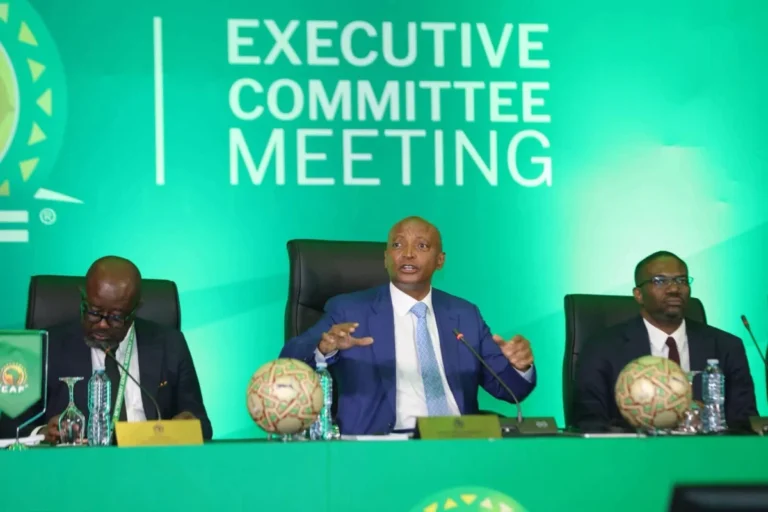
The Confederation of African Football (CAF) has officially signaled a transformative shift in the landscape of continental women’s football by greenlighting the inaugural U-17 Women’s Africa Cup of Nations (WAFCON). This landmark decision, finalized during a high-level Executive Committee meeting held in Abuja on Saturday, underscores a strategic pivot toward grassroots development and the systematic nurturing of female talent across the continent. Under the leadership of CAF President Patrice Motsepe, the governing body is doubling down on efforts to ensure that the rapid growth of the women’s game is supported by sustainable, age-grade competitive structures.
This development arrives at a pivotal juncture for African football, which has seen increased visibility on the global stage following the impressive performances of national teams from Nigeria, South Africa, Morocco, and Zambia at recent FIFA Women’s World Cups. By establishing an U-17 continental tournament, CAF aims to bridge the gap between amateur participation and elite professional standards, providing young athletes with a vital pathway for career progression.
Strategic Expansion of the Women’s Football Ecosystem
The introduction of the U-17 WAFCON is not merely an addition to the sporting calendar; it is a long-term investment in the technical and tactical maturation of African players. Historically, young female footballers in Africa have faced a dearth of continental exposure, often relying on sporadic friendly matches or qualifying rounds for international youth tournaments to test their mettle. A dedicated tournament will now offer a regular, high-stakes environment for talent identification and development.
This move aligns with the broader CAF "Women’s Football Strategy," which focuses on increasing the number of professional players, enhancing coaching standards, and creating inclusive competitions. By standardizing the U-17 competition, CAF ensures that member associations (MAs) are incentivized to invest in their youth programs, effectively broadening the talent pool available to senior national team coaches.
Bidding Process for the 2028 WAFCON
Parallel to the announcement of the youth competition, the CAF Executive Committee has officially opened the bidding process for the 2028 Women’s Africa Cup of Nations. The tournament is slated to take place in March and April of 2028, with the qualifying rounds scheduled to commence in April 2027. This timeline provides a generous window for prospective host nations to upgrade infrastructure, secure government guarantees, and finalize logistics.
The bidding phase is strictly time-bound, with interested member associations given a three-week window to submit their dossiers to the CAF Secretariat. This urgency reflects a desire to finalize venue selections early, allowing for a robust marketing and commercial campaign that maximizes the economic impact of the event. The 2028 tournament is expected to follow the successful format established in recent years, which has seen increased fan engagement, higher broadcast viewership, and significant corporate sponsorship interest.

Strengthening Officiating Standards: A Professionalization Drive
Beyond competition expansion, the Abuja meeting placed a heavy emphasis on the "integrity and professionalism" of match officiating. President Motsepe has consistently highlighted that the quality of football is intrinsically linked to the quality of the refereeing. Consequently, the Executive Committee reviewed a comprehensive suite of initiatives presented by Olivier Kabene, Chairman of the CAF Referees Committee.
The roadmap for professionalizing African officiating centers on two flagship programs: the CAF Elite Referees Project and the Next Generation Referees initiative. The Elite Referees Project, which is scheduled to commence its inaugural training course in the final week of November 2026, aims to refine the decision-making capabilities, fitness levels, and tactical understanding of existing top-tier officials. Complementing this is the Next Generation initiative, a scouting and training program designed to identify promising referees at an early stage and fast-track their development through mentorship and specialized curriculum.
Furthermore, CAF is in the process of finalizing the "CAF Referees Manual." This document is intended to serve as the definitive guide for officiating standards, ensuring that there is a uniform interpretation of the Laws of the Game across all CAF-sanctioned competitions. This move is a direct response to historical criticisms regarding inconsistent officiating, and it represents a proactive attempt to align African standards with the rigorous expectations of FIFA and other continental confederations.
Chronology and Institutional Context
The events in Abuja represent the culmination of a broader strategy initiated by the current CAF administration to reform the governance and technical capacity of the organization.
- 2021-2022: CAF launches the "Women’s Football Strategy," prioritizing the expansion of competitions.
- 2024: High-level discussions on the sustainability of women’s football infrastructure during the 47th Ordinary General Assembly.
- November 2026 (Upcoming): Commencement of the first training course under the Elite Referees Project.
- April 2027 (Upcoming): Start of the qualifying rounds for the 2028 WAFCON.
- March-April 2028 (Upcoming): Scheduled hosting of the 2028 WAFCON.
The hosting of these strategic meetings in Abuja also serves to reinforce the role of major regional hubs in driving continental policy. As President Motsepe noted during the assembly, the ability of member associations to collaborate with the central governing body is the primary driver of football’s growth in the region.
The Economic and Developmental Implications
The implications of these decisions are multifaceted. Firstly, from a commercial perspective, the U-17 WAFCON creates new broadcast rights and sponsorship opportunities. The commercialization of women’s football is currently one of the fastest-growing sectors in the global sports market, and Africa, with its vast population and rising interest, is well-positioned to capitalize on this trend.
Secondly, from a sociological standpoint, the institutionalization of youth football provides a significant platform for gender empowerment. By creating professional pathways for young girls, CAF is not only developing athletes but also creating role models and fostering a culture of professional ambition that transcends the pitch.

Thirdly, the focus on refereeing has immediate competitive benefits. Improved officiating leads to a better flow of the game, reduces disputes, and increases the overall quality of the product for fans and broadcasters alike. The "Next Generation" program is particularly crucial here; by investing in young officials, CAF is ensuring a sustainable pipeline of talent that will serve the continent for the next decade.
Analysis of Challenges and Future Outlook
Despite the optimism surrounding these announcements, the successful implementation of these projects will depend on several critical factors. For the U-17 WAFCON to be truly impactful, member associations must commit to providing adequate training facilities and local league structures. Without domestic support, the international tournament risks becoming a platform for a select few rather than a catalyst for continental growth.
Furthermore, the bidding process for the 2028 WAFCON will test the logistical readiness of prospective hosts. The requirement for modern stadiums, transport links, and medical facilities is substantial. As CAF continues to set higher standards for its tournaments, the burden on host nations to deliver world-class infrastructure increases. However, the potential for host nations to use these tournaments as a catalyst for urban development and tourism remains a powerful incentive.
The focus on refereeing also presents a challenge in terms of technology and training. Integrating VAR (Video Assistant Referee) and other modern tools into the workflow of these training programs will be essential. The success of the Elite Referees Project will be measured by the reduction of high-profile errors in continental matches and the increased representation of African referees at the FIFA World Cup and other global events.
Conclusion
The decisions made in Abuja by the CAF Executive Committee represent a significant leap forward for African football. By formalizing the U-17 WAFCON, the confederation is securing the future of the women’s game, while the structured approach to hosting the 2028 WAFCON and professionalizing refereeing demonstrates a level of administrative maturity that is essential for the continent’s standing in global sport.
As the calendar moves toward 2027 and 2028, the eyes of the football world will be on the member associations as they respond to the call for bids and prepare the next generation of talent and officials. With these initiatives, CAF is clearly signaling that it is not merely reacting to the evolution of the global game, but actively shaping the future of football within Africa. The success of these programs will ultimately be defined by the consistency, investment, and collaboration between CAF, its member associations, and the stakeholders who power the beautiful game.