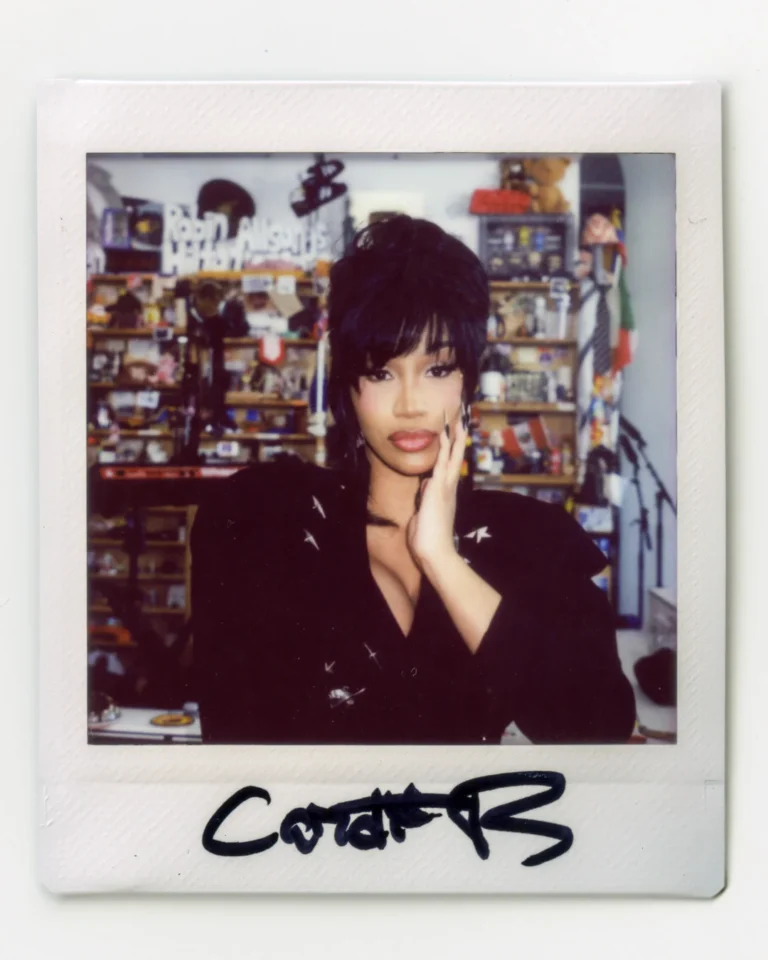
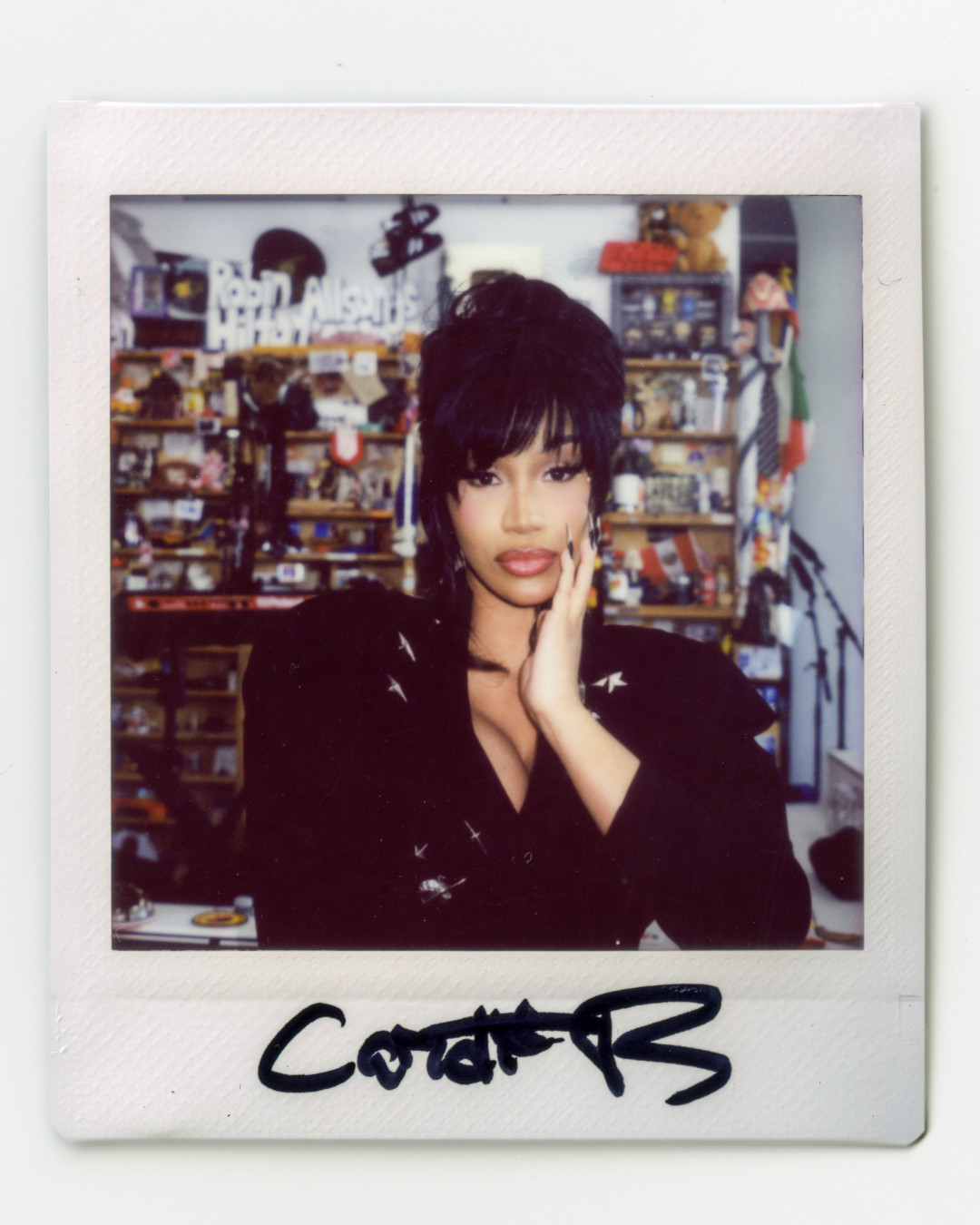
Grammy Award-winning rap superstar Cardi B officially entered the hallowed halls of NPR Music to deliver her long-awaited debut Tiny Desk Concert, a performance that instantly cemented itself as one of the most unique, high-energy, and heavily attended sets in the history of the acclaimed digital video series. Stepping away from stadium stages, pyrotechnics, and massive festival setups, the Bronx native brought her signature unfiltered charisma, raw vocal delivery, and commanding stage presence to the intimate office workspace on October 22, 2026, drawing a massive crowd of office employees and music executives eager to witness the historical moment.
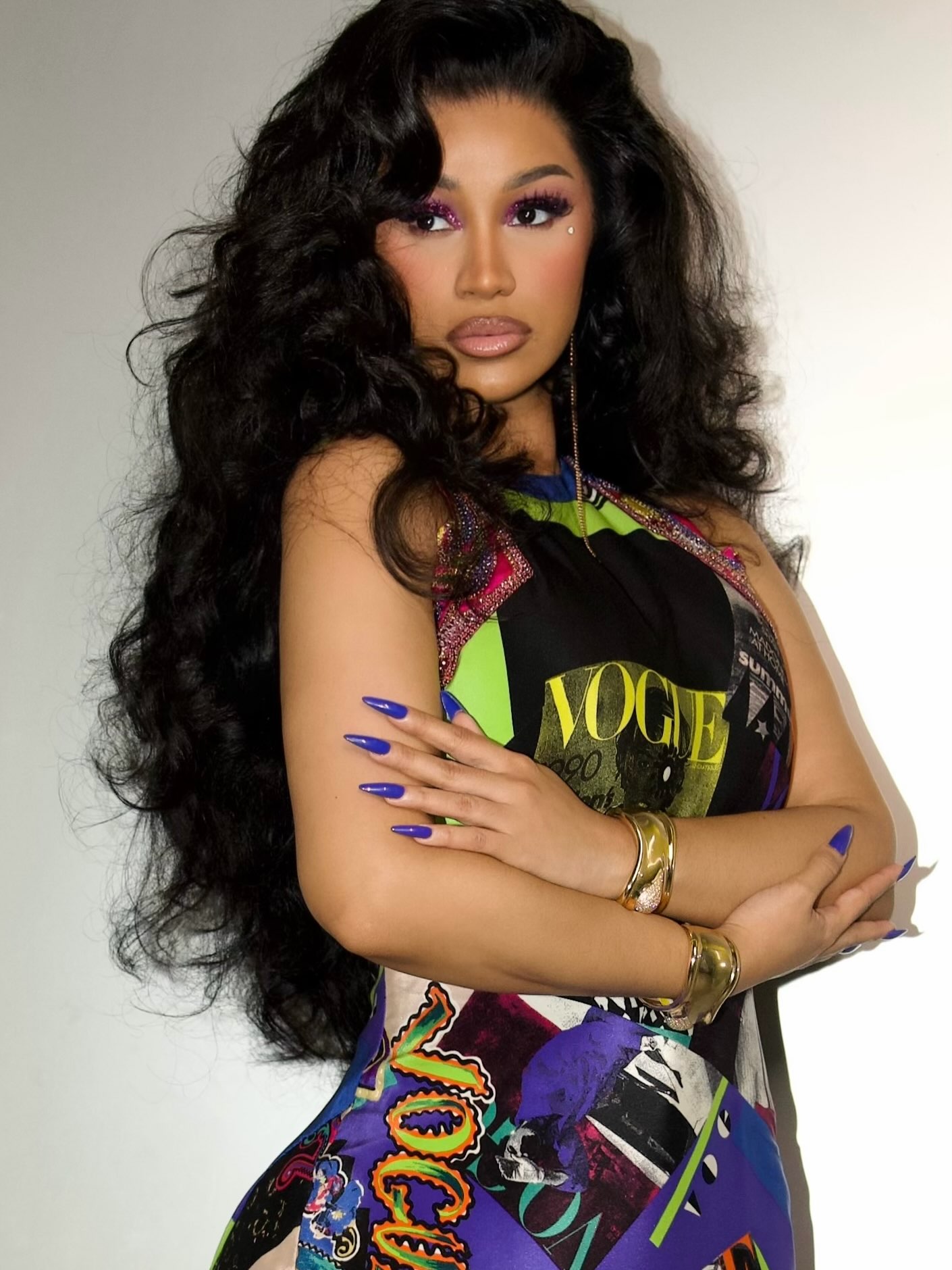
Dressed in sharp leather trousers paired with a sophisticated power blazer, Cardi B balanced high fashion with her characteristically approachable, humorous demeanor. Far from stripping away her larger-than-life persona, the stripped-down format of the NPR workspace highlighted her lyrical dexterity, dynamic vocal control, and innate ability to connect with an audience on a micro level. The setlist spanned her career-defining breakout tracks to deeply vulnerable deep cuts, offering a comprehensive retrospective of her meteoric rise in the global music industry.
Setting the Tone: The Chronology of an Unforgettable Set
The performance commenced with the atmospheric synths and undeniable confidence of “Hello,” instantly establishing a high-energy cadence before seamlessly transitioning into a newly reimagined acoustic-leaning arrangement of “ErrTime.” While Cardi B is globally recognized for her aggressive party anthems and hard-hitting trap beats, the Tiny Desk platform allowed her to demonstrate her versatility as a recording artist.
Shifting the emotional register of the room, she pivoted toward introspective territory with vulnerable renditions of “Man of Your Word” and “Be Careful.” True to her spontaneous personality, she paused between songs to joke with the packed room, deadpanning, “Change the vibes, change the vibes,” before catapulting the energy back to the ceiling.
The latter half of the performance was a masterclass in crowd-pleasing momentum. She launched into the vibrant choreography-free energy of “Up,” which flowed directly into “AH HA.” The crescendo of the afternoon arrived when she delivered live renditions of two foundational pillars of modern hip-hop: her historic 2017 breakout anthem “Bodak Yellow”—the track that made her the first solo female rapper to top the Billboard Hot 100 in nearly two decades—and the breezy, Latin-infused global smash “I Like It.” By the closing notes, Cardi was dancing along with the ecstatic crowd, distributing warm hugs to front-row attendees, and leaving an indelible mark on the NPR office culture.
Background Context: The Evolution of the Tiny Desk Phenomenon
To understand the cultural weight of Cardi B’s debut, one must examine the evolution of NPR Music’s Tiny Desk Concert series. Launched in 2008 by host All Songs Considered host Bob Boilen and producer Stephen Thompson, the franchise originated from a casual, intimate performance requested by folk singer Laura Gibson at a cluttered office desk. Over nearly two decades, the series has transformed from an indie-music rite of passage into a premier global stage for artists across every genre, including pop, classical, jazz, and hip-hop.
Historically, rap artists appearing on Tiny Desk have utilized the platform to subvert expectations, offering live instrumentation, acoustic reinterpretations, and deeply personal storytelling. Memorable hip-hop and R&B installments from icons such as Anderson .Paak, Mac Miller, Tyler, The Creator, and Usher have routinely generated tens of millions of views while redefining how modern urban music is consumed live. Cardi B’s arrival represents a significant milestone for the franchise, bridging the gap between stadium-scale commercial rap and intimate, unvarnished acoustic-adjacent performance art.

Supporting Data and Commercial Impact
Cardi B’s entry into the Tiny Desk ecosystem arrives at a time of sustained commercial dominance and cultural omnipresence. Since shattering industry ceilings with her debut studio album, Invasion of Privacy (2018)—which went triple platinum and made history by winning the Grammy Award for Best Rap Album—she has maintained a formidable footprint on global charts.
Data from music analytics platforms consistently underscores her streaming longevity. “Bodak Yellow” remains a cultural touchstone, having achieved Diamond certification by the Recording Industry Association of America (RIAA), making Cardi the first female rapper to earn a diamond-certified single. Meanwhile, subsequent smashes like “I Like It” featuring Bad Bunny and J Balvin, alongside solo anthems like “Up,” have accumulated billions of streams worldwide. Her ability to translate these high-production, heavily engineered studio tracks into a stripped-down office setting highlights a level of musicianship and vocal resilience that critics often overlook in mainstream rap discourse.
Industry Reactions and Public Response
The immediate aftermath of the performance release saw social media platforms erupt with praise from both legacy music critics and casual fans. Industry analysts noted that the decision to participate in the Tiny Desk series reflects a deliberate strategy by Cardi B to showcase her artistic growth, lyrical cadence, and vocal delivery without the safety net of heavy studio backing tracks or autotune.
Music journalists and cultural commentators praised the juxtaposition of high fashion and grassroots authenticity. Observers pointed out that Cardi’s willingness to laugh at herself, engage directly with office workers standing inches away, and display emotional vulnerability during tracks like “Be Careful” humanizes a superstar who is frequently subjected to intense media scrutiny. Representatives from NPR Music noted that the crowd density for the recording session was among the highest in the history of the franchise, a testament to her enduring star power and broad demographic appeal.
Broader Implications for Hip-Hop in Intimate Media Spaces
Cardi B’s Tiny Desk debut carries broader implications for how major rap artists market their catalogs and engage with alternative media formats. In an era where short-form video algorithms and streaming dominance dictate promotional cycles, legacy performance platforms like NPR offer artists a rare opportunity to cultivate long-form credibility and critical acclaim.
By stepping behind the desk, Cardi B joins an elite pantheon of musical innovators who have used the format to rewrite the narrative surrounding their technical capabilities. The performance serves as a reminder that beneath the chart records, tabloid headlines, and high-budget music videos lies a fundamentally gifted storyteller and entertainer whose connection to her audience remains as potent as ever. As the video continues to accumulate millions of views across digital platforms, it reinforces the timeless adage that true talent thrives brightest when stripped of excess.