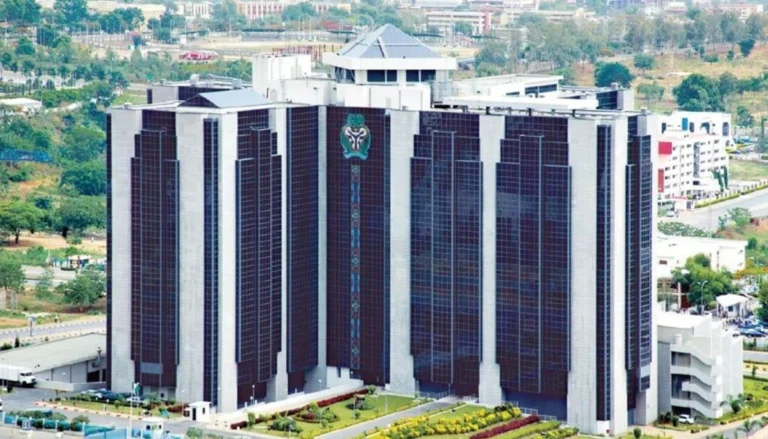
The Chartered Institute of Bankers of Nigeria (CIBN) has projected that the Central Bank of Nigeria (CBN) will maintain its benchmark Monetary Policy Rate (MPR) at the current level of 26.5% when the Monetary Policy Committee (MPC) concludes its 306th meeting. This outlook, shared by CIBN President and Chairman of Council, Dr. Dele Alabi, in an interview with the News Agency of Nigeria on Saturday in Lagos, precedes the MPC’s crucial deliberations scheduled to commence on Monday in Abuja. The anticipated decision underscores the CBN’s ongoing commitment to combating inflation and fostering macroeconomic stability, a strategy reinforced at the committee’s previous meeting where the MPR was held steady.
CIBN’s Rationale: Navigating Inflation and Economic Uncertainty
Dr. Alabi articulated the CIBN’s expectation for a rate hold, grounding it in the CBN’s established inflation-targeting framework and the current economic data landscape. According to his analysis, neither recent inflationary trends nor broader economic indicators present a compelling justification for an immediate shift in monetary policy, whether an increase or a decrease. The institute believes that retaining the current policy stance offers the apex bank a vital window to meticulously assess evolving inflationary pressures and the dynamic macroeconomic environment. This period of observation is deemed crucial for allowing the CBN to gather sufficient insights and data to inform more strategic and impactful policy adjustments in the future.
"Retaining the current policy stance would allow the apex bank to assess evolving inflationary pressures and broader economic conditions before making further adjustments," Dr. Alabi stated. This measured approach is intended to equip the CBN with a deeper understanding of how current macroeconomic trends are unfolding, thereby enabling more informed and effective decision-making regarding future monetary policy directions. The CIBN’s perspective highlights a preference for continuity and careful evaluation over reactive policy changes, particularly in a period characterized by persistent economic challenges.
Expert Consensus: A Call for Caution and Broader Economic Reforms
Reinforcing the CIBN’s outlook, Professor Akpan Ekpo, a respected economist and former member of the MPC, also advised the committee to hold the policy rate. Professor Ekpo emphasized the prevailing global economic uncertainties as a significant factor necessitating a cautious approach. He argued that unpredictable international economic conditions create a volatile backdrop, making it prudent for Nigeria to maintain a steady monetary policy course rather than introduce potentially destabilizing changes.
Beyond the immediate monetary policy decision, Professor Ekpo offered broader economic prescriptions for the Federal Government. He underscored the critical need to significantly increase investment in productive sectors of the economy. According to him, such strategic investments are fundamental to strengthening Nigeria’s economic growth trajectory and enhancing overall macroeconomic stability. Furthermore, Professor Ekpo urged policymakers to actively consider and implement recommendations put forth by the Manufacturers Association of Nigeria (MAN). These recommendations, he suggested, are vital for bolstering domestic production capacity and sustaining the momentum of economic expansion. His commentary signals a recognition that while monetary policy plays a crucial role, fiscal and structural reforms are equally, if not more, important for long-term economic health.
Background: The CBN’s Inflationary Battle and Policy Evolution
The Central Bank of Nigeria has, in recent months, adopted a deliberately cautious monetary policy stance. This approach has seen the institution prioritize keeping interest rates steady, striking a delicate balance between the imperative to curb inflation and the objective of supporting economic growth. This strategy has been particularly pronounced in the wake of sustained inflationary pressures.
At its last MPC meeting, the committee cited the need to preserve tight monetary conditions in response to renewed inflationary pressures. Headline inflation had experienced consecutive increases in March and April, prompting the CBN to maintain its restrictive monetary policy. The decision was also driven by a desire to provide the Monetary Policy Committee with more time to rigorously evaluate the impact of previously implemented policy measures on price stability. This implies a focus on allowing existing policies to permeate the economy and demonstrate their intended effects before considering any further interventions.
The historical context of the MPR reveals a series of adjustments aimed at managing inflation. For instance, at the MPC meeting held in February 2024, the committee had raised the MPR by a significant 400 basis points to 22.75% from 18.75%. This was followed by another increase to 24.75% in March, and subsequently to the current 26.5% in April. These aggressive hikes were direct responses to escalating inflation figures, which had consistently breached the upper bounds of the CBN’s target range. The current pause, therefore, represents a tactical shift towards assessment after a period of aggressive tightening.
Economic Data and Inflationary Trends
Nigeria’s inflation rate has been a persistent concern, significantly impacting household purchasing power and business operating costs. The National Bureau of Statistics (NBS) reported that Nigeria’s annual inflation rate rose to 33.69% in April 2024, a slight increase from 33.20% in March. This persistent upward trend, driven primarily by food and energy prices, poses a significant challenge for the CBN’s inflation-targeting mandate.
Food inflation, a major component of the headline figure, stood at 40.53% in April, compared to 40.01% in March. This surge is attributed to factors such as the naira’s depreciation against major currencies, insecurity in food-producing regions, and high costs of transportation and logistics. Non-food inflation also contributed, albeit at a lower rate, reflecting the broader impact of economic pressures on various goods and services.
While the CIBN and Professor Ekpo’s projections suggest a hold, other financial institutions have offered differing perspectives. For example, Standard Chartered Plc. had previously indicated an expectation that the CBN would reduce interest rates. This divergence in outlook highlights the complexity of the economic situation and the varying interpretations of incoming data and future economic trajectories by different stakeholders. Such differing views are common in macroeconomic forecasting, particularly in emerging markets where economic variables can be highly volatile.
Broader Implications and Future Outlook
The decision of the MPC to hold the MPR at 26.5% would have several implications for the Nigerian economy. Firstly, it would signal continued commitment to a tight monetary policy, aimed at taming inflation. This could lead to a sustained high cost of borrowing for businesses, potentially dampening investment and economic expansion in the short term. However, proponents of this stance would argue that controlling inflation is a prerequisite for sustainable long-term growth and that the current high rates are necessary to anchor inflation expectations.
Secondly, a continued high interest rate environment could make fixed-income investments more attractive, potentially drawing capital towards government securities. This could, in turn, impact the performance of the stock market and other riskier asset classes. The exchange rate of the Naira would also be a key factor to monitor. While high interest rates can sometimes support a currency by attracting foreign portfolio inflows, the effectiveness of this mechanism is dependent on broader economic fundamentals and investor confidence.
The pronouncements from the CIBN and Professor Ekpo also point towards the critical need for complementary fiscal and structural policies. If the CBN continues to bear the brunt of inflation management through monetary policy alone, the burden on the economy may become unsustainable. Therefore, the call for increased investment in productive sectors, support for manufacturing, and the implementation of other structural reforms are crucial for a holistic approach to economic stabilization and growth.
The MPC’s decision will be closely watched by investors, businesses, and consumers alike. It will provide further clarity on the CBN’s strategy for navigating the complex economic landscape of Nigeria, characterized by persistent inflation, currency volatility, and the ongoing pursuit of sustainable economic growth. The committee’s deliberations will undoubtedly weigh the immediate impact of interest rates on economic activity against the imperative to achieve price stability, a balancing act that defines its mandate. The coming days will reveal whether the consensus for a hold prevails or if other factors necessitate a deviation from the anticipated path.