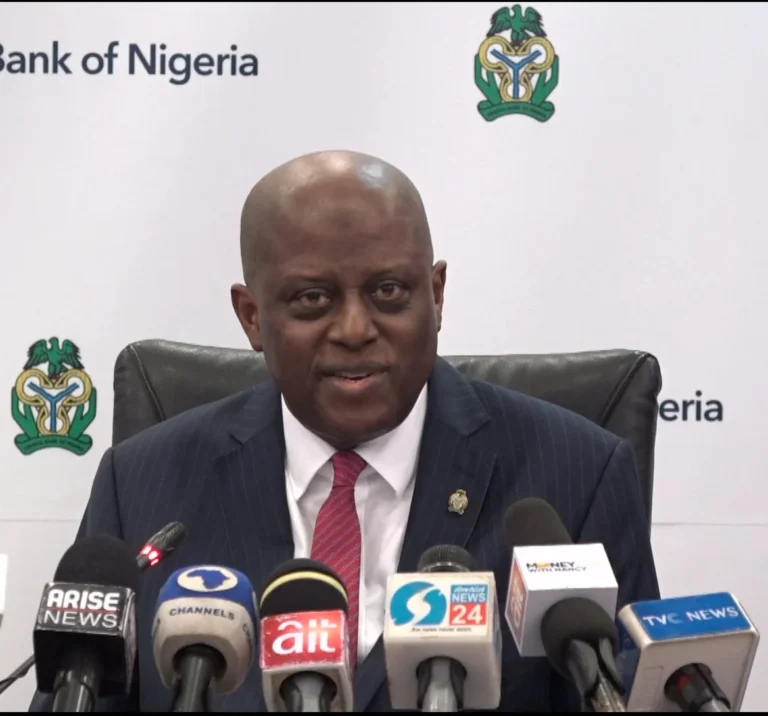
The Central Bank of Nigeria (CBN) has affirmed its decision to hold its benchmark interest rate, the Monetary Policy Rate (MPR), steady at 26.5 percent, a move that underscores the institution’s cautious approach in navigating a complex economic landscape characterized by escalating global uncertainties and stubborn domestic inflationary pressures, particularly in the food sector. This critical decision, reached by the Monetary Policy Committee (MPC) during its latest sitting, signals a period of watchful waiting, allowing the central bank to meticulously assess the impact of previous policy adjustments and evolving economic dynamics before contemplating further interventions.
Deep Dive into Monetary Policy Decisions
CBN Governor, Yemi Cardoso, articulated the committee’s rationale, highlighting a confluence of factors that necessitated a pause in the aggressive tightening cycle witnessed in previous meetings. Foremost among these were the renewed geopolitical tensions in the Middle East, which have the potential to disrupt global supply chains and exert upward pressure on commodity prices, most notably crude oil. Domestically, the persistent pressure on food prices continues to be a primary concern, disproportionately affecting household incomes and purchasing power across the nation. Beyond the MPR, the MPC also elected to retain other key monetary policy parameters, including the cash reserve requirements (CRR) for deposit money banks and the asymmetric corridor around the MPR, further emphasizing a commitment to stability and predictability in the financial markets. The CRR, a vital tool for managing liquidity in the banking system, remains a significant instrument in the CBN’s arsenal, influencing banks’ lending capacity and overall money supply. Maintaining it at current levels reflects a desire to keep liquidity conditions tight to curb inflation without stifling economic activity entirely.
Navigating Nigeria’s Inflationary Landscape
Despite a marginal deceleration in Nigeria’s headline inflation rate, which eased slightly from 15.93 percent in May to 15.91 percent in June 2026, the CBN adopted a prudent stance. Governor Cardoso noted that this fractional decline did not sufficiently alleviate concerns, especially when juxtaposed with the troubling trajectory of food inflation. Food inflation, a critical component of the consumer price index given its substantial weighting in household expenditure, surged from 16.96 percent to a concerning 17.52 percent over the same period. This uptick was primarily attributed to persistent supply chain disruptions emanating from insecurity in key agricultural producing regions, exacerbated by dilapidated infrastructure and the heightened cost of transportation, a direct consequence of recent reforms in the energy sector. These factors collectively constrain the timely and efficient movement of foodstuffs from farms to markets, creating artificial scarcity and driving up prices.
Conversely, core inflation, which meticulously strips out volatile food and energy prices to offer a clearer picture of underlying price trends, exhibited a more encouraging slowdown. It receded to 15.92 percent from 16.82 percent, a positive development largely bolstered by a relative stabilization observed in the foreign exchange market. This suggests that while external and structural factors continue to fuel food price hikes, the efforts to stabilize the naira and manage liquidity are beginning to yield some positive impact on other segments of the economy. The MPC’s decision to maintain interest rates unchanged is thus strategically designed to allow the committee ample opportunity to closely monitor these divergent inflationary trends and other pertinent economic developments, ensuring that any subsequent policy adjustments are both timely and effective. The CBN remains committed to its primary mandate of price stability, aiming to steer inflation towards a more sustainable single-digit path in the medium to long term, a goal that has proven challenging amidst prevailing economic headwinds.
Global Economic Uncertainties and Domestic Resilience
The global economic environment continues to present a complex backdrop for Nigeria’s monetary policy decisions. The re-escalation of tensions in the Middle East, for instance, carries significant implications for global energy markets. Historically, such geopolitical instability often translates into higher international crude oil prices. While Nigeria, as a major oil exporter, might benefit from increased revenue in the short term, this also introduces a volatile element into the domestic economy through potential inflationary pass-through effects from higher refined petroleum product costs, despite subsidy removals. The MPC acknowledged that sustained global economic shocks, including those impacting oil prices, necessitate robust domestic policy responses. In this context, the committee lauded the burgeoning cooperation between the Federal Government and the CBN. This synergistic approach, fostering better alignment between fiscal and monetary policies, has proven instrumental in mitigating the adverse effects of external shocks, allowing Nigeria to build greater resilience against global economic turbulences. This collaboration is crucial for ensuring a coherent and effective overall economic strategy, where fiscal measures complement monetary objectives, and vice-versa, creating a more stable macroeconomic environment.
Indicators of Economic Growth and Stability
Despite the inflationary challenges, Nigeria’s economy continues to exhibit encouraging signs of growth and resilience. The nation’s Gross Domestic Product (GDP) expanded by a commendable 3.89 percent in the first quarter of 2026. This growth trajectory was predominantly propelled by robust activities within the non-oil sector, underscoring ongoing diversification efforts away from traditional reliance on crude oil. Key drivers within the non-oil sector include the services industry, particularly telecommunications and financial services, as well as segments of agriculture and manufacturing that have demonstrated capacity for expansion. This diversification is vital for long-term sustainable growth and reduced vulnerability to oil price volatility.
Further bolstering this positive outlook, the Purchasing Managers’ Index (PMI), a forward-looking indicator that gauges business activity and sentiment, registered an improvement. It climbed to 50.1 points in June from 49.6 points in May. A PMI reading above 50 points generally indicates an expansion in the manufacturing and services sectors, suggesting growing business confidence and activity. This modest but significant improvement in the PMI points towards a gradual recovery in business operations and investment, which are crucial for job creation and sustained economic expansion.
Moreover, Nigeria’s external reserves have demonstrated a healthy upward trend, rising to $52.52 billion as of July 17, 2026, a notable increase from $50.47 billion recorded at the end of May. Governor Cardoso confidently stated that this strengthened reserve position provides import cover for approximately 11 months, significantly exceeding the international benchmark of three to six months. Robust external reserves are critical for defending the naira, financing imports, and instilling confidence among foreign investors, thereby contributing to overall macroeconomic stability and reducing external vulnerabilities. The accumulation of reserves is often linked to improved oil revenues, increased remittances, and foreign portfolio investment inflows, reflecting a healthier balance of payments position.
Reforming the Foreign Exchange Market and the Naira’s Trajectory
The value and stability of the naira remain central to Nigeria’s economic discourse. Governor Cardoso firmly refuted claims suggesting the currency is undervalued, reiterating the CBN’s unwavering commitment to a transparent, market-driven foreign exchange system. This system, he emphasized, is designed to allow market forces, rather than discretionary government intervention, to determine exchange rates. This stance reflects a fundamental shift in policy from previous administrations, moving towards greater liberalization and responsiveness to supply and demand dynamics in the FX market.
The governor elaborated that the long-term stability and strength of the naira would fundamentally hinge on a combination of structural reforms and economic performance. These include sustained increases in oil earnings, which remain a significant source of foreign currency; attracting greater foreign direct investment (FDI) and foreign portfolio investment (FPI) into diverse sectors of the economy; boosting local production across various industries to reduce import dependence; and implementing effective import substitution strategies. These measures collectively aim to enhance the supply of foreign exchange into the economy while simultaneously reducing demand, thereby fostering a more stable and resilient naira.
In a move to further enhance transparency and efficiency within the financial markets, Governor Cardoso also announced the introduction of the new Nigeria Official Overnight Rate (NOFA). This innovative benchmark is designed to improve the clarity and reliability of transactions in the interbank market by utilizing actual transaction data, rather than relying on estimates. NOFA is expected to provide a more accurate reflection of overnight lending rates, thereby improving liquidity management and pricing mechanisms within the banking sector, fostering greater confidence and stability in money market operations.
Ensuring a Robust and Stable Banking Sector
The banking sector, a cornerstone of any modern economy, continues to be a focal point for the CBN. Governor Cardoso addressed concerns surrounding the withdrawal of COVID-19 regulatory support measures, explaining that this necessary adjustment had prompted banks to recalibrate their balance sheets. These support measures, introduced during the pandemic, included temporary forbearance on loan classifications, relaxed capital adequacy requirements, and other palliative measures to cushion the impact of the economic downturn on financial institutions. Their withdrawal, while requiring adjustments, does not, according to the Governor, signal an underlying weakness within the industry. Instead, it reflects a return to pre-pandemic regulatory standards, ensuring that banks operate on a sound and sustainable footing.
Furthermore, the Governor robustly defended the CBN’s recent actions regarding the revocation of licenses of some financial institutions. He clarified that these decisive actions were not arbitrary but were necessitated by prolonged and egregious regulatory and compliance breaches. Such measures, while sometimes disruptive, are vital for maintaining the integrity, stability, and public trust in the financial system. Cardoso offered firm assurances to Nigerians that, despite these targeted interventions, the country’s banking system remains fundamentally safe, sound, and stable, underpinned by robust regulatory oversight and adequate capitalization.
The Digital Transformation of Payments and Financial Inclusion
In an era of rapid technological advancement, the CBN is actively championing the modernization of Nigeria’s payment landscape. Governor Cardoso acknowledged that lower denomination coins, while still retaining their status as legal tender, have seen a significant reduction in usage. This trend is a clear reflection of the accelerating adoption of digital payment methods among Nigerians, a phenomenon driven by convenience, efficiency, and increasing access to digital infrastructure. The CBN is actively facilitating this transition, aligning with its broader objectives of financial inclusion.
According to the Governor, the ongoing financial inclusion efforts, coupled with the growing embrace of electronic payment systems, are poised to progressively diminish the nation’s reliance on physical cash. Initiatives such as the eNaira, Nigeria’s central bank digital currency, mobile banking applications, and various fintech innovations are rapidly transforming how transactions are conducted. This shift not only enhances transactional efficiency and reduces the costs associated with cash management but also extends financial services to underserved populations, fostering greater economic participation and transparency within the economy.
Expert Outlook and Future Considerations
Looking ahead, the CBN’s "wait and see" approach adopted at this MPC meeting suggests that future policy decisions will be highly contingent on the evolution of key economic indicators, particularly inflation and exchange rate stability. Analysts generally anticipate that if inflationary pressures, especially food inflation, persist or intensify, the committee may be compelled to revisit its tightening stance. Conversely, sustained stability in the foreign exchange market and continued moderation in core inflation could provide room for a more accommodative stance, especially if economic growth shows signs of deceleration. The interplay between global commodity prices, domestic security challenges, and the effectiveness of fiscal policy measures will critically influence the trajectory of monetary policy in the coming months. The success of the ongoing collaboration between the Federal Government and the CBN will also be paramount in navigating these complex challenges, ensuring that Nigeria’s economy remains on a path of sustainable growth and stability.