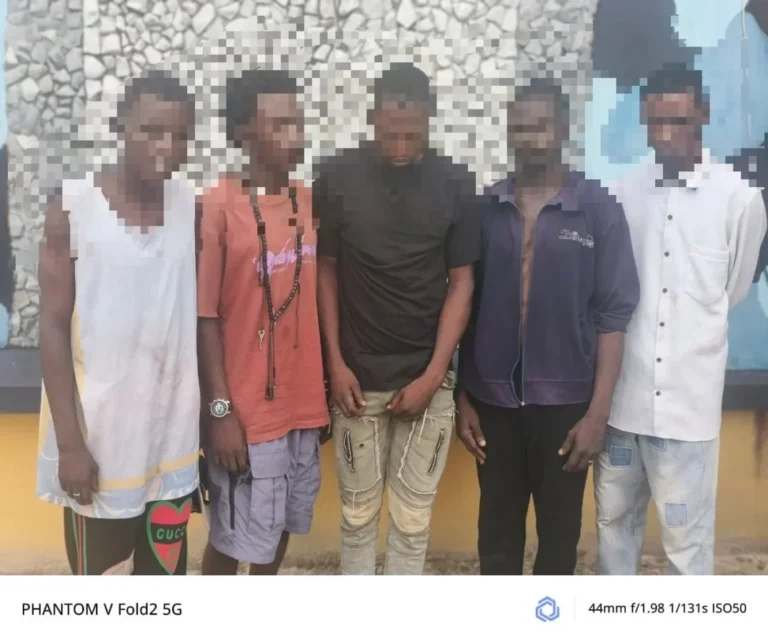
The Delta State Police Command has launched a comprehensive security offensive across several local government areas, resulting in the apprehension of numerous suspects linked to cultism, extortion, illicit drug trafficking, and armed robbery. This surge in tactical operations, coordinated by the State Commissioner of Police, CP Samuel Erale, underscores a renewed commitment to dismantling criminal networks that have increasingly threatened public order and economic development in the region. The recent wave of arrests, occurring between September 8 and September 10, 2026, represents a significant escalation in the state’s efforts to curb the rising tide of organized crime.
Chronology of Police Operations
The tactical maneuvers conducted by the Delta State Police Command were characterized by intelligence-led interventions across diverse locales, ranging from rural communities to bustling urban centers.
On September 8, 2026, the Okpanam Division received an emergency distress call regarding an illegal blockade at a construction site. According to official reports, a group of individuals had forcibly halted work, seized construction tools, and demanded an illicit levy of N700,000—a practice locally referred to as "deve"—from the contractors. Upon arrival, police personnel engaged the suspects, resulting in the arrest of 30-year-old Collins Dunkun. While six accomplices managed to evade capture, investigators successfully recovered a locally made single-barrel pistol and a cartridge from the site.
Simultaneously, in the Warri area, the Divisional Surveillance Team executed a raid on an incomplete building within the Ugbuegwai Community, specifically in the King Zanga area. Acting on intelligence regarding the distribution of prohibited substances, officers apprehended five individuals: Rabiu Salihu (26), Salisu Suleiman (23), Rabilu Ali (24), Alhassan Mohd Mansur (28), and Aliyu Abubakar (25). The seizure at this location was substantial, involving quantities of Indian hemp, Codeine, Colorado, Rizla, SK, and Canadian Loud, marking a major strike against local drug supply chains.
Also on September 8, the Ekpan Division demonstrated the efficacy of modern investigative techniques by tracking a stolen brown Toyota Camry (registration BEN-572BT). The vehicle had been reported stolen in Benin City on September 7. Following an intelligence-led investigation, officers tracked the vehicle to the New Era area of Jakpa Road. An ambush was set, leading to the arrest of Destiny Suleman (41) and Samuel Ejiro (21), and the recovery of the stolen asset.
The most recent operation occurred on September 10, 2026, when the Anti-Cult Unit, based in Ozoro, raided a clandestine gathering in the Aragba-Orogun community. Intelligence reports had suggested that a significant number of cult members were meeting to conduct initiation rites or organize criminal activities. Eight suspects were taken into custody: Godspower Achubue (27), Ziden Edem (27), Kingsley Aniefem (36), Omita John (22), Onumu Happy (22), Kenneth Ukpurakpo (22), Juliet Festus (26), and Oghenegueke Okuanah (22). A subsequent search of one suspect’s residence yielded a pump-action gun and a live cartridge.
Supporting Data and Regional Context
The prevalence of "deve"—extortion of construction firms—has long been a bottleneck for infrastructural development in Delta State. Often perpetrated by cult groups or localized gangs, these demands frequently lead to project abandonment or increased costs, which are ultimately passed on to the public.
The recovery of firearms in three out of the four separate police operations highlights the alarming proliferation of small arms within the state. According to regional security reports, the intersection of cultism and illicit drug distribution has created a hybrid threat profile, where gangs utilize narcotics to fund the acquisition of weapons. The arrest of individuals in possession of both high-end illicit substances like "Canadian Loud" and firearms suggests a sophisticated level of criminal organization that requires sustained law enforcement pressure to neutralize.
The demographic data of the arrested individuals—predominantly young men between the ages of 22 and 36—aligns with broader national trends regarding youth involvement in criminal gangs. Experts in regional security have often pointed to high youth unemployment rates as a catalyst for recruitment into cult activities, which offer a perverse sense of belonging and protection in volatile environments.
Official Stance and Strategic Direction
State Police Public Relations Officer, SP Bright Edafe, emphasized in a press briefing that the arrests were not isolated incidents but part of a broader, proactive strategy. "The Command is currently implementing a zero-tolerance policy toward any form of criminality that threatens the peace and safety of our citizens," SP Edafe stated.
Commissioner of Police Samuel Erale reinforced this message, warning that the state would not serve as a sanctuary for criminal elements. "Cultism, the unlawful possession of firearms, extortion, and the peddling of illicit drugs are not merely petty crimes; they are the bedrock upon which more serious violent offenses are built. We are dismantling these networks from the ground up," the CP remarked.
The CP’s strategy focuses on "proactive prevention," a shift from purely reactive policing. This involves the increased use of community-based intelligence networks, which played a crucial role in the successful raids at Aragba-Orogun and the Warri drug den. By fostering trust between local communities and police divisions, the Command intends to intercept criminal plans before they manifest into violence or theft.
Implications for Public Safety and Economic Stability
The implications of these arrests are multi-faceted. First, for the construction and business sectors, the swift response of the Okpanam Division sends a strong signal that extortion will be met with force, potentially stabilizing the business climate for contractors who have previously been hesitant to operate in certain zones.
Second, the drug busts in Warri are likely to disrupt local distribution networks. By seizing various synthetic and organic narcotics, the police have effectively reduced the supply of these substances, which are known to fuel the aggressive tendencies associated with cult-related violence.
However, analysts caution that the root causes of these criminal activities—social inequality, lack of vocational opportunities, and the ease of access to illegal firearms—remain significant challenges. While law enforcement provides the necessary immediate security, long-term stabilization will likely require a multi-agency approach involving social welfare, economic development, and community engagement programs to steer youth away from gang affiliation.
As investigations into the arrested suspects continue, the Delta State Police Command has indicated that they are pursuing leads to apprehend the fleeing accomplices from the Okpanam incident. The Command has also called upon the public to remain vigilant and continue reporting suspicious activities, noting that the "see something, say something" policy remains the most effective tool in their arsenal.
For now, the residents of the affected communities in Aragba-Orogun, Warri, and Okpanam are witnessing a visible return to state authority. The challenge for the police in the coming months will be to maintain this momentum, ensuring that these areas do not revert to lawlessness once the current operations conclude. The proactive stance of the current leadership in the Delta State Police Command signals that they are prepared to sustain these efforts, potentially leading to a quieter and more secure period for the state’s growing population.