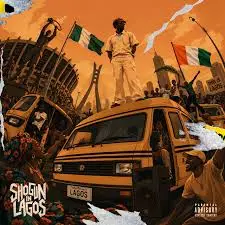
The contemporary West African music landscape has witnessed another significant cross-border collaboration with the release of Gbedu, a standout track from Ivorian rapper and composer Didi B’s latest studio album, Shogun in Lagos. For this compelling project, the celebrated Abidjan-born artist has enlisted the lyrical prowess of veteran Nigerian hip-hop recording artist and record producer Phyno. The resulting track bridges the linguistic and cultural divide between Francophone and Anglophone West African hip-hop, merging sophisticated continental production with hard-hitting rap verses. Released as the fourth track on an extensive 23-song body of work, Gbedu has quickly drawn the attention of music critics, streaming audiences, and industry analysts alike, serving as a testament to the growing integration of regional music markets across the continent.
Main Facts of the Release
Gbedu stands as a premier focal point of Didi B’s sprawling 23-track album titled Shogun in Lagos. The single features a strategic pairing of Didi B’s rapid-fire, multilingual delivery and Phyno’s signature Igbo-inflected cadence and resonant baritone. The production duties for the track were handled by Saszy Afroshii, a talented record producer known for crafting dynamic soundscapes that blend contemporary afrobeats percussion with gritty hip-hop foundations.
The track was made available globally across all major digital streaming platforms, accompanied by promotional efforts targeted at core markets in Nigeria, Côte d’Ivoire, and the broader diaspora. While Shogun in Lagos as a whole explores various themes of cultural synthesis, ambition, and international reach, Gbedu specifically emphasizes club-ready energy, rhythmic propulsion, and lyrical dexterity. The collaboration highlights a deliberate strategy by both artists to expand their footprints beyond their immediate domestic audiences, leveraging each other’s regional dominance to secure pan-African listenership.
Chronology and Background of the Collaboration
The path leading to the release of Gbedu and the broader Shogun in Lagos album reflects a calculated evolution in the careers of both Didi B and Phyno. Didi B, born Bénédiction Diezou and formerly a key member of the influential Ivorian group Kiff No Beat, has spent the past several years cementing his status as one of Francophone Africa’s most bankable and critically acclaimed solo hip-hop artists. Following the success of his previous solo projects, which earned him widespread recognition including awards at the African Talent Awards and nominations across regional platforms, Didi B set his sights on deeper integration with the burgeoning Nigerian music industry.
The conceptualization of Shogun in Lagos began taking shape in late 2022 and early 2023, a period during which Didi B spent considerable time in Nigeria’s commercial capital, Lagos—widely regarded as the nerve center of African popular music production. During these extended stays, the Ivorian artist engaged in strategic recording sessions, collaborating with a cross-section of Nigerian producers and vocalists to capture the sonic essence of the city.
Phyno, whose career spans well over a decade, represents a cornerstone of modern Nigerian hip-hop. Rising to prominence with his groundbreaking 2014 debut album No Guts No Glory, Phyno popularized indigenous rap in the eastern region of Nigeria and has consistently collaborated with international acts. His inclusion on Shogun in Lagos was finalized during the latter stages of the album’s production cycle in Lagos, where Saszy Afroshii presented the instrumental beat that would eventually become Gbedu. Recognizing the potential of the beat to host a high-energy cross-border exchange, both artists recorded their respective verses, blending French, English, and indigenous Nigerian languages to create a seamless bilingual anthem.
Supporting Data and Market Context
The release of Gbedu arrives at a time of unprecedented growth and structural shift within the African recorded music industry. According to recent data from trade organizations such as the International Federation of the Phonographic Industry (IFPI) and various digital streaming analytics firms, Sub-Saharan Africa remains one of the fastest-growing music markets globally, driven primarily by streaming adoption on mobile platforms.
Cross-border collaborations of this magnitude are increasingly backed by robust digital distribution networks and localized playlisting strategies. Shogun in Lagos, featuring 23 tracks, represents a modern distribution model designed to maximize algorithmic engagement on platforms like Spotify, Apple Music, and Boomplay. Longer tracklists, while historically associated with streaming-era optimization to boost aggregate play counts, are utilized here to present a comprehensive artistic statement that bridges different regional sub-genres, specifically Ivorian rap traditions and Nigerian hip-hop/afrobeats sensibilities.
Producer Saszy Afroshii’s involvement further underscores the technical sophistication behind the track. Known for navigating the intricate sonic demands of both hip-hop and afrobeats, Afroshii’s production incorporates layered percussion, heavy sub-bass frequencies, and subtle melodic hooks designed to appeal to both sound system environments and headphone listeners. Market data indicates that tracks featuring such pan-African collaborations experience higher-than-average retention rates on editorial playlists spanning West, East, and Central Africa.
Official Responses and Industry Reception
While direct, formal press statements from individual record labels are often streamlined in the digital age, representatives close to both Didi B and Phyno have emphasized the organic nature of the collaboration. Insiders note that the partnership was born out of mutual respect for each other’s catalog and a shared vision for the globalization of African hip-hop.
Music critics and industry commentators across Lagos and Abidjan have largely praised the track for its technical proficiency and cultural significance. Reviewers have highlighted Didi B’s ability to adapt his cadence to the Nigerian production style without losing his distinct Ivorian identity, while Phyno’s verse has been lauded for maintaining the lyrical gravity that has defined his career for over ten years. Radio programmers in major West African urban centers have similarly responded by integrating Gbedu into heavy rotation schedules, noting positive listener feedback regarding its infectious rhythm and cross-cultural appeal.
Broader Impact and Implications for African Music Integration
The release of Gbedu and its parent album Shogun in Lagos carries significant implications for the broader African music economy. Historically, language barriers—specifically the division between Anglophone and Francophone territories—have acted as structural impediments to the seamless flow of popular culture across the continent. While artists from Nigeria and Ghana frequently dominated Anglophone charts, and artists from Côte d’Ivoire, Senegal, and the Democratic Republic of Congo maintained distinct regional markets, recent years have seen a concerted effort to dismantle these historical silos.
Collaborations like the one between Didi B and Phyno serve as cultural and commercial bridges. By uniting a major Francophone rap star with a heavyweight of Nigerian indigenous hip-hop, the track demonstrates that regional boundaries are increasingly porous in the streaming era. This trend not only expands the addressable market for individual artists but also encourages record producers, songwriters, and streaming platforms to invest in pan-African marketing initiatives rather than strictly domestic campaigns.
Furthermore, the choice of Lagos as the thematic and literal backdrop for Didi B’s album reinforces the city’s position as a continental hub for music creation and industry networking. As more artists from neighboring regions travel to Nigeria to record and collaborate, the resulting cultural exchange enriches the sonic palette of African popular music as a whole.
Conclusion
As Gbedu continues to circulate across digital platforms, radio waves, and live performance venues, it stands as a clear indicator of where modern African hip-hop is heading. Through meticulous production by Saszy Afroshii, strategic cross-border partnership, and the combined star power of Didi B and Phyno, the track transcends its status as merely the fourth song on a 23-track album. Instead, it functions as a working blueprint for continental integration, proving that artistic collaboration remains one of the most effective tools for uniting diverse audiences across West Africa and beyond.