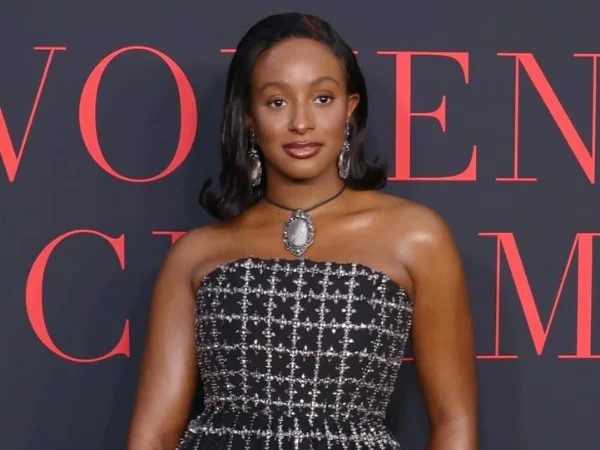
The evolution of personal branding in the digital age often serves as a barometer for an artist’s maturity, and few transformations have been as anticipated or as discussed as the recent stylistic pivot of Nigerian disc jockey and producer, Florence Otedola, professionally known as DJ Cuppy. For nearly two decades, Cuppy’s aesthetic was synonymous with a vibrant, monochromatic commitment to the color pink—a branding choice that became a global trademark. However, as revealed in her November 2026 feature in GQ Poland, the artist is consciously transitioning away from the signature look that defined her meteoric rise to fame, signaling a shift toward a more nuanced and multifaceted professional identity.
The Significance of a Signature Aesthetic
To understand the weight of this decision, one must look at the function of the "pink era" within the broader context of the Nigerian entertainment industry. When Cuppy first burst onto the scene, the landscape for female DJs in Africa was significantly more restrictive than it is today. By adopting a hyper-feminine, bold, and consistent color palette, she successfully carved out a niche that was instantly recognizable.
In marketing terms, this was a masterclass in brand consistency. Whether appearing on a red carpet, performing at a high-profile music festival, or engaging in philanthropic endeavors, the color pink functioned as a visual shorthand for her brand. It allowed her to stand out in a male-dominated environment where female DJs were frequently pressured to adopt more "neutral" or "edgy" personas to gain credibility. Pink, in this context, was not merely a fashion statement; it was a defiant declaration of feminine power.
A Chronology of a Color-Coded Career
The "pink era" did not happen overnight; it was a deliberate cultivation that spanned several distinct phases of her career:
- 2007–2013 (The Foundational Years): During her early development, Cuppy experimented with various sounds and looks while studying in the United Kingdom. Her entry into the professional DJ circuit began to gain traction as she started integrating high-fashion elements into her performances.
- 2014–2017 (The Branding Phase): As her visibility grew, so did the intensity of her branding. This period marked the solidification of her pink hair and wardrobe, which became a fixture in the media. By 2015, the "Cuppy" brand was inextricably linked to the color.
- 2018–2022 (Global Expansion): During this period, the pink aesthetic became a global calling card. Her collaborations with international artists and her appearances at global fashion weeks were consistently highlighted by her signature color, cementing her status as a pop-culture icon in Nigeria and beyond.
- 2023–2025 (Refinement and Maturity): As she ventured into deeper philanthropic work—specifically through the Cuppy Foundation—the artist began to demonstrate a more grounded approach to her image.
- November 2026 (The Pivot): The GQ Poland interview serves as the official public transition, where she explicitly frames the departure from the color as an act of personal growth rather than a rejection of her past.
Insights from the GQ Poland Interview
In the video interview that circulated across social media platforms in early November 2026, Cuppy addressed the elephant in the room with characteristic candor. When questioned by fans and interviewers alike about the absence of her trademark shade, she explained that her growth as an entertainer and an individual necessitated a broader palette.
"I believe my growth as a person and an entertainer should not be restricted to a particular color," she noted during the discussion. She clarified that while pink was an essential tool for establishing a foothold in a competitive, male-dominated industry, the necessity for such a rigid visual marker has diminished as her body of work now speaks for itself. Her style, she emphasized, is currently evolving to reflect a more grounded, culturally influenced aesthetic that draws inspiration from her African heritage.
The Psychology of Rebranding in Entertainment
From a sociological perspective, the decision to drop a long-standing "signature look" is often a strategic maneuver to signal artistic maturity. In the music industry, artists like Taylor Swift, Rihanna, and Beyoncé have famously undergone visual rebrands to mark the beginning of new eras. For DJ Cuppy, this shift suggests a desire to be perceived as a multi-dimensional creative—someone whose contributions to music, education, and philanthropy are not overshadowed by a visual gimmick.
Experts in brand management note that moving away from a signature look carries inherent risks—the loss of immediate recognition—but also offers the reward of increased versatility. By diversifying her aesthetic, Cuppy is positioning herself to be taken more seriously in spheres where she may have previously been categorized primarily as a "personality" or "socialite." This pivot allows her to explore new fashion sensibilities that are more in line with her current personal evolution, blending luxury, traditional African motifs, and contemporary minimalism.
Public Reaction and Digital Discourse
The social media response to the news has been overwhelmingly supportive, with fans taking to platforms like X (formerly Twitter) to discuss the "end of an era." The viral nature of her tweet—asking, "But Cuppy, what happened to all the pink?"—served as an invitation for her followers to engage in the conversation, effectively turning a potential brand crisis into a moment of community connection.
While some fans expressed nostalgia for the "Pink Cuppy" days, the general consensus is that the evolution is a positive sign of her self-assurance. By controlling the narrative surrounding her image change, she has successfully managed the public’s expectations, framing the transition as a natural progression rather than a sudden change of heart.
Broader Implications: Beyond the Wardrobe
This shift extends far beyond the color of her hair or the clothes in her closet. It mirrors her trajectory in the professional world. As the daughter of billionaire businessman Femi Otedola, Cuppy has often navigated the complexities of being a public figure with immense family legacy. Her transition signals a desire to define her own parameters for success, separate from the public-facing persona she cultivated in her early twenties.
Furthermore, this change highlights a larger trend in the African entertainment industry, where artists are increasingly prioritizing "authenticity" over "curated spectacle." As the continent’s music industry continues to achieve global dominance, the artists at the forefront are finding that their personal stories, cultural influences, and evolving identities are their most valuable assets.
Looking Ahead
DJ Cuppy has made it clear that she is not abandoning pink entirely; rather, she is ending her exclusive reliance on it. This nuance is crucial. It suggests a move toward a "wardrobe of choice" rather than a "wardrobe of necessity."
As she continues to balance her music production, academic pursuits, and charitable foundations, this stylistic pivot provides a blank canvas for her next chapter. Whether this new era will involve a focus on more traditional African fashion, high-concept editorial style, or a more minimalist approach, remains to be seen. What is certain, however, is that the transition marks a significant milestone in the career of one of Nigeria’s most prominent public figures.
In the final analysis, Cuppy’s decision to move past her pink era is a testament to the fact that personal identity is fluid. By letting go of the visual shorthand that made her famous, she is demonstrating a confidence that is perhaps more powerful than the color that once defined her. Her legacy will likely not be measured by the hues she wore, but by the barriers she broke as she stepped out from the shadows of her own signature brand to embrace the full spectrum of her identity.