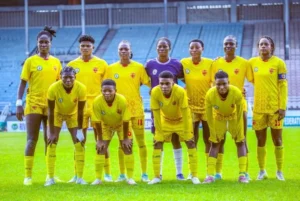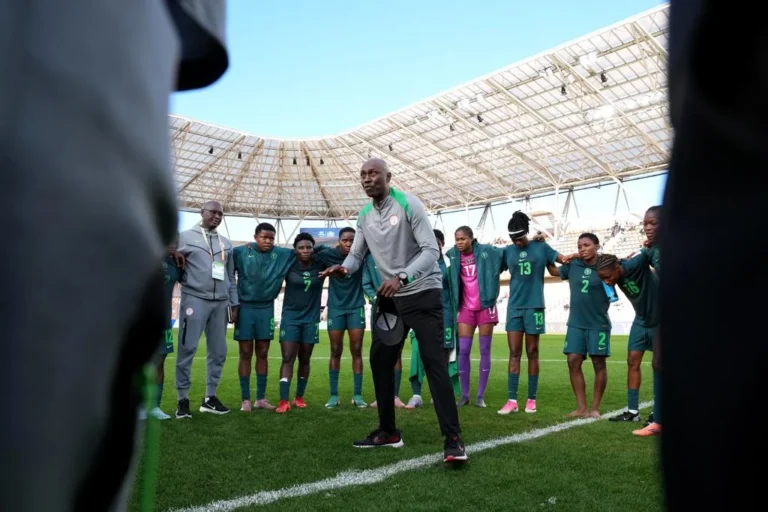
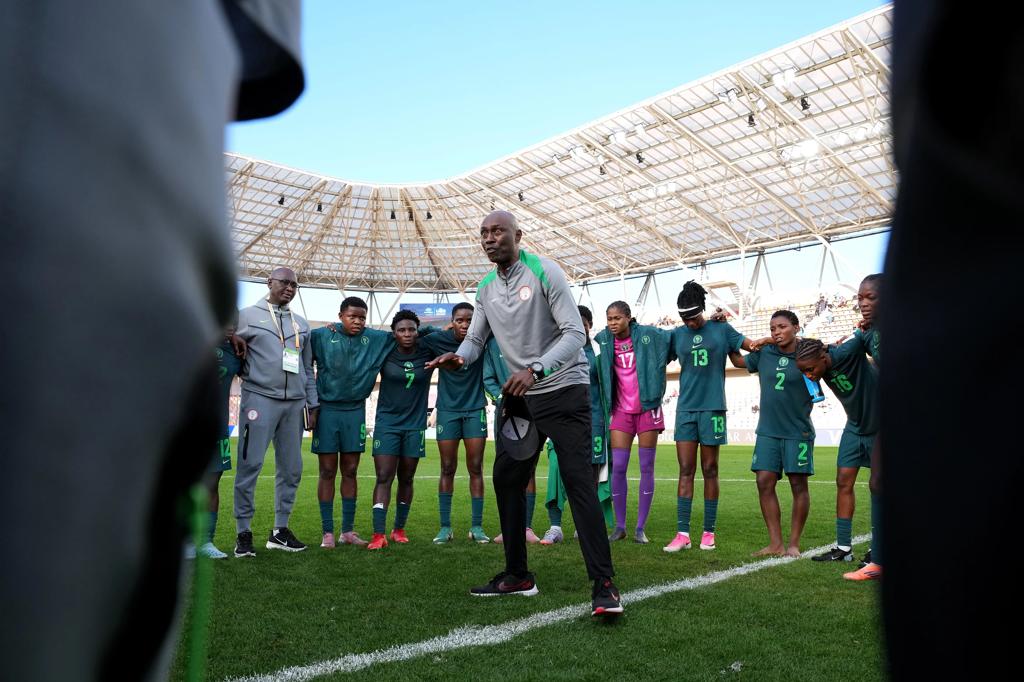
The Nigeria U-20 women’s national team, affectionately known as the Falconets, delivered a tactical masterclass at the Stadion Miejski Bielsko-Biała on Thursday, dismantling England 3-0 to advance to the quarter-finals of the 2026 FIFA U-20 Women’s World Cup in Poland. Under the guidance of head coach Moses Aduku, the Nigerian side displayed a level of defensive grit and clinical finishing that left their European counterparts scrambling, ultimately proving that their progression from the group stage was merely a prelude to a deeper tournament run.
Tactical Supremacy and the Underestimation Factor
In the aftermath of the emphatic win, Coach Moses Aduku did not mince words regarding the psychological state of the opposition. The Nigerian tactician posited that the English side entered the Round of 16 clash with a misplaced sense of superiority, effectively underestimating the technical and physical capabilities of the Falconets.
"The English team is a very good side, and I think they underrated us," Aduku stated during the post-match press conference with FIFA Media. "They never believed that we could play up to this level. However, I have maintained since the conclusion of the group stages that the World Cup truly begins in the knockout rounds. I told the girls that this victory is history; we must enjoy it briefly and immediately shift our focus to the next challenge."
This victory marks a significant milestone for Nigeria in the competition, reinforcing their reputation as a perennial powerhouse in women’s youth football. By neutralizing England’s high-pressing style, the Falconets showcased a level of maturity that suggests they are prepared to challenge the tournament favorites for the ultimate prize.
A Chronology of the Round of 16 Clash
The match began with high intensity, as Nigeria signaled their attacking intent from the opening whistle. By controlling the midfield transition, the Falconets disrupted England’s rhythm, forcing early defensive errors. The pressure paid off in the eighth minute when Tosin Rafiu capitalized on a defensive lapse, firing a composed finish into the back of the net to give Nigeria a 1-0 lead.
Throughout the remainder of the first half, the game transformed into a tactical battle of attrition. England, struggling to adjust to Nigeria’s physical dominance, attempted to rally through offensive threats from Lily Dent, Princess Ademiluyi, and Rachel Maltby. Despite these concerted efforts, Nigeria’s defensive structure remained impenetrable.
The turning point of the first half occurred in the 33rd minute. Following a VAR intervention, the referee awarded a penalty to England, offering the Young Lionesses a golden opportunity to equalize. However, Nigerian goalkeeper Christiana Uzoma emerged as the hero, diving correctly to deny Rachel Maltby’s spot-kick. Uzoma’s heroics, coupled with several vital interventions in the ensuing minutes, ensured that Nigeria entered the halftime interval with their slender lead intact.
The second half began with a renewed vigor from the Nigerian side. Just two minutes after the restart, in the 47th minute, Janet Akekoromowei extended the lead, executing a clinical finish that effectively deflated the English resistance. The final blow came in the 73rd minute courtesy of substitute Mary Mamudu. Introduced in the 61st minute, Mamudu required only 12 minutes to influence the scoreline, slotting home a deflected assist from Precious Oscar to seal the 3-0 victory.
Player Spotlight: Janet Akekoromowei’s Impact
Named Player of the Match for her pivotal contribution, Janet Akekoromowei has become a central figure in Nigeria’s pursuit of the trophy. Her goal in the 47th minute was more than just an insurance marker; it was a statement of intent. Reflecting on the squad’s ambition, Akekoromowei noted that the team’s objectives are firmly set on the championship title rather than mere individual or stage-based achievements.
"The reason why we are here is to take the cup home," Akekoromowei said. "We are committed to giving our absolute all in every minute of every match. The coach pushes us to maintain high standards, and we hold each other accountable on and off the pitch. We remain focused and determined to reach our goal."
Broader Context and Tournament Implications
The 2026 FIFA U-20 Women’s World Cup in Poland has been characterized by high-scoring encounters and surprising results, yet Nigeria’s progression has been marked by a consistent trajectory of improvement. Having finished as runners-up in Group F, the Falconets faced the pressure of a high-stakes knockout game against a highly-fancied English team.
Statistically, the victory highlights the depth of the Nigerian squad. Coach Aduku’s decision to rotate the bench and the immediate impact of substitutes like Mary Mamudu demonstrate a level of squad management that will be vital in the latter stages of the tournament. Furthermore, the defensive resilience shown by Christiana Uzoma and the backline provides a foundation of confidence for the team as they prepare for the quarter-finals.
For England, the exit represents a significant disappointment, as the Young Lionesses failed to convert their possession and opportunities into goals. Their inability to break down the Nigerian defense, combined with the missed penalty, highlights the volatility of knockout football where a single lapse in judgment can lead to tournament elimination.
The Road Ahead: Facing Colombia
With the England match firmly in the rearview mirror, the Falconets must now prepare for a formidable quarter-final showdown against Colombia. The South American side secured their spot in the final eight after a hard-fought 1-0 victory over the tournament hosts, Poland, on the same day.
The match is scheduled to take place this Sunday at the Władysław Król Municipal Stadium in Łódź, with a kickoff time of 2:00 p.m. Nigerian time. Given Colombia’s grit—evidenced by their victory over the host nation—this upcoming fixture promises to be a rigorous test of Nigeria’s tactical discipline and endurance.
Analysis of Nigeria’s Championship Potential
Nigeria’s performance against England has elevated them in the eyes of observers and analysts. The combination of early-goal scoring, penalty-saving resilience, and second-half tactical discipline suggests that the Falconets possess the essential attributes of a championship-winning team.
However, the challenge of maintaining this level of performance over a condensed tournament schedule remains. The physical demand of the quarter-final against Colombia will require quick recovery and continued tactical flexibility. Coach Aduku’s insistence that his players "do more" indicates a coaching staff that is not satisfied with past successes, even those as significant as a 3-0 win over a major European nation.
The historical context of Nigeria’s participation in the U-20 Women’s World Cup shows a team that is consistently capable of reaching the latter stages but has often struggled to clear the final hurdles against European or South American giants. If the current squad can maintain their focus and internal cohesion, this year’s tournament could represent the most successful campaign in the history of the Falconets.
As the tournament progresses to the quarter-final stage, the narrative surrounding the Falconets has shifted from that of an underdog to a legitimate title contender. The players and staff alike are operating with a singular, unified mission: to return home with the trophy. With the support of a growing fanbase and the tactical acumen of their leadership, the path to the podium is clearly mapped out, though the obstacles remain significant.
The quarter-final against Colombia will serve as a definitive barometer for the team’s championship credentials. For now, the Nigerian camp remains focused, with the echoes of their victory over England serving as a reminder of what they are capable of when they play with discipline, confidence, and purpose. The world of women’s youth football now turns its attention to Łódź, where the next chapter of the Falconets’ journey will be written on Sunday.