The Federal Government has issued a strict two-week ultimatum to motorists, commercial transport operators, and residents utilizing the Lagos section of the ambitious Lagos-Calabar Coastal Highway, mandating total compliance with established safety regulations, traffic laws, and infrastructure protection guidelines. Failure to adhere to these directives within the stipulated timeframe will result in the immediate and indefinite shutdown of the strategic route.
The ultimatum was formally announced on Monday by the Federal Controller of Works in Lagos State, Olufemi Dare, during a comprehensive on-site inspection tour of the highway corridor. According to the Controller, the stern directive was prompted by mounting alarm over persistent reckless driving, rampant vandalism of public property, illegal parking of heavy-duty vehicles, and unauthorized commercial activities that collectively threaten public safety and undermine ongoing civil engineering works. The intervention follows direct expressions of concern from the Minister of Works, David Umahi, who has closely monitored reports of infractions along the newly opened stretches of the multi-billion-naira infrastructure project.
Expressing the administration’s zero-tolerance stance toward indiscipline on federal infrastructure, Dare emphasized that the government would not hesitate to rescind open-access privileges if road users continued to flout the law. Within two weeks, if there is no measurable improvement on all these flagged issues, authorities will have no option other than to revisit the situation and implement a total shutdown of the road to protect lives and preserve the integrity of the capital investment.
Background Context and Project Scope
The Lagos-Calabar Coastal Highway stands as one of the most significant infrastructure undertakings in contemporary West Africa, designed to connect the commercial nerve center of Lagos in the country’s southwest to the coastal border city of Calabar in the south-south. Traversing nine states, the mega-project aims to revolutionize regional commerce, ease maritime transport constraints, and integrate coastal communities into a cohesive economic corridor.
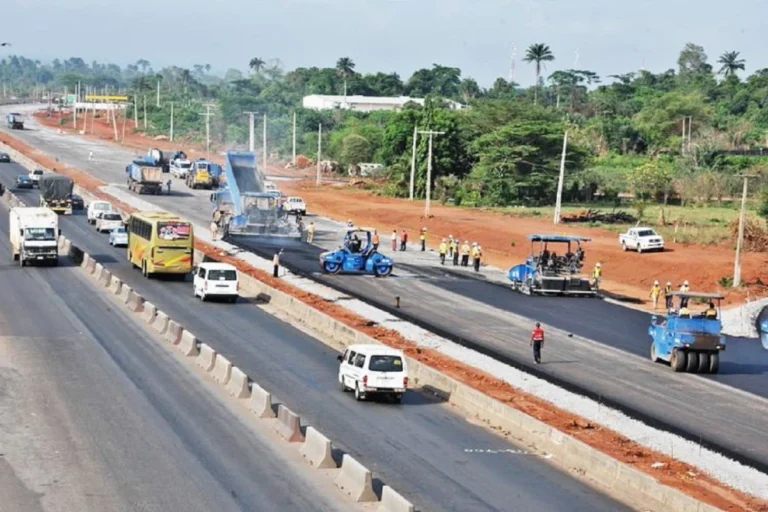
However, managing traffic flow along a highway that remains very much an active construction zone has presented unprecedented logistical challenges for federal regulators. The Lagos section of the coastal highway spans approximately 103 kilometers and has been strategically segmented into two primary phases to expedite construction and deployment. The first subsection covers roughly 47 kilometers, extending from the end of Ahodubule to Eleko Junction, while the second subsection accounts for approximately 56 kilometers, stretching from Eleko Junction to Odo-Ome at the boundary separating Lagos and Ogun states.
Crucially, this 103-kilometer stretch incorporates 20 major bridges, many of which are still in various stages of construction, requiring heavy machinery, deep foundation work, and active movement of engineering personnel. Because significant portions of the civil works remain unfinished, the premature opening of the corridor to unrestricted public traffic has turned safety enforcement into a critical daily challenge for the Federal Ministry of Works and associated security agencies.
Escalating Speed Violations and Public Safety Hazards
Among the primary catalysts for the government’s ultimatum is the alarming prevalence of excessive speeding by motorists who treat the unfinished coastal highway like a finished expressway. Federal guidelines explicitly mandate that because heavy construction activities, bridge erections, and material haulage are ongoing along the route, the maximum approved speed limit is strictly set at 30 kilometers per hour.
Despite prominent warning signage and continuous public sensitization campaigns, compliance has been notably poor. Ministry officials report that a significant number of motorists routinely accelerate well beyond safe thresholds, clocking speeds between 100 kilometers per hour and 120 kilometers per hour. Operating heavy vehicles at high velocities through active construction zones has drastically increased the risk of catastrophic collisions, vehicular rollovers, and fatal accidents involving construction workers and civilian road users alike.
The Federal Government noted that reports of fatalities along the newly opened sections have reached an unacceptable threshold. Authorities have made it clear that the convenience of faster transit cannot supersede the sanctity of human life. By setting a strict 30 km/h ceiling, engineers aim to minimize braking distances, protect survey crews and laborers, and prevent structural damage to uncurated road surfaces that have yet to receive their final layers of asphalt.
Rampant Vandalism and Security Vulnerabilities
Beyond traffic infractions, the inspection tour revealed an escalating wave of organized vandalism targeting critical infrastructural components designed to secure and delineate the highway. Official assessments indicate that approximately five kilometers of specialized ClearVu fencing—installed primarily to provide a physical safety barrier between the highway and adjacent residential communities—have been systematically dismantled and stolen.
Furthermore, concrete covers spanning roughly 18 kilometers of utility and drainage channels have been targeted, vandalized, and carted away by unknown perpetrators. Investigators note that these criminal operations predominantly occur during the dead of night, leveraging the darkness to strip public assets without immediate apprehension. This widespread removal of safety barriers not only compromises the structural integrity of the drainage and median systems but also creates severe security vulnerabilities, allowing unregulated pedestrian crossings directly onto high-speed lanes.
In response to these security breaches, the Federal Ministry of Works is actively reviewing its infrastructural defense strategies. Plans are currently underway to phase out vulnerable sections of steel-based security fencing, replacing them with heavy-duty, tamper-resistant concrete barriers that are significantly more difficult to dismantle or remove. Additionally, federal authorities are collaborating with security architecture partners to deploy comprehensive closed-circuit television (CCTV) surveillance systems along the entire length of the Lagos corridor to monitor movements, deter nighttime sabotage, and facilitate the prompt apprehension of vandals.
Comprehensive Crackdown on Environmental and Traffic Infractions
The two-week ultimatum serves as the enforcement spearhead for a broader, multi-faceted regulatory cleanup of the Lagos-Calabar Coastal Highway corridor. Alongside speeding and vandalism, the Federal Government has instituted an immediate and total prohibition against a wide range of activities that degrade the highway environment and obstruct traffic flow.
Under the new directives, commercial truck and articulated trailer drivers are strictly barred from parking along the highway shoulders or verges. Long-term parking by heavy-duty vehicles has historically narrowed usable lanes, obstructed visibility for oncoming traffic, and accelerated the deterioration of sub-base layers not yet engineered to bear stationary heavy loads for extended periods.
In the same vein, authorities have outlawed the creation and utilization of unauthorized U-turns, which have proliferated as motorists attempt to bypass official interchanges, frequently causing sudden multi-lane bottlenecks and severe side-impact collisions. Commercial motorcycle operators (popularly known as okadas), tricycles (keke napep), roadside hawkers, and individuals engaging in animal grazing along the highway corridor have similarly been targeted for immediate removal.
To enforce these environmental and operational standards, the government has scheduled the systematic demolition and clearance of all shanties, makeshift trading stalls, and illegal structures that have sprung up along the right-of-way. Officials have warned that truck drivers found violating parking prohibitions will face severe impoundment penalties, while individuals caught constructing or utilizing unauthorized U-turns will be subjected to prompt legal prosecution.
Broader Economic Implications and Analytical Outlook
The unfolding situation along the Lagos-Calabar Coastal Highway underscores the complex socio-economic realities of implementing mega-infrastructure projects in densely populated developing urban environments. While the corridor is envisioned as a transformative catalyst for national GDP growth, intra-state mobility, and industrial expansion, its immediate integration into the daily routines of millions of citizens requires a delicate balance between public access and regulatory enforcement.
Economically, a total shutdown of the Lagos section—should motorists fail to meet the two-week compliance deadline—would inflict considerable logistical friction on commercial transport operators, commuters, and businesses that have begun relying on the route to bypass chronic congestion on alternative arterial roads like the Lekki-Epe Expressway. However, transport economists and civil safety experts generally support the government’s hardline approach, arguing that premature degradation of the asset through unchecked vandalism and preventable highway fatalities would impose far greater long-term economic and human costs.
The success of the government’s intervention will ultimately hinge on the effectiveness of enforcement mechanisms deployed after the two-week window expires. If sustained through visible police presence, automated speed-tracking infrastructure, and strict punitive measures against offenders, the ultimatum could establish a crucial precedent for civil obedience and infrastructural stewardship across Nigeria’s evolving national road network. Conversely, a failure to back the threat with decisive action could embolden violators, rendering subsequent safety policies difficult to enforce. As the clock ticks down on the fourteen-day grace period, all eyes remain fixed on motorists, regulators, and enforcement agencies along the Lagos-Calabar coastal corridor.