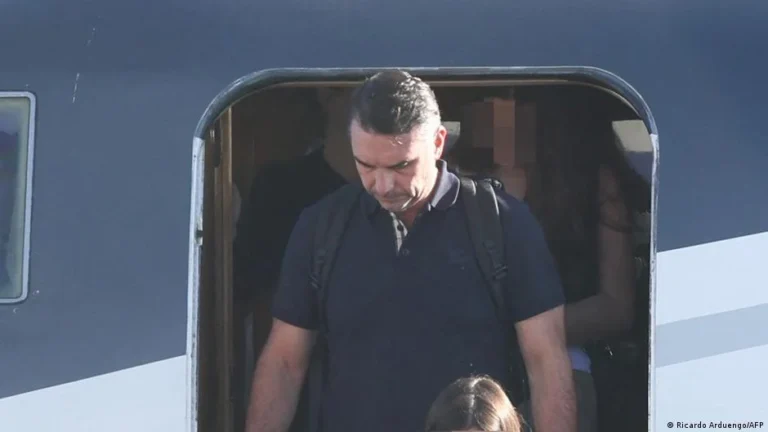
Brazilian Senator Flavio Bolsonaro arrived at the Miami-Opa Locka Executive Airport on Wednesday morning, marking a dramatic escalation in the political instability currently gripping South America’s largest nation. Accompanied by his wife and two daughters, the senator’s arrival in Florida follows a rapid, multi-leg transit across the hemisphere, beginning in Argentina and passing through Ecuador before reaching the United States. His departure comes amidst a high-stakes standoff with the Brazilian judiciary, which had previously ordered the surrender of his passports to prevent him from exiting the country while he faces ongoing criminal investigations.
The senator, who remains a central figure in Brazil’s right-wing political movement, has refused to acknowledge the victory of President-elect Luiz Inácio "Lula" da Silva in Sunday’s general election. Instead, Bolsonaro has launched a provocative campaign from abroad, declaring himself the "rightful leader" of Brazil and labeling the current electoral process a "tyranny" orchestrated by a "criminal organization."
A Calculated Flight: Chronology of the Departure
The timeline of Flavio Bolsonaro’s exit suggests a carefully planned maneuver to evade the tightening grip of the Brazilian Supreme Court. On Monday, the senator publicly stated on social media that he had no intention of leaving Brazil, insisting that he would "hand over my passports and defend myself against this travesty." However, by Tuesday, the situation had shifted significantly.
As investigations into his alleged financial crimes intensified, the Supreme Court moved to restrict his movement. Facing a potential loss of legislative immunity in February 2027, when his current Senate term concludes, Bolsonaro appears to have utilized his dual citizenship—holding an Italian passport—to circumvent the travel restrictions imposed by the Brazilian authorities.
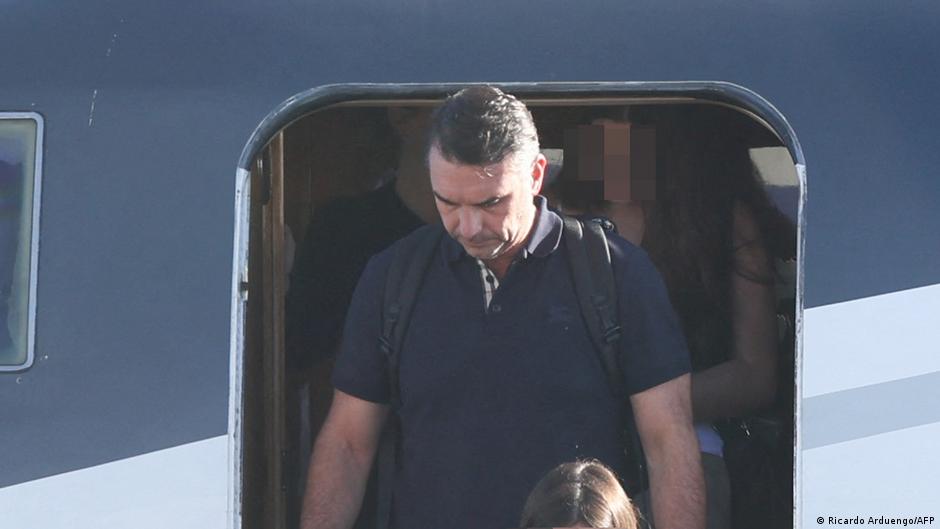
His journey began late Tuesday, when he departed Brazil for Argentina. From there, he secured a private jet to Guayaquil, Ecuador, before finalizing the flight to South Florida. By the time Brazilian authorities were aware of his precise trajectory, he had already reached international airspace, effectively placing him beyond the immediate reach of Brazilian law enforcement.
The Contentious Rhetoric of a Contested Election
In an initial statement posted to the social media platform X (formerly Twitter), the senator brazenly claimed to be the "elected president" of Brazil. While this post was later deleted and replaced with a more nuanced assertion that he is the "rightful leader," the intent remained clear: to delegitimize the outcome of the democratic process.
International observers and electoral monitors have roundly rejected these claims. The Brazilian electoral authority, the Tribunal Superior Eleitoral (TSE), confirmed on Wednesday that the voting process proceeded with full integrity and strict adherence to the nation’s constitutional framework. The political party to which Bolsonaro belongs has also formally acknowledged the results, distancing itself from the senator’s claims of systemic irregularity. Despite this, Bolsonaro continues to rally his base, telling his 60 million voters that the election was stolen and urging them to view the incoming administration as illegitimate.
Contextualizing the Legal and Political Risks
The legal jeopardy surrounding Flavio Bolsonaro is substantial. He is currently the subject of multiple probes into alleged financial irregularities and money laundering, accusations he consistently dismisses as a "political witch hunt." Critics of the Bolsonaro family argue that these legal battles are the primary driver for his flight to the United States, noting that he is seeking to replicate the path of his father, former President Jair Bolsonaro.
The elder Bolsonaro is currently incarcerated in Brazil, serving time for his role in a conspiracy designed to subvert the democratic transfer of power following his own electoral defeat in 2022. This historical precedent adds significant weight to the current situation; the younger Bolsonaro’s departure is widely viewed by political analysts as an attempt to avoid a similar fate, potentially seeking asylum or political refuge in a country where his allies maintain significant influence.

Official Responses and Diplomatic Strains
The arrival of a prominent, embattled foreign politician in the United States has placed the U.S. State Department in a delicate position. A spokesperson confirmed that the U.S. government would grant the necessary visas for the Bolsonaro family, citing standard administrative procedures. However, the move is likely to irritate the incoming Lula administration in Brasília, which has previously accused the Trump administration of tacitly supporting the Bolsonaro family’s efforts to undermine Brazilian democracy.
When questioned by reporters at Joint Base Andrews regarding his thoughts on the senator’s rhetoric and the subsequent political fallout in Brazil, President Donald Trump declined to provide a direct response. Instead, he reiterated his long-standing criticism of the Brazilian election, describing it as a "very strange" process. Such remarks have historically served to embolden the Bolsonaro faction, creating a persistent point of friction between Washington and Brasília.
Implications for Hemispheric Relations
The implications of this flight extend far beyond the immediate legal concerns of one senator. It represents a deepening ideological rift within the Americas, pitting the populist-nationalist movement championed by the Bolsonaros against the traditionalist and institutionalist forces represented by the current Brazilian judiciary and the incoming government.
- Democratic Stability: The refusal of a high-ranking lawmaker to accept election results, paired with his flight to a foreign nation, sets a troubling precedent for democratic norms in the region.
- Bilateral Tensions: Should the Brazilian government request extradition, the United States will be forced to choose between maintaining a positive relationship with its new diplomatic counterparts in Brazil and accommodating a political figure closely aligned with domestic American populist interests.
- Judicial Credibility: The Supreme Court of Brazil is now under immense pressure to prove its independence. The failure to prevent the departure of a key suspect may lead to calls for more stringent judicial oversight in the future, further polarizing the Brazilian public.
As of Wednesday afternoon, the Bolsonaro family remained in the Miami area. While the U.S. government has not indicated any plans to intervene, the international community is watching closely to see if this event signals the beginning of a long-term exile for the senator or if it will trigger a prolonged diplomatic dispute over extradition and legal accountability.
The situation remains fluid. With the Brazilian judiciary expected to issue further warrants and the political climate in the country reaching a fever pitch, the presence of the Bolsonaros in Florida serves as a reminder of the fragility of institutional stability in the face of deep-seated political polarization. For now, the "rightful leader" rhetoric continues to circulate, ensuring that the shadows of the 2026 election will loom over Brazilian governance for months, if not years, to come.