For decades, the narrative of the Nigerian music industry was inextricably linked to the sprawling, often chaotic campuses of its premier public universities. The University of Ibadan (UI), the University of Lagos (UNILAG), and the University of Benin (UNIBEN) were the traditional epicenters of creative ferment. These institutions offered a specific brand of freedom—a mixture of intellectual autonomy, student unionism, and a vibrant social calendar filled with "hall weeks," departmental shows, and open-air concerts. In these environments, artists were forged in the heat of live performances, finding their first audiences in the roar of thousands of fellow students. However, a significant shift has occurred over the last decade. A new wave of Nigerian musical talent is emerging from an unlikely source: the highly regulated, faith-based, and strictly monitored environments of the country’s private universities.
The rise of these "private school stars" presents a fascinating paradox in the sociology of Nigerian creativity. In institutions where curfews are strictly enforced, dress codes are mandatory, and religious observance is often compulsory, a generation of artists is thriving not because of the freedom afforded to them, but because of the creative pressure created by its absence. This phenomenon suggests that restriction, rather than stifling talent, has acted as a concentrator, forcing young creatives to develop their craft with a level of intensity and digital proficiency that mirrors the global evolution of the music industry.
The Genesis of the Private Pipeline: The Babcock Blueprint
The template for this modern trajectory was arguably established in 2011 by David Adeleke, known globally as Davido. At the time, Davido was a student at Babcock University, a Seventh-day Adventist institution known for its rigorous moral codes and strict student supervision. The clash between Davido’s burgeoning musical ambitions and the university’s restrictive environment became a matter of national entertainment news when he skipped his studies to join the "Lynxxx and Friends" tour in Ibadan.
The subsequent friction between Davido, his billionaire father, and the university administration resulted in a landmark compromise. A deal was struck: Davido would attend his lectures from Monday to Friday, adhering to the university’s strictures, and in return, he would have the resources to build a world-class recording studio and film music videos on weekends. This negotiation marked the beginning of a new era. It proved that the private university environment, despite its rigid exterior, could serve as a launchpad for superstardom if the artist possessed the necessary resources and a relentless drive to bypass institutional barriers.
The ABUAD Wave: Concentration and Digital Vaults
Today, this pattern is most visible at Afe Babalola University (ABUAD) in Ekiti State. Unlike the public university model, where artists often prioritize live performances and campus popularity, the ABUAD cohort has embraced a "hunker down" mentality. Mavo, a 21-year-old optometry student, represents the vanguard of this movement. Within the confines of his dormitory, Mavo spent four years building an expansive digital archive of over 300 songs before ever releasing a professional track.
This "dormitory studio" culture is a direct response to campus restrictions. When students are unable to leave campus freely or host large-scale events, the focus shifts inward. The creative energy that would have been spent on the "circuit" is instead channeled into production and songwriting. Mavo’s collaboration with producer Wana, also a student at ABUAD, exemplifies this. Together, they developed a polished, radio-ready sound—including hits like "MONEY CONSTANT" and "Formula 1"—entirely within the restricted ecosystem of their university.
The success of these artists is increasingly backed by data. In August 2024, Mavo and fellow student Kobilou released their joint EP, Kobilou Kilobizzy. Despite being produced within the constraints of campus life, the project peaked at number 72 on the Apple Music Charts and garnered over 150,000 streams across various platforms within its first month. This demonstrates that the barrier between the "campus underground" and the global mainstream has effectively collapsed, thanks to digital distribution and social media.
The Visual Language of Resistance: Alté and Streetwear
The creative output of these private university students is not limited to audio. A sophisticated visual language has emerged, often characterized by the "Alté" aesthetic—a genre-defying blend of streetwear, archival fashion, and moody, cinematic photography. Because these students live under strict dress codes during school hours, their creative "off-duty" personas become even more pronounced and deliberate.
Photographers like Peeko HD have played a crucial role in documenting this scene. By placing artists like Mavo and Egertton in raw, unfiltered natural environments, they create a visual contrast to the manicured, orderly nature of the private university campus. This aesthetic—marked by leather jackets, chain accessories, and oversized silhouettes—serves as a form of non-verbal rebellion. Mavo has even extended this world-building into linguistics, creating Bizzypedia, a dictionary of slang specific to his sound and circle. This level of meticulous branding is a hallmark of the private school artist, who must curate an entire universe from within a single room.
Comparative Analysis: Public vs. Private Infrastructure
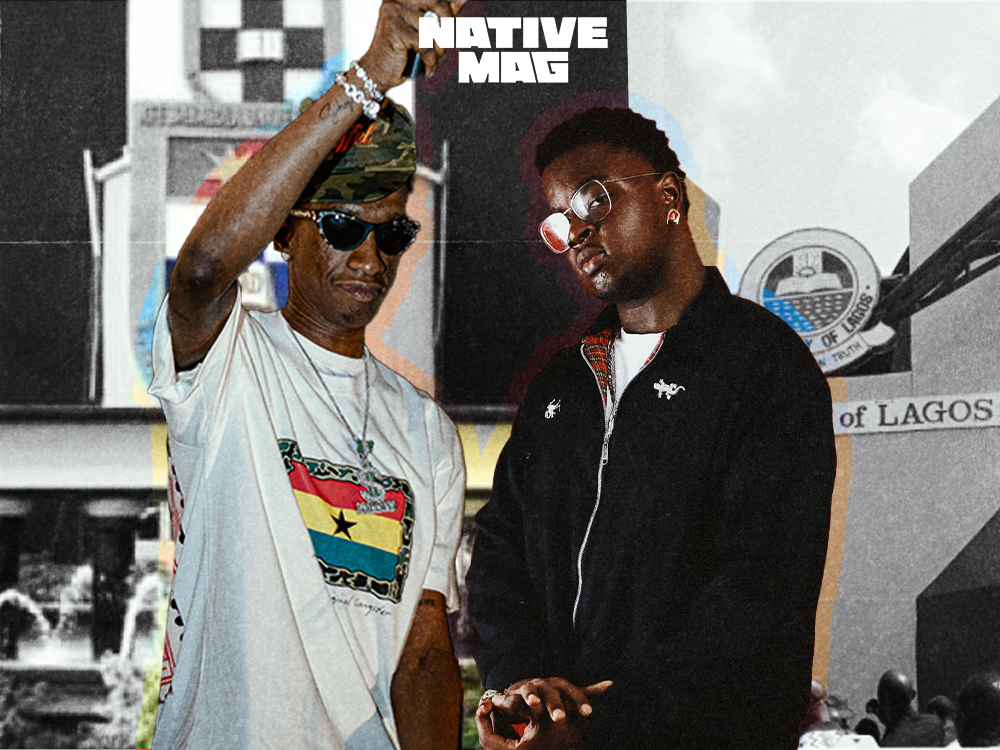
To understand the unique nature of the private university incubator, it is essential to contrast it with the traditional public university experience. Zaylevelten (also known as Tenski), an alumnus of the University of Lagos (UNILAG), describes an environment where the institution itself provides the ladder. At UNILAG, "Freshers’ Nights" and "Hall Weeks" are institutionalized events where emerging artists open for established stars. The infrastructure is geared toward public performance and immediate physical feedback.
In contrast, the private university infrastructure is often accidental or clandestine. While some schools like ABUAD are becoming more permissive—allowing artists to promote songs at campus parties—others remain deeply ambivalent. At Bowen University, for instance, students have attempted to create their own creative infrastructure, such as the "Bowen’s Got Talent" (BGT) competition and various dance troupes. However, these initiatives are often at the mercy of shifting administrative policies.
The Bowen Case Study: The Fragility of Creative Ecosystems
The experience at Bowen University highlights the precarious balance between institutional control and artistic expression. While the university provides some facilities, such as a music studio available for a fee, the culture remains highly sensitive to administrative whims. Students report that when the university management shifted the campus curfew from 10:00 PM to 9:00 PM, the rehearsal culture for dance and music groups nearly collapsed.
Onyeka, a student at Bowen, noted that organizing a creative event is an uphill battle, stating that many planned sessions are "debunked" by management. A recent creative event was only allowed to proceed under the guise of a sporting event, nearly facing cancellation on the day of the show. This environment creates a "pressure cooker" effect; only the most dedicated artists survive the administrative hurdles, resulting in a cohort of graduates who are exceptionally disciplined and savvy about navigating bureaucracy.
Economic Factors and Global Reach
The emergence of private universities as music hubs cannot be divorced from socio-economic realities. Students in these institutions often come from middle-to-upper-class backgrounds, providing them with access to the essential tools of modern music production: high-end laptops, home-studio equipment, and consistent internet access. This economic cushion allows them to experiment with "niche" sounds that might not immediately appeal to the "street" demographic but find a massive audience on global streaming platforms.
Furthermore, the digital literacy of this demographic has allowed them to bypass traditional gatekeepers. Using platforms like TikTok for promotion and DistroKid for distribution, a student in a dormitory in Ekiti State can reach listeners in London, New York, and Lagos simultaneously. The university gatekeepers may keep the students in, but they cannot keep the data from flowing out.
Implications for the Nigerian Music Industry
The shift toward private university incubators suggests several long-term implications for Afropop and the broader Nigerian creative economy:
- Professionalization of the Underground: The move from live campus shows to "vault-building" means that artists are entering the professional industry with higher technical proficiency and a larger body of work.
- Aesthetic Diversification: The "Alté" and experimental sounds emerging from these schools are diversifying the Nigerian music palette, moving beyond traditional Afrobeats into more global, genre-fluid territory.
- Institutional Adaptation: As private universities realize the prestige associated with successful alumni like Davido, they may eventually transition from "containing" creativity to "curating" it, potentially introducing music business and production programs into their curricula.
Conclusion
Nigeria’s private universities did not intend to become the new breeding grounds for the country’s biggest musical exports. Built on foundations of discipline and religious morality, these institutions were designed to produce the next generation of doctors, lawyers, and engineers. However, the very restrictions intended to ensure focus have inadvertently created a new kind of artistic rigor.
By forcing students to create in the margins of their degrees, private universities have fostered a generation of artists who are masters of digital self-distribution and visual branding. The gate may keep the students within the campus walls at 2:00 AM, but it cannot stop the laptop, the beat, and the song from reaching the world. As the Nigerian music industry continues its global ascent, it is clear that the next great sound is just as likely to come from a quiet dorm room in a faith-based institution as it is from the storied stages of the nation’s public squares.