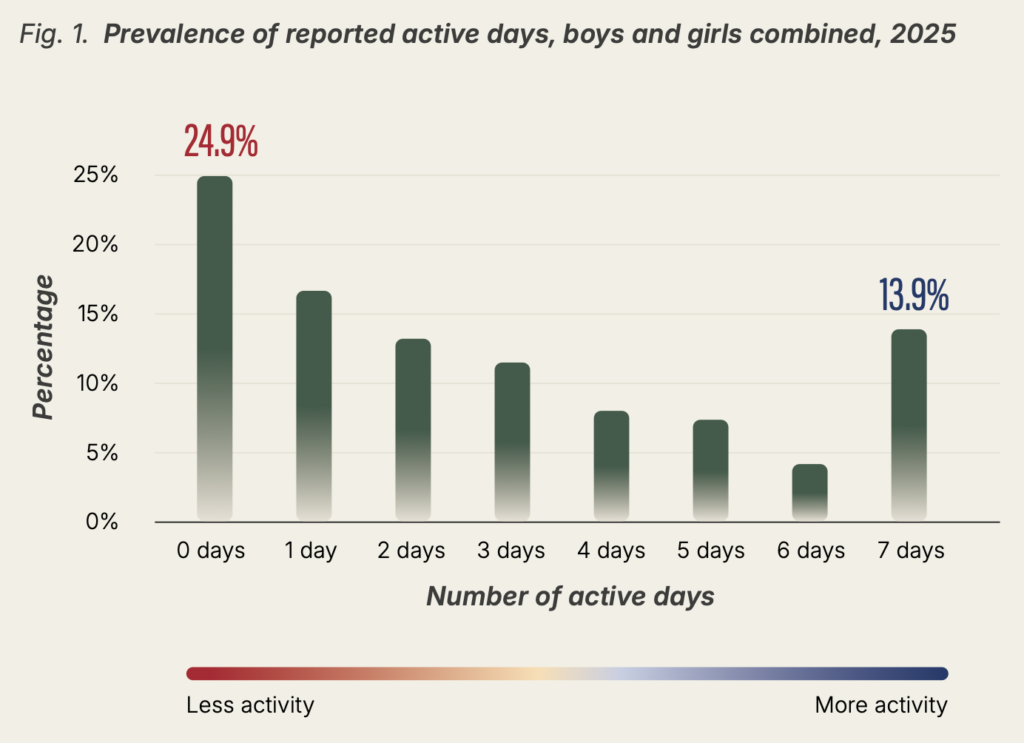
A comprehensive new assessment released by the World Health Organization (WHO) and published in The Lancet Global Health reveals that one in every four adolescents globally continues to suffer from a profound lack of physical activity. The report, titled "A generation missing out," underscores a persistent public health crisis: approximately 240 million young people aged 11 to 17 fail to secure the moderate-to-vigorous physical exertion necessary for healthy physical, cognitive, and social development. Based on an expansive dataset comprising 389 population-based surveys across 140 countries and territories—representing roughly 3.2 million adolescents—the findings indicate that only 14 percent of surveyed youths meet the WHO recommendation of at least 60 minutes of daily physical activity.
On average, adolescents globally report achieving the recommended threshold of daily movement on only 2.7 days out of the week. This alarming baseline has remained virtually unchanged for a decade and a half, signaling a systemic failure across multiple societal pillars to prioritize and facilitate youth movement. Public health experts warn that without immediate, structural interventions, this inactive generation faces a significantly heightened trajectory toward chronic non-communicable diseases (NCDs) later in life, placing an unprecedented burden on global healthcare infrastructure.

Fifteen Years of Stagnation: A Chronology of Inaction
To understand the current crisis, public health analysts trace the trajectory of global monitoring efforts back to 2010, when the WHO first established baseline metrics for adolescent physical inactivity. At that time, global health officials recognized that urbanization, digital technology adoption, and shifting transportation paradigms were fundamentally altering how children and adolescents interact with their physical environments.
By 2016, a subsequent global assessment demonstrated that the needle had barely moved, with inactivity rates hovering stubbornly around 80 percent globally. The newly published 2026 data confirms that the intervening decade has yielded negligible progress. Despite numerous regional frameworks, school health initiatives, and athletic campaigns, the global proportion of inactive adolescents has flatlined.
During an embargoed press briefing ahead of the report’s launch, WHO Director-General Dr. Tedros Adhanom Ghebreyesus pulled no punches regarding the lack of systemic headway. For 15 years, he noted, the international community has watched young people fall behind, with girls shouldering the steepest deficit. Crucially, Dr. Tedros emphasized that the solution does not lie in placing the onus back on adolescents through motivational campaigns, but rather in fundamentally reshaping the built environment—designing schools, neighborhoods, and municipal infrastructure where active lifestyles are the default choice rather than the exception.
Methodological Insights and the Deepening Gender Gap
The monumental study captured approximately 60 percent of the global adolescent population through self-reported questionnaires regarding their activities over the preceding week. While the metrics uniformly highlight a broad societal deficit, the data exposes a stark, persistent gender disparity that cuts across nearly every geographic and cultural boundary.
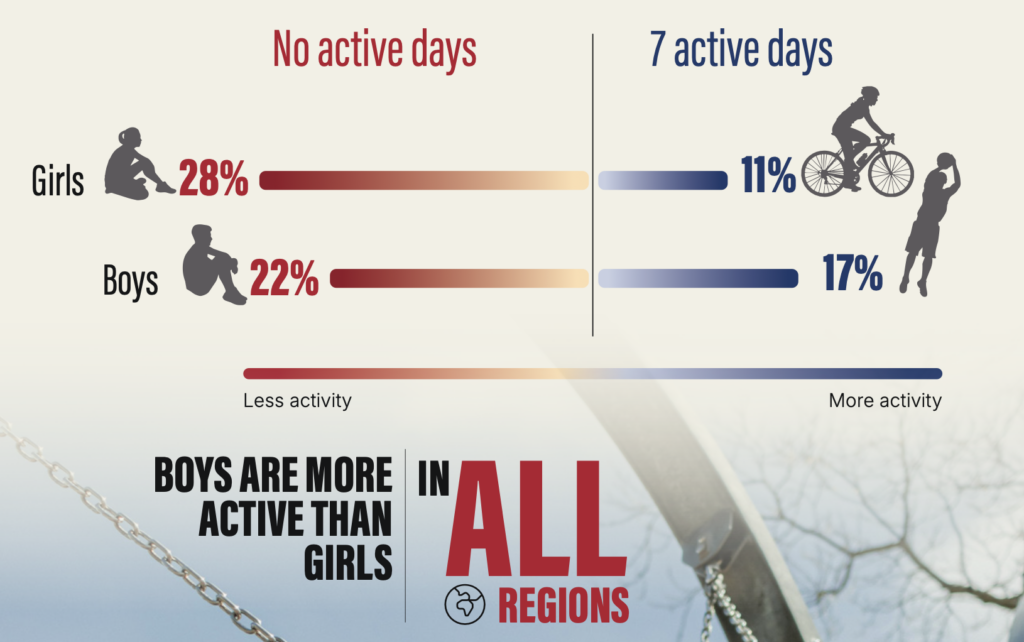
Globally, adolescent girls are significantly less active than boys. Approximately 28 percent of girls reported zero days of moderate-to-vigorous physical activity during the survey week, compared to 22 percent of boys. Furthermore, only 11 percent of girls achieved the recommended 60 minutes of daily activity across all seven days of the week, contrasted with 17 percent of boys.
Dr. Fiona Bull, WHO’s head of Physical Activity Promotion, elaborated on the multifaceted drivers behind this gender gap during the briefing. She explained that the deficit is rooted in a complex matrix of social, cultural, and structural barriers. At the institutional level, girls often face a dearth of visible female role models and professional female coaches in formal sports environments. At the community level, prevailing social norms frequently dictate that girls are discouraged from utilizing public spaces for recreation, or that active pursuits are deemed culturally inappropriate.
Safety concerns also disproportionately affect female adolescents, limiting their freedom of movement in public spaces, streets, and parks. However, the data offers a strategic pathway for policymakers: surveys indicate that adolescent girls exhibit a higher affinity for non-traditional activities such as dance. Health experts argue that expanding institutional and community-based access to diverse movement options—moving beyond traditional competitive team sports—presents a vital opportunity to re-engage inactive girls.
Stark Regional Polarization and Societal Determinants
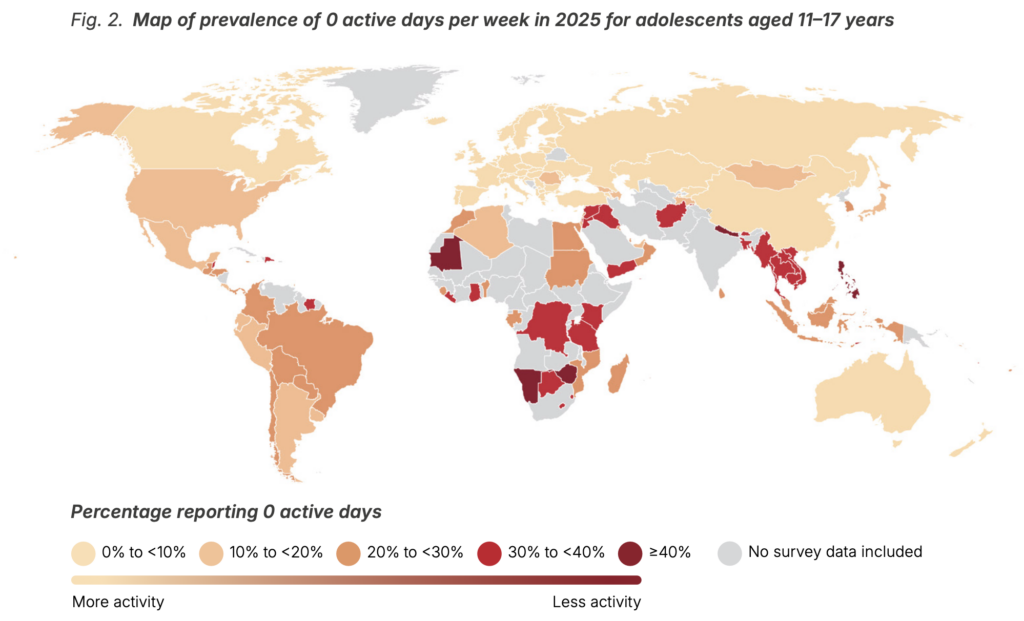
The crisis of adolescent inactivity is not distributed uniformly across the globe; rather, the data reveals a stark polarization between low- and middle-income regions and high-income nations.
In most of Europe, high-income Asian nations, and parts of the Americas, 90 percent or more of adolescents reported engaging in at least some physical activity during the week. Conversely, regions across Sub-Saharan Africa, the Middle East, and parts of South Asia present an alarming pattern where upwards of 40 percent of respondents reported zero active days throughout the week.

Dr. Leanne Riley, unit head of surveillance, monitoring, and reporting at WHO’s NCD division, highlighted this dichotomy, noting that low- and middle-income settings are frequently characterized by a high prevalence of completely inactive weeks. This regional divergence is heavily influenced by rapid, often unplanned urbanization, inadequate public transport infrastructure, a lack of pedestrian-friendly pathways, and the proliferation of unsafe environments for walking or cycling to school.
Physical activity is ultimately shaped by where adolescents live, learn, and travel. Factors such as neighborhood design, the availability of green spaces, household economic stability, and the pervasive shift toward screen-based sedentary lifestyles collectively dictate whether a young person can safely incorporate movement into their daily routine.
Health Implications and the Economic Burden of Inactivity
The long-term physiological and psychological consequences of sustained physical inactivity during adolescence are profound. Dr. Etienne Krug, Director at WHO’s Department of Health Determinants, Promotion and Prevention, underscored that regular movement is one of the most powerful prophylactic measures against the global surge of non-communicable diseases.
Inactivity is a primary, independent risk factor for cardiovascular disease, stroke, type-2 diabetes, and specific forms of cancer. Beyond metabolic health, the absence of physical exertion deprives adolescents of critical mental health dividends. Clinical research consistently demonstrates that physical activity reduces symptoms of anxiety and depression, enhances cognitive function, builds musculoskeletal strength, and fosters vital social connections among peers.
Because adolescence is a critical developmental window characterized by neuroplasticity and habit formation, behaviors established during these formative years frequently dictate lifestyle choices well into adulthood. Failing to instill healthy movement habits in youth effectively preprograms populations for chronic disease later in life, creating a compounding crisis for global healthcare systems and national economies.
Multi-Sectoral Solutions: Urban Planning, Transport, and School Environments
Addressing the adolescent inactivity crisis requires a fundamental paradigm shift away from individual behavioral counseling toward structural, multi-sectoral policy interventions. The WHO report explicitly calls for coordinated action spanning urban planning, national transportation policy, and educational reform.

Public health engineers and urban planners must collaborate to design active transport environments. This entails heavy public investments in connected, safe walking and cycling networks that link residential neighborhoods directly to schools, parks, and community centers. Public transport systems must also evolve to seamlessly accommodate and encourage active commuting habits among youth.
Within educational institutions, school environments must be reimagined to prioritize physical education, active recess periods, and extracurricular movement programs. Rather than viewing physical education as peripheral to academic achievement, policymakers must recognize movement as a foundational prerequisite for cognitive engagement and holistic student well-being.
Private Sector Engagement: The Sporting Goods Industry Responds
In an encouraging development following the publication of the WHO report, the private sector has stepped forward to pledge coordinated action. Approximately 83 major sporting goods companies, manufacturers, and international sports federations have signed an open letter coordinated by the World Federation of the Sporting Goods Industry (WFSGI).
Iconic global brands—including Adidas, ASICS, Bauer, Decathlon, New Balance, and Nike—have committed to leveraging their market reach, innovation capacity, and community networks to help reverse the trend of adolescent inactivity. In their joint statement, the signatories acknowledged that corporate responses must be diverse, ranging from making athletic apparel and equipment more financially accessible to investing in grassroots participation programs, supporting school-level athletics, and deploying technological innovations to dismantle barriers to entry for marginalized youth.
Ultimately, the WHO’s landmark assessment serves as a clarion call to governments, urban planners, educators, and industry leaders. Reversing the trajectory of 240 million inactive adolescents will require sustained political will, financial investment, and a cultural commitment to building cities and communities where movement is safe, accessible, and normative for every young person.