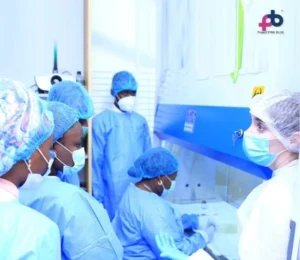
The Nigerian healthcare landscape stands at a critical crossroads, facing a dual burden of infectious diseases and a rising tide of non-communicable diseases (NCDs). In response to these growing challenges, Dr. Olumuyiwa Olusanya, a distinguished healthcare management professional and Managing Partner at Insignia Health, has issued an urgent call for a fundamental restructuring of the nation’s medical priorities. Speaking at a recent webinar organized by SYNLAB, a leading provider of laboratory diagnostic services, Dr. Olusanya argued that Nigeria’s current "reactive" healthcare model—which focuses on treating illnesses only after they manifest—is economically unsustainable and clinically inefficient.
Dr. Olusanya, who serves as a prominent member of the International Society for Pharmacoeconomics and Outcomes Research (ISPOR), emphasized that for decades, healthcare financing in Nigeria and across the African continent has been synonymous with acute care. This focus on "paying for sickness" rather than "investing in health" has left millions of citizens vulnerable to catastrophic health expenditures and late-stage diagnoses. The webinar, titled “Financing Beyond Treatment: Covering Prevention, Diagnostics and Continuity of Care,” served as a platform for industry experts to dissect the systemic failures of the current framework and propose a roadmap for a more resilient healthcare future.
The Paradigm Shift: From Reactive to Proactive Healthcare
The core of Dr. Olusanya’s thesis is the necessity of reimagining the healthcare value chain. He posited that the traditional model, which prioritizes hospital admissions and pharmaceutical interventions over early detection, is the primary driver of the high mortality rates associated with manageable conditions. “For a long time, healthcare financing in Nigeria has been synonymous with paying for treatment after people have fallen ill,” Olusanya stated. “Today, we must transition to a system where we finance the full spectrum of care, from prevention to treatment.”
Central to this transition is the elevation of diagnostics. Citing data from the World Health Organization (WHO), Olusanya noted that approximately 65 percent of all clinical decisions are informed by diagnostic results. This statistic highlights a glaring disconnect in the Nigerian system: while diagnostics are the bedrock of evidence-based medicine, they remain chronically underfunded and under-integrated into standard insurance packages. Without accurate and early diagnostic data, physicians are often forced to treat symptoms rather than root causes, leading to suboptimal patient outcomes and wasted resources.
The Economic Imperative of Early Detection
One of the most compelling arguments presented during the webinar was the sheer economic cost of delayed medical intervention. Dr. Olusanya provided a sobering breakdown of how the cost of care escalates when diseases are detected in their advanced stages. The financial implications are particularly devastating for NCDs, which are now responsible for a significant portion of the healthcare burden in urban Nigeria.
According to the data presented:
- Breast Cancer: Treatment costs can escalate by as much as 8.5 times when diagnosed at a late stage compared to early-stage detection. Early intervention often involves localized surgery and hormone therapy, whereas late-stage care requires expensive chemotherapy, radiotherapy, and palliative care.
- Diabetes: Managing complications such as neuropathy, retinopathy, and kidney failure can increase costs by approximately six times compared to early management through lifestyle changes and basic medication.
- Hypertension: The cost of managing strokes or heart failure resulting from unmanaged high blood pressure is five times higher than the cost of routine monitoring and preventive medication.
- Cervical Cancer: This condition showed the most dramatic disparity, with late-stage treatment costs rising nearly ten times higher than early detection and preventive screening.
These figures illustrate that the lack of focus on diagnostics is not merely a medical oversight but a profound economic failure. When individuals are forced to pay out-of-pocket for late-stage treatments, it frequently leads to "catastrophic health spending," defined by the WHO as a situation where health expenditures exceed 40 percent of a household’s capacity to pay, often pushing families into permanent poverty.
Systemic Barriers: High Out-of-Pocket Expenditure and Low Insurance Coverage
The challenge of shifting toward a preventive model is compounded by the structural weaknesses in Nigeria’s healthcare financing. Currently, the Nigerian healthcare system is characterized by a massive reliance on out-of-pocket (OOP) payments. Dr. Olusanya highlighted that over 70 percent of total healthcare expenditure in the country is funded directly by individuals at the point of service. This is significantly higher than the global average and far exceeds the 30-40 percent threshold recommended for achieving Universal Health Coverage (UHC).
Furthermore, despite the transition of the National Health Insurance Scheme (NHIS) to the National Health Insurance Authority (NHIA) under the new Act of 2022, insurance penetration remains alarmingly low. Fewer than 10 percent of Nigerians are currently covered by any form of health insurance. This lack of coverage creates a barrier to preventive care, as uninsured individuals are unlikely to seek diagnostic tests or screenings when they do not feel actively ill, fearing the immediate financial cost.
The fragmentation of the system also presents a hurdle. Funding is currently split across federal, state, and local government levels, often operating in silos. "There is no uniformity," Olusanya lamented. "Funds are fragmented, and schemes operate in silos. This is not helping the system." This lack of coordination means that even when preventive programs are initiated, they often lack the scale or the data-sharing infrastructure necessary to be effective.
Structural Proposals for Healthcare Financing Reform
To address these systemic gaps, Dr. Olusanya proposed several radical but necessary reforms to the way health insurance and public health funds are managed. He advocated for a "ring-fencing" strategy, where a specific percentage of health insurance premiums is strictly allocated to diagnostics and preventive services.

"We can ring-fence about 15 to 20 percent of premiums to fund preventive care through diagnostics," he suggested. By earmarking these funds, insurers would be forced to prioritize wellness checks and screenings, ensuring that these services are not sidelined in favor of more expensive surgical or emergency interventions.
Other key proposals included:
- Mandatory Screenings: Integrating age- and gender-specific diagnostic packages into all standard health plans. This would ensure that screenings for conditions like prostate cancer, cervical cancer, and hypertension become a standard entitlement for every enrollee.
- Incentivized Compliance: Introducing a "no-claim bonus" or lower premium rates for individuals who demonstrate high compliance with annual health screenings. This approach borrows from the general insurance sector (such as auto insurance) to encourage proactive health management.
- Structured Diagnostic Packages: Developing affordable, tiered screening packages that can be easily adopted by both private and social health insurance schemes.
The Role of Diagnostic Providers and Community Access
The webinar also touched upon the responsibility of the private sector, particularly diagnostic service providers like SYNLAB. Dr. Olusanya noted that for a preventive model to work, testing must be accessible and affordable. Diagnostic providers must work in tandem with health maintenance organizations (HMOs) to expand their footprint into underserved communities.
"Diagnostics providers must develop affordable screening packages in partnership with health schemes and expand access to testing at the community level," he said. This includes leveraging technology for faster reporting and using mobile diagnostic units to reach populations that may not have easy access to major urban medical centers.
Furthermore, the concept of "continuity of care" was highlighted as a vital component of the preventive strategy. Prevention does not end with a single test; it requires a lifecycle approach that includes follow-up consultations, diagnostic surveillance, and compliance tracking for those identified as high-risk. This is particularly crucial for chronic conditions like diabetes and hypertension, where regular monitoring can prevent the onset of life-threatening complications.
Policy Enforcement and the National Health Insurance Authority (NHIA)
While the National Health Insurance Authority Act of 2022 makes health insurance mandatory for all Nigerians, Dr. Olusanya observed that enforcement remains the "weakest link" in the chain. The Act provides a robust legal framework for expanding coverage, but without stringent implementation and the integration of preventive services, the mandate may fail to deliver the desired impact on public health.
The expert called for a deliberate shift in policy focus, urging the NHIA and state-level contributory health agencies to move beyond the "basic minimum package" that often only covers primary treatments. Instead, he argued that the definition of "essential care" must be expanded to include the very diagnostic tools that prevent long-term disability and death.
Analysis of Implications: A Healthier Workforce and a Stronger Economy
The implications of Dr. Olusanya’s proposals extend far beyond the medical sector. From a macroeconomic perspective, a shift toward diagnostics and prevention could significantly boost Nigeria’s productivity. Late-stage illnesses often afflict the working-age population, leading to lost man-hours and decreased economic output. By keeping the workforce healthy through early detection, the nation can preserve its human capital.
Moreover, reducing the prevalence of catastrophic health spending would have a stabilizing effect on the economy. When families are not forced to sell assets or take out high-interest loans to pay for emergency medical care, they have more disposable income to invest in education and small businesses, fostering overall economic growth.
The SYNLAB webinar has reignited a critical conversation about the future of Nigerian healthcare. The consensus among experts is clear: the current model is a race against time that the country is currently losing. By reframing diagnostics and prevention as an "investment" rather than a "cost," Nigeria has the opportunity to build a healthcare system that is not only more equitable but also more resilient in the face of future health crises.
As Dr. Olusanya concluded, “Prevention and diagnostics are not costs; they are investments. If we embed them properly into our healthcare system and financing models, we will reduce catastrophic health spending and improve outcomes for all Nigerians.” The challenge now lies with policymakers, insurers, and healthcare providers to turn these recommendations into a functional reality.