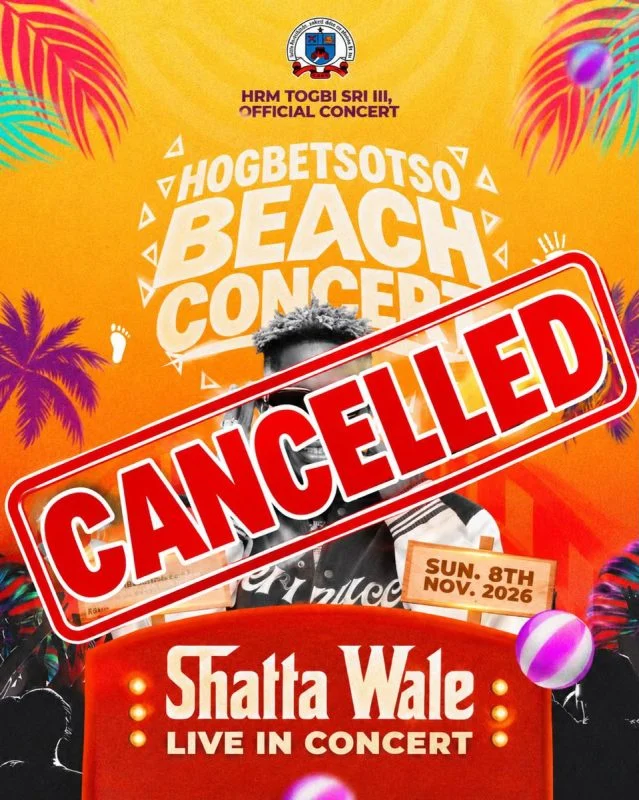
The entertainment landscape of the Volta Region experienced an abrupt shift on Sunday afternoon as organizers announced the sudden cancellation of the highly anticipated Hogbetsotso Beach Concert, which was set to feature Ghanaian dancehall heavyweight Shatta Wale. Billed as the official concert of HRM Togbi Sri III, the high-profile event was slated for Sunday, November 8, 2026, at the Eli Beach Resort and Hotel in Tegbi. The announcement, first disseminated via an official statement on X by prominent media outlet TV3 Ghana, has left thousands of festivalgoers, music enthusiasts, and tourism stakeholders searching for answers regarding the abrupt halt to one of the flagship events of the annual Anlo Hogbetsotso Festival weekend.
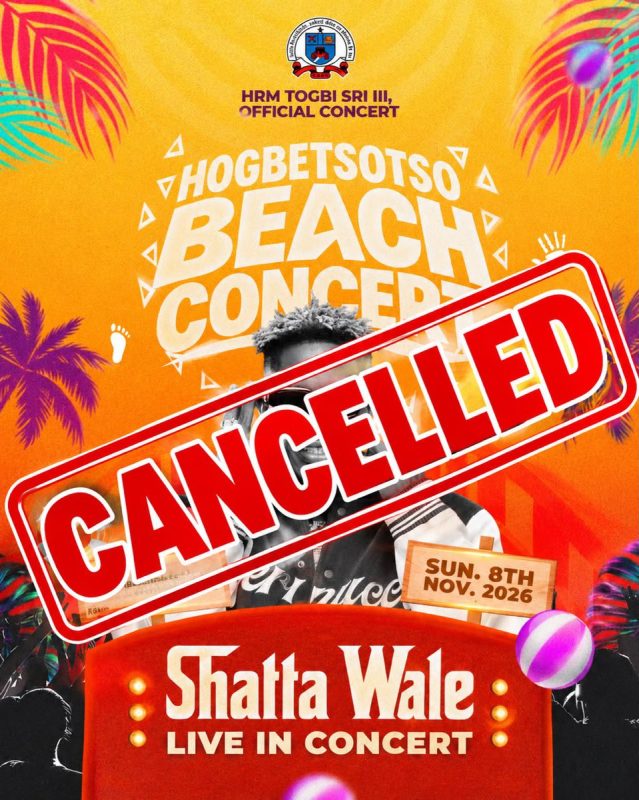
The breaking news was accompanied by promotional event artwork emblazoned with a bold red "Cancelled" stamp across the original publicity material. Despite the definitive nature of the announcement, neither the event organizers, the traditional authorities, nor Shatta Wale’s management team provided an immediate explanation for the cancellation, leaving fans and industry insiders to speculate whether the massive concert might be rescheduled for a later date.
Festival Background and Cultural Significance
To understand the weight of the cancellation, one must look at the cultural and economic magnitude of the Anlo Hogbetsotso Festival. Celebrated annually on the first Saturday of November, Hogbetsotso is the premier cultural gathering of the Anlo Ewe people, centered primarily in Anloga, the traditional capital of the Anlo state in the Volta Region of Ghana. The festival commemorates the historic migration of the Ewe people from Notsie in present-day Togo to their current coastal settlements, serving as a powerful symbol of resilience, unity, and cultural preservation.
In recent years, the festival has evolved far beyond traditional durbars and customary rites. Recognizing the immense drawing power of contemporary Ghanaian youth culture, organizers have increasingly integrated modern entertainment spectacles into the week-long itinerary. High-energy beach concerts, street jams, and artist-led music festivals have been deliberately woven into the Hogbetsotso calendar to attract domestic and international tourists, significantly boosting the local economy, hospitality sector, and small businesses in the Volta Region.
The 2026 edition of the festival operated under the resonant theme, "Anlo, Our Heritage and Our Values: Striving to Build One Ghana for a Better Tomorrow." This overarching message emphasized community cohesion, national development, and the preservation of ancestral dignity, making the inclusion of top-tier musical acts a vital bridge between traditional heritage and contemporary Ghanaian identity.
Chronology of Events and Festival Lineup Disruptions
The cancellation of the Shatta Wale concert is part of a turbulent week for large-scale entertainment bookings surrounding the 2026 Hogbetsotso celebrations. The trouble began earlier in the week, pointing to a series of logistical and strategic adjustments across the festival’s entertainment circuit:
- November 5, 2026: The Ghana News Agency (GNA) officially confirmed that dancehall icon Shatta Wale was locked in to headline the Sunday Hogbetsotso Beach Concert at Eli Beach Resort and Hotel in Tegbi. This booking was strategically positioned as the grand finale of the entertainment weekend, following a stacked Saturday schedule.
- November 6, 2026: Tourism and entertainment portals, including 3News, heavily promoted the weekend lineup, highlighting major performances by fellow dancehall star Stonebwoy and vocal powerhouse MzVee at Lalana Beach in Anloga, scheduled ahead of the Saturday grand durbar.
- November 7, 2026: The traditional grand durbar took place in Anloga, drawing massive crowds of dignitaries, chiefs, and citizens. However, concurrent entertainment offerings hit their first major roadblock when EdemFest—planned for Emancipation Beach on Saturday—was abruptly postponed. The organizers, Volta Regime Music Group, released a statement indicating that a strategic opportunity had emerged, promising a rescheduled date in the future.
- November 8, 2026: The cascading effect of festival weekend adjustments culminated on Sunday afternoon when TV3 Ghana broadcast the official cancellation notice for the HRM Togbi Sri III Official Concert featuring Shatta Wale, stunning ticket holders who had already gathered or traveled to Tegbi for the event.
Economic and Cultural Implications
The cancellation of an event of this magnitude carries multifaceted implications for the local economy, tourism promotion, and the broader Ghanaian music industry. Major concerts featuring artists of Shatta Wale’s stature act as massive economic catalysts for host communities. Hotels, guesthouses, restaurants, transport operators, and local vendors in Tegbi, Anloga, and surrounding Volta Region towns rely heavily on the influx of tourists during the Hogbetsotso weekend to generate substantial revenue.
When a headlining event is canceled at the eleventh hour, the immediate financial fallout can be severe. Hoteliers and transport providers face sudden cancellations, while local vendors who stocked up on goods anticipating thousands of revelers are left with surplus inventory. Furthermore, such abrupt changes can disrupt travel itineraries for international and domestic tourists who planned their entire weekend around the concert experience.
From a branding perspective, the consecutive disruptions—marked by both the postponement of EdemFest and the cancellation of the Togbi Sri III concert—underscore the complex logistical challenges of executing multi-day, high-capacity entertainment events during massive cultural festivals. Organizing committees, traditional authorities, and private event promoters must navigate complex regulatory environments, security demands, corporate sponsorships, and technical requirements, any of which can become points of friction.
Stakeholder Reactions and Industry Analysis
As of Sunday evening, formal statements from Shatta Wale’s management team and the traditional council led by HRM Togbi Sri III were still pending. Industry analysts note that clear and timely communication is critical in maintaining consumer trust, particularly within Ghana’s vibrant live music sector, where fans often travel long distances to support their favorite artists.
The lack of an official reason behind the Sunday afternoon cancellation has inevitably fueled speculation across social media platforms, with fans debating whether unforeseen logistical hurdles, weather conditions, security concerns, or contractual disagreements precipitated the shutdown. Media watchdogs and entertainment pundits have emphasized the necessity for enhanced transparency from event organizers to mitigate disappointment and protect the commercial viability of festival-tied entertainment.
Despite these setbacks, the core cultural events of the 2026 Hogbetsotso Festival, including the traditional rites and durbars, proceeded successfully, underscoring the resilience of the Anlo heritage. However, the entertainment sector’s turbulence serves as a stark reminder of the fragile nature of live event production and the urgent need for robust contingency planning.
As stakeholders await further developments, questions remain regarding whether Shatta Wale’s performance will be rescheduled for a future date or if refunds will be systematically issued to ticket holders. Observers of the Ghanaian entertainment industry will undoubtedly monitor how organizers address the fallout, setting a precedent for how future festival-associated concerts manage unexpected crises.