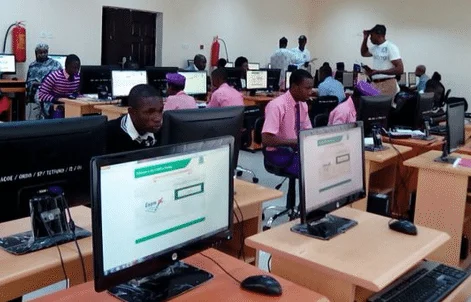
The Joint Admissions and Matriculation Board (JAMB) has officially announced that the 2024 Unified Tertiary Matriculation Examination (UTME) mock examination will be conducted on Thursday, March 7, 2024. This optional preliminary assessment is designed specifically for candidates who indicated an interest in participating during their initial registration phase. The exercise will take place across all accredited Computer-Based Test (CBT) centers nationwide, serving as a critical dry run for millions of prospective undergraduates seeking admission into Nigerian tertiary institutions.
As the date approaches, registered candidates who opted for the mock test are required to obtain their official examination slips. These documents contain vital information, including the designated CBT center, specific shift timings, and assigned seat numbers. Educational authorities and examination officials strongly advise participants to either reprint their slips directly from the official JAMB portal or check their registered email addresses for digital copies sent by the board.
Main Facts and Operational Overview of the 2024 UTME Mock
The primary objective of the JAMB mock examination is to adequately prepare candidates for the actual UTME by familiarizing them with the computerized testing environment, software interface, and general operational procedures. For many secondary school leavers and direct-entry aspirants, the mock test minimizes anxiety and builds confidence before the high-stakes main examination.
According to guidelines issued by the board, participation in the mock exam requires prior indication of interest during the main registration period. Candidates who opted in were required to pay a designated fee of ₦1,500. Educational administrators explained that this financial requirement was implemented to prevent financial losses for CBT center operators, which historically occurred when large numbers of candidates registered for the mock examination but failed to show up on test day, thereby wasting allocated resources and seating capacity.
The examination covers the standard four subjects chosen by each candidate, mirroring the format of the actual UTME. The questions are designed to test aptitude, comprehension, and subject-specific knowledge in accordance with the Nigerian secondary school curriculum. By simulating actual testing conditions—complete with time constraints and security protocols—the board ensures that candidates understand how to manage their time effectively during the main examination.
Step-by-Step Guide to Printing the JAMB Mock Examination Slip
To ensure a seamless process on examination day, candidates must present a printed copy of their mock examination slip alongside a valid form of identification. JAMB has provided a straightforward digital portal for this purpose. Candidates can follow these verified steps to retrieve and print their documents:
- Navigate to the official JAMB mock slip printing portal by visiting the designated web address at https://www.jamb.org.ng/ExamSlipPrinting1/PrintMockExaminationSlip.
- Input the exact JAMB Registration Number or the verified Email Address used during the initial registration process into the designated search field.
- Click on the button labeled Print Examination Slip to initiate the retrieval process from the central database.
- Review the displayed examination details, which will clearly outline the assigned CBT venue, scheduled time, and individual seat number, then proceed to print the document using a standard printer.
Candidates are strongly advised to print multiple copies of the slip and store a digital backup on their mobile devices or cloud storage. Arriving at the designated center without a physical copy of the slip may lead to denial of entry by center security personnel.
Background Context and Chronology of the UTME Registration Cycle
The announcement of the mock examination date is part of a broader, meticulously planned academic calendar managed by JAMB under the leadership of its Registrar, Professor Is-haq Oloyede. The 2024 UTME registration and examination cycle began months prior with extensive stakeholder consultations, software upgrades, and the accreditation of CBT centers across the 36 states of the federation and the Federal Capital Territory (FCT).
Historically, the introduction of the mock examination was hailed as a progressive step by educational stakeholders. Prior to its implementation, thousands of candidates encountered computer-related challenges on the day of the main UTME, ranging from an inability to navigate basic mouse functions to unfamiliarity with on-screen calculators and time-management tools. By introducing a standardized rehearsal, JAMB significantly reduced technical friction and enhanced overall examination integrity.
The timeline leading up to the March 7 mock examination involved several critical milestones:
- Late 2023: Facility inspections and re-accreditation of CBT centers to ensure compliance with modern hardware and software standards.
- January 2024: Commencement of the main UTME registration exercise, accompanied by the integration of the mock exam option and the associated ₦1,500 fee.
- February 2024: Conclusion of the registration window, data cleaning, and allocation of candidates to verified CBT centers based on geographical proximity and center capacity.
- Early March 2024: Release of mock examination slips and final logistical preparations by center administrators and security agencies.
- March 7, 2024: Nationwide conduct of the UTME mock examination.
Following the mock examination, the board typically analyzes performance data and logistical feedback from center managers. This evaluation period helps identify any recurring technical glitches, power supply challenges, or connectivity bottlenecks, allowing the board to implement corrective measures well before the commencement of the main UTME.
Supporting Data and Capacity Metrics
Administering a nationwide computer-based examination for over one and a half million candidates annually requires immense logistical coordination. While the mock examination attracts a smaller percentage of the total applicant pool—typically numbering in the hundreds of thousands—it utilizes the same infrastructural framework as the main test.
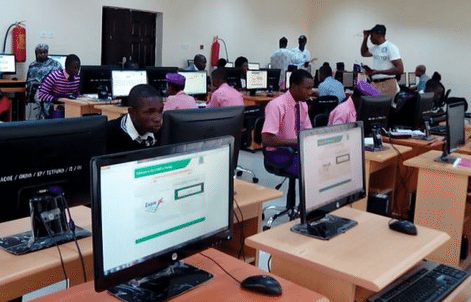
Nigeria currently boasts hundreds of approved CBT centers distributed across urban and rural settlements. These centers must meet strict infrastructural guidelines, including a minimum number of functional desktop computers or laptops, uninterrupted backup power systems (such as high-capacity generators and inverters), robust wide-area network (WAN) connectivity, and closed-circuit television (CCTV) surveillance to curb examination malpractice.
Data from previous testing cycles indicates that candidates who participate in the mock examination generally demonstrate a higher level of digital literacy and time management during the main UTME. Educators note that the psychological barrier of facing a computerized standardized test for the first time is largely dismantled during the mock phase, leading to improved performance outcomes for participating students.
Official Responses and Stakeholder Perspectives
Education analysts, parent-teacher associations, and student unions have largely commended JAMB for its consistent adherence to its operational calendar. Spokespersons for various educational advocacy groups have noted that transparent communication regarding dates, fees, and procedures helps alleviate the anxiety traditionally associated with tertiary entrance examinations in Nigeria.
Commenting on the rationale behind the non-refundable mock fee, board officials reiterated that the policy was introduced to enforce commitment among applicants. In earlier years, thousands of candidates who registered for the mock examination failed to show up, forcing center operators to incur operational costs and depriving other serious candidates of testing slots. The nominal fee ensures that only genuinely interested participants occupy available seats at accredited centers.
Furthermore, security agencies and anti-fraud units maintain a collaborative relationship with JAMB to ensure that examination centers remain secure. Measures such as biometric verification using the, Computer-Based Test malpractice prevention software, and restricted access to exam halls have become standard protocols during both mock and main examinations.
Broader Impact and Implications for the Nigerian Education Sector
The successful execution of the JAMB mock examination carries significant implications for the wider Nigerian education ecosystem. By continuously refining the computer-based testing process, JAMB sets a benchmark for standardized assessment within the country.
First, the emphasis on digital proficiency during the mock and main examinations forces secondary schools—both public and private—to upgrade their computer laboratories and integrate computer-based learning into their daily curricula. This systemic shift ensures that Nigerian students are better prepared for modern academic and professional environments where digital literacy is paramount.
Second, the reliability and transparency of the pre-testing phase bolster public confidence in the admissions process. Admissions into Nigerian universities, polytechnics, and colleges of education rely heavily on the credibility of UTME scores. A thorough rehearsal of the testing infrastructure ensures that technical failures are minimized, thereby safeguarding the academic future of millions of young Nigerians.
As candidates prepare for the March 7, 2024, mock examination, educational experts advise participants to treat the exercise with the same seriousness as the main UTME. Reviewing past questions, familiarizing oneself with computer hardware basics, and adhering strictly to reporting times outlined on the printed slips remain critical success factors. With preparations finalized across all centers, the stage is set for another milestone in Nigeria’s educational assessment journey.