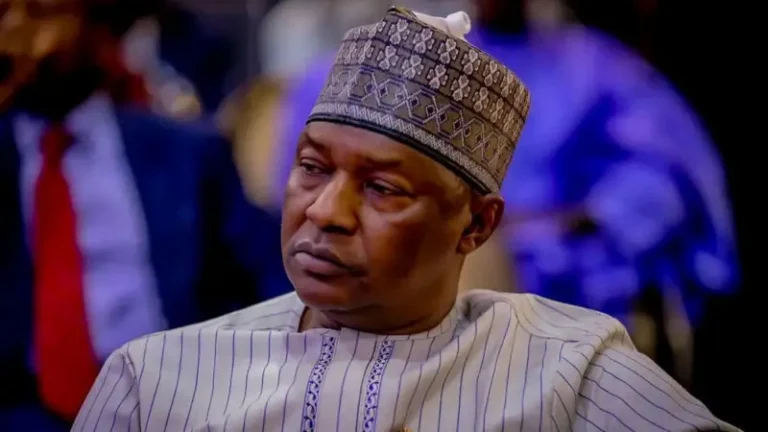
The African Democratic Congress (ADC) in Kebbi State has vehemently asserted that the ongoing investigation and subsequent prosecution of its gubernatorial candidate and former Attorney-General of the Federation (AGF) and Minister of Justice, Abubakar Malami (SAN), are politically orchestrated maneuvers designed to destabilize the opposition ahead of the 2027 general elections. The party, through a joint statement issued on Saturday in Birnin Kebbi, warned that such tactics would not deter its resolve to challenge the incumbent All Progressives Congress (APC) government.
The statement, co-signed by Sufiyanu Bala, the State Chairman of the ADC, and Alhaji Shehu Sambawa, Chairman of the ADC Elders Forum, underscored the party’s position. While affirming its commitment to the rule of law and non-opposition to legitimate investigations into alleged wrongdoing, the ADC unequivocally accused the ruling APC of weaponizing state institutions, particularly anti-graft agencies, to systematically weaken political opponents across the nation. This accusation draws parallels to historical instances where state power has been perceived to be used for political ends, raising concerns about democratic fairness and the integrity of the electoral process.
“We are not averse to lawful investigation, arraignment and/or prosecution of any suspect, but we are not blind to the ongoing Gestapo method of muzzling members of the opposition parties from across the nation,” the statement read, employing strong language to convey their perceived targeting. The party further declared its unyielding determination, stating, “No amount of political persecution, suppression, blackmail or intimidation will take our minds and eyes away from the big goal, that is, to defeat the discredited APC Government at the polls come the 2027 General Elections.” This firm stance highlights the high stakes involved in Malami’s case, not just for the individual but for the broader political landscape in Kebbi State and potentially beyond.
The ADC elaborated on its conviction that the entire process—from the initial petition to Malami’s investigation, arrest, detention, and formal prosecution—has been meticulously engineered to achieve a predetermined political outcome. The party characterized the legal proceedings as "politically motivated," suggesting a lack of genuine legal impetus. Specific grievances included the alleged arrest and detention of Malami over what the party described as a bailable offense, coupled with claims that his properties were searched in his absence, procedures that, if true, could raise questions about due process and legal propriety. These procedural concerns form a significant part of the ADC’s narrative of political persecution.
“It is even more clear that from the politically motivated petition, investigation, arrest, detention and prosecution, the Malami, SAN matter is primarily dictated, designed and orchestrated to achieve a predetermined goal,” the statement reiterated, emphasizing the party’s belief in a grand design. Furthermore, the ADC challenged the basis of allegations concerning Malami’s assets, arguing that they failed to adequately consider his personal and family background and financial standing prior to his ministerial appointment. This suggests a defense strategy that will likely focus on demonstrating legitimate sources of wealth, predating his time in public office, to counter accusations of illicit enrichment.
Despite the formidable legal challenges, the ADC expressed unwavering confidence in the judicial system, particularly the appellate courts. “The good thing about Malami’s case is that his prosecutors have no final say on the accusations levelled against him and we are supremely confident that the appellate court will do justice to him,” the party stated, indicating a long-term legal battle and a belief in ultimate vindication through higher judicial review. This position underscores the party’s strategic approach, acknowledging the immediate legal hurdles while banking on a potential reversal at a later stage.
Reaffirming its staunch support, the ADC declared the full backing of its Kebbi State chapter for Malami. “We wish to state, without equivocation, that the entire members of the ADC, Kebbi State Chapter, are solidly behind our Party Leader and Gubernatorial Candidate, come rain or shine,” the statement asserted, demonstrating party cohesion and loyalty in the face of adversity. The party further pledged that “no amount of blackmail, harassment, intimidation, name-calling and media trial will truncate our unalloyed commitment” to its objective of unseating the APC in the 2027 elections. The ADC framed the current difficulties as necessary sacrifices in a broader struggle to "restore democratic governance," signaling their commitment to their political agenda despite perceived intimidation.
Abubakar Malami: A Profile and Political Trajectory
Abubakar Malami’s journey in Nigeria’s political and legal landscape is marked by significant roles. A Senior Advocate of Nigeria (SAN), Malami served as the Attorney-General of the Federation and Minister of Justice from November 2015 to May 2023 under the administration of former President Muhammadu Buhari. His tenure as AGF was characterized by several high-profile legal battles, policy initiatives, and, at times, considerable controversy. He was a central figure in the administration’s anti-corruption drive, overseeing the prosecution of numerous alleged corrupt officials and the recovery of stolen national assets, both domestically and internationally.
During his time as AGF, Malami was involved in critical decisions regarding the independence of anti-graft agencies, the handling of high-profile corruption cases, and legal advice to the federal government on various constitutional matters. His office played a pivotal role in the repatriation of significant sums of looted funds from abroad, including the Abacha loot. However, his actions and decisions were not without scrutiny, often drawing criticism from civil society organizations, opposition parties, and legal experts who sometimes questioned the impartiality of certain prosecutions or the adherence to due process in some instances. These past controversies, while distinct from his current predicament, form part of the public’s perception of his legal and political career.
Malami’s political aspirations became evident with his bid for the Kebbi State governorship ticket, initially under the APC, which he later contested under the platform of the ADC for the 2027 elections. This transition from the ruling party to an opposition platform for a high-stakes gubernatorial race provides crucial context to the current allegations of political motivation. His move to the ADC, a party seeking to challenge the established political order in Kebbi, positions him directly against the interests of the incumbent APC in the state.
Chronology of Events Leading to the Prosecution
While specific dates for the ongoing case remain under wraps or are subject to legal proceedings, a plausible chronology can be inferred from the ADC’s statement and typical investigative processes in Nigeria:
- 2015-2023: Abubakar Malami serves as the Attorney-General of the Federation and Minister of Justice under President Muhammadu Buhari. During this period, he accumulates significant political capital and also becomes a target for scrutiny due to the sensitive nature of his office and the anti-corruption mandates.
- Post-May 2023: Following the end of the Buhari administration, Malami, like many former high-ranking officials, becomes eligible for investigation into his assets and actions while in office. This period is often a fertile ground for petitions and probes by anti-graft agencies, especially under a new political dispensation.
- Late 2023 – Early 2024 (Inferred): A petition is lodged against Abubakar Malami, likely concerning allegations of unexplained wealth, abuse of office, or other financial improprieties during his tenure as AGF. Such petitions often originate from civil society groups, whistleblowers, or political rivals.
- Early 2024 (Inferred): Anti-graft agencies, such as the Economic and Financial Crimes Commission (EFCC) or the Independent Corrupt Practices and Other Related Offences Commission (ICPC), commence preliminary investigations based on the petition. This involves intelligence gathering, review of public records, and initial interviews.
- Mid-2024 (Inferred): The investigation progresses to a more formal stage, potentially involving requests for Malami’s asset declaration forms, bank statements, and other financial documents. This is the period when the ADC alleges property searches were conducted, possibly in his absence, raising questions of due process.
- Late 2024 (Inferred): Malami is formally invited for questioning, leading to his arrest and detention. The ADC claims this was for a bailable offense, suggesting the severity of the initial charges might not have warranted prolonged detention under normal circumstances.
- Late 2024 – Early 2025 (Current Period): Malami is formally charged in court, and the prosecution officially begins. This is the stage where the ADC makes its public pronouncements about political motivation, as the case moves into the public domain and impacts his political standing for the 2027 elections. The matter is now actively before the courts.
Allegations and the ADC’s Defense
The specific allegations against Malami, while not fully detailed in the provided text, generally revolve around unexplained wealth and potentially illicit enrichment, common charges leveled against former public officials in Nigeria. Anti-graft agencies typically investigate discrepancies between an official’s declared assets and their known legitimate income, as well as any unusual financial transactions.
The ADC’s defense strategy, as articulated in their statement, is multifaceted:
- Political Motivation: This is the primary and most vocal defense. The party argues that the timing and nature of the prosecution are calculated to remove a strong opposition candidate from the 2027 gubernatorial race in Kebbi. They point to the "Gestapo method of muzzling members of the opposition" as evidence of a broader pattern.
- Procedural Irregularities: Claims of arrest for a bailable offense and property searches in Malami’s absence suggest a challenge to the legality and fairness of the investigative process. These procedural issues can be grounds for legal challenges, potentially leading to the dismissal of charges if proven.
- Background Justification of Assets: The ADC asserts that the allegations fail to account for Malami’s personal and family background and his financial standing before his appointment as AGF. This implies a defense that will trace the provenance of his assets to legitimate, pre-public office sources, arguing that his wealth is not solely a product of his time in government.
- Confidence in Appellate Courts: The party’s declared faith in the appellate courts suggests a long-term legal battle, where they anticipate a more impartial review of the evidence and procedure, leading to Malami’s exoneration.
Responses from Key Stakeholders
The political and legal ramifications of Malami’s prosecution elicit various responses from different stakeholders:
- Anti-Graft Agencies (EFCC/ICPC): These agencies consistently maintain that their investigations and prosecutions are strictly evidence-based, devoid of political influence, and conducted in accordance with the law. They typically assert their independence and commitment to fighting corruption regardless of the political affiliation or status of the accused. In such high-profile cases, they would emphasize the thoroughness of their investigations and the strength of the evidence presented to the courts.
- The Ruling All Progressives Congress (APC): The APC, both at the national and state levels, would likely distance itself from accusations of political interference. Their standard response would be to affirm their commitment to the rule of law, support for anti-corruption institutions, and emphasize that no one is above the law. They would likely argue that the legal process should be allowed to run its course without political commentary or obstruction.
- Legal Experts and Civil Society Organizations: Many legal experts would emphasize the importance of due process, fair trial, and the presumption of innocence. They would scrutinize the procedures followed by investigative agencies and the courts to ensure adherence to constitutional rights. Civil society groups, particularly those focused on good governance and anti-corruption, would call for transparency in the proceedings, urging that the case not be used as a political tool but as a genuine effort to combat corruption, while also advocating for the rights of the accused. They might also highlight the broader implications for accountability of public officials.
- The Judiciary: The courts, being the arbiters of justice, would be expected to conduct the trial impartially, weighing the evidence presented by both the prosecution and the defense. Their role is to ensure that justice is served according to the law, irrespective of the political pressures or public perceptions surrounding the case. The confidence expressed by the ADC in the appellate courts also underscores the judiciary’s critical role as a check on potential abuses.
Broader Implications and Analysis
The prosecution of a high-profile former Attorney-General, particularly one who is now a gubernatorial candidate for an opposition party, carries significant implications across several dimensions:
- Political Landscape in Kebbi State: For Kebbi State, the case directly impacts the 2027 gubernatorial election. Malami is a formidable candidate, and his legal troubles could either cripple his campaign or, conversely, galvanize support from those who perceive him as a victim of political persecution. The ADC’s strategy to frame the prosecution as politically motivated is a calculated move to garner sympathy and rally its base. Should Malami be convicted, it would undoubtedly alter the dynamics of the election; an acquittal or successful appeal would strengthen his political standing.
- National Anti-Corruption Fight: This case tests the credibility and independence of Nigeria’s anti-graft institutions. If the prosecution is perceived as politically motivated, it could erode public trust in these agencies and undermine the broader anti-corruption agenda. Conversely, if Malami is found guilty through a fair and transparent process, it would send a strong message that even powerful former officials are not immune to accountability, potentially strengthening the fight against corruption. The consistency with which anti-graft agencies are seen to prosecute former officials from various administrations and political leanings will be crucial in shaping public perception.
- Precedent for Public Officials: The outcome of Malami’s case could set a significant precedent for the prosecution of former high-ranking public officials in Nigeria. It reinforces the notion that tenure in office does not grant immunity from future legal scrutiny. This could either serve as a deterrent against corruption or, if perceived as an instrument of political vendetta, might discourage honest individuals from seeking public office due to fear of arbitrary prosecution.
- Inter-Party Relations and Democratic Health: The allegations of using state apparatus to target opposition figures are deeply concerning for Nigeria’s democratic health. Such actions, if proven, undermine the principles of fair political competition and equal opportunities. It can lead to increased political polarization and distrust, making constructive dialogue and national consensus-building more challenging. The ADC’s defiance, however, also shows that opposition parties are increasingly willing to challenge what they see as overreach by the ruling party.
- Rule of Law and Due Process: The case highlights the perennial struggle in many democracies, including Nigeria, to balance the need for accountability with the protection of individual rights and adherence to due process. The scrutiny on whether Malami’s arrest, detention, and property searches were conducted lawfully will be critical. The final judgment will be a test of the Nigerian judiciary’s ability to withstand political pressure and uphold the tenets of justice.
Conclusion
The prosecution of Abubakar Malami (SAN) is more than just a legal battle; it is a politically charged event with profound implications for Nigeria’s democratic landscape, its anti-corruption efforts, and the upcoming 2027 general elections in Kebbi State. The African Democratic Congress’s resolute stance, accusing the ruling APC of weaponizing state institutions, places the burden of proof not only on the prosecution to demonstrate Malami’s guilt but also on the state to prove the impartiality and independence of its legal processes. As the matter proceeds through the courts, it will continue to attract significant public and political attention, serving as a critical barometer for the health of Nigeria’s democracy and its commitment to equitable justice for all citizens, irrespective of their political standing or past offices held. The resolution of this case will undoubtedly cast a long shadow over Nigerian politics for years to come.