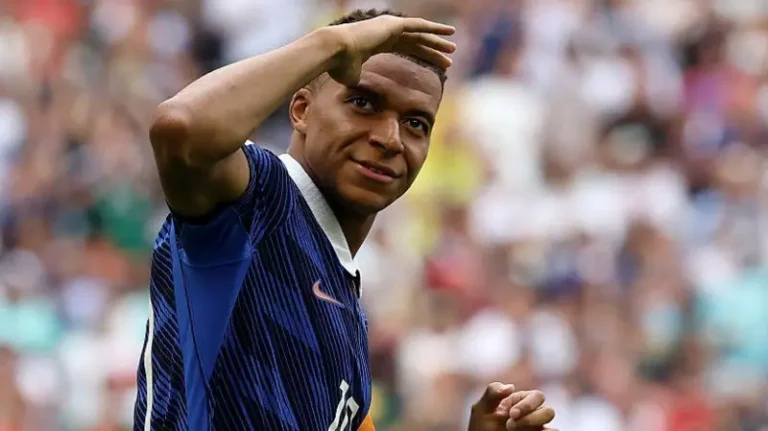
Kylian Mbappe has etched his name in football history, becoming the first player ever to secure the FIFA World Cup Golden Boot on two separate occasions. The electrifying French forward capped off a remarkable 2026 tournament by finishing as the competition’s leading scorer, a feat that underscores his unparalleled impact on the global stage. This latest triumph solidifies his status as one of the game’s all-time greats and adds another glittering chapter to his already illustrious career.
A Dominant Performance Secures Unprecedented Achievement
Mbappe’s quest for the Golden Boot in 2026 was nothing short of extraordinary. He netted a staggering 10 goals in eight matches, a tally that propelled him past formidable rivals, most notably Argentina’s captain Lionel Messi. This remarkable scoring spree not only secured him the individual accolade but also marked a significant personal milestone, as it followed his triumph in the 2022 World Cup in Qatar, where he also claimed the Golden Boot with eight goals. According to reports, the Real Madrid star is the only player in the history of the men’s World Cup to win the top scorer prize in consecutive tournaments, a testament to his enduring brilliance and consistent performance at the highest level.
The 27-year-old’s 10-goal haul in 2026 also achieved another significant historical marker. He became the first player to reach double figures in a single men’s World Cup since Gerd Muller of West Germany, who scored 10 goals in the 1970 tournament. This places Mbappe in elite company, with only two players having ever surpassed his current tournament total: France’s own Just Fontaine, who famously scored 13 goals in the 1958 World Cup, and Hungary’s Sandor Kocsis, who netted 11 goals in the 1954 edition. Mbappe’s ability to consistently deliver such prolific performances in the pressure cooker environment of the World Cup is a testament to his exceptional talent and mental fortitude.
Furthermore, Mbappe’s impressive scoring record in the 2026 tournament saw him ascend to the pinnacle of the men’s World Cup all-time scoring chart. With a total of 22 goals across his World Cup appearances, he now sits one goal ahead of Lionel Messi, further cementing his legacy as one of the most prolific World Cup strikers of all time. This climb to the summit of the all-time scoring list is a significant achievement, especially considering his relatively young age and the potential for him to extend this record in future tournaments.
A Journey Through the 2026 World Cup Campaign
Mbappe’s path to his second Golden Boot was paved with a series of crucial goals across every stage of the 2026 competition. His campaign began with a bang in the group stage, where he registered braces against Senegal and Iraq, showcasing his predatory instincts and ability to find the back of the net with regularity. His scoring prowess continued into the knockout rounds, with another brace against Sweden in the round of 32, followed by a vital penalty that proved to be the match-winner against Paraguay in the round of 16. He then continued his impressive run with a crucial strike against Morocco in the quarter-finals, demonstrating his consistent threat to opposing defenses throughout the tournament.
The dramatic race for the Golden Boot reached its climax in the final matches of the tournament. Lionel Messi, entering the World Cup final with the opportunity to overtake Mbappe, needed a hat-trick to secure the award. However, in a tightly contested final that saw Argentina ultimately fall 1-0 to Spain in New Jersey, the veteran Argentine maestro was unable to find the net. Messi concluded the tournament with eight goals in eight matches, a commendable performance that fell just short of Mbappe’s extraordinary tally.
The chase for individual scoring honors also saw other notable performances. England midfielder Jude Bellingham and Norway striker Erling Haaland finished the tournament with seven goals each, highlighting their emergence as formidable goal-scoring threats on the international stage. France’s Ousmane Dembele and England captain Harry Kane, both prolific forwards, scored six goals apiece, underscoring the attacking talent on display throughout the 2026 World Cup.
Honors and Recognition Beyond the Golden Boot
While Mbappe dominated the scoring charts, other players also received well-deserved recognition for their exceptional contributions to the tournament. Spain’s goalkeeper, Unai Simon, was a standout performer, earning the prestigious Golden Glove award for his stellar performances between the posts. Simon’s incredible consistency was a cornerstone of Spain’s victorious campaign, as he conceded a mere one goal in eight matches, registering an impressive seven clean sheets. The only player to breach his defenses throughout the entire competition was Belgium’s Charles De Ketelaere, a testament to Simon’s formidable goalkeeping prowess.
At 29 years old, Simon had earned his place as Spain’s undisputed first-choice goalkeeper, a decision that manager Luis de la Fuente rightly trusted. His commanding displays, characterized by astute decision-making, brilliant reflexes, and unwavering confidence, were instrumental in Spain’s triumphant journey to lifting the World Cup trophy. His consistent excellence not only earned him individual acclaim but also significantly bolstered his team’s chances of success. The Athletic Club goalkeeper’s performance serves as a reminder of the critical role that defensive solidity plays in achieving ultimate victory in a major international tournament.
Context of the 2026 FIFA World Cup
The 2026 FIFA World Cup, hosted across the United States, Canada, and Mexico, was a landmark event in the history of the tournament. Expanded to include 48 teams for the first time, it represented a significant shift in the global football landscape, offering more nations the opportunity to compete on the world’s biggest stage. The tournament, which commenced on June 11, 2026, and concluded with the final on July 19, 2026, was characterized by thrilling matches, unexpected upsets, and the emergence of new footballing powers. The sheer scale of the event, with matches played across multiple countries and time zones, presented unique logistical challenges but also fostered a truly global celebration of the sport.
The group stage, featuring 16 groups of three teams, led into a knockout phase that saw the intensity escalate with each passing round. The unique format of the group stage, with fewer matches per team but a higher stakes for progression, added an intriguing tactical dimension to the early stages of the competition. The final, held at the iconic MetLife Stadium in New Jersey, was a tense affair that ultimately saw Spain emerge victorious, marking their first World Cup title in over two decades. The tournament’s overall narrative was one of fierce competition, showcasing both established footballing giants and rising contenders.
Mbappe’s Rise: A Chronology of Excellence
Kylian Mbappe’s journey to becoming a dual Golden Boot winner is a story of meteoric rise and sustained excellence. His senior career began at AS Monaco, where he burst onto the scene as a teenager, his blistering pace and clinical finishing quickly drawing comparisons to some of the game’s legends. His move to Paris Saint-Germain in 2017, initially on loan before a permanent transfer, further amplified his global profile.
His international debut for France came in March 2017, and he quickly became an integral part of the national team setup. The 2018 FIFA World Cup in Russia marked his arrival as a global superstar. At just 19 years old, he played a pivotal role in France’s triumph, scoring four goals, including a brace in the final against Croatia, and winning the FIFA Young Player Award.
The 2022 FIFA World Cup in Qatar saw Mbappe take his game to another level. Despite France falling short in the final against Argentina, he etched his name in World Cup final history by scoring a hat-trick, becoming only the second player to do so in a men’s World Cup final. He also secured the Golden Boot with eight goals, demonstrating his individual brilliance on the grandest stage.
His move to Real Madrid in the summer of 2025 further solidified his position as one of football’s most marketable and influential figures. The 2026 World Cup, therefore, represented a chance for him to not only defend his Golden Boot but also to add another World Cup title to his collection, though France ultimately finished in fourth place. His consistent performance across multiple World Cups underscores his remarkable longevity and ability to perform under immense pressure.
Broader Impact and Implications
Kylian Mbappe’s achievement of winning the World Cup Golden Boot twice has profound implications for his legacy and the broader landscape of international football. His consistent scoring prowess and ability to deliver in critical moments solidify his claim as one of the greatest footballers of his generation, and potentially, of all time. This dual accolade places him in an exclusive club of players who have achieved sustained individual dominance on the global stage.
For France, Mbappe’s continued brilliance offers a beacon of hope for future success. Despite the disappointment of not securing a third World Cup title in 2026, his presence ensures that Les Bleus will remain a formidable force for years to come. His leadership on and off the pitch, coupled with his electrifying performances, will continue to inspire a new generation of French talent.
From a commercial and marketing perspective, Mbappe’s status as a dual Golden Boot winner further enhances his global appeal. He is already one of the most recognized athletes in the world, and this achievement will undoubtedly lead to increased endorsement opportunities and solidify his position as a global icon. His influence extends beyond the pitch, making him a significant cultural figure.
The record-breaking nature of his scoring also prompts a re-evaluation of historical scoring benchmarks. His ascent to the top of the all-time World Cup scoring chart, surpassing legends of the game, signals a new era of attacking prowess in international football. It also raises questions about the future potential of scoring records, given Mbappe’s age and his continued trajectory of excellence.
The tournament itself, with its expanded format, showcased the growing global reach of football. The success of teams that might have previously struggled to qualify, and the emergence of new stars, highlights the sport’s ever-increasing universality. The 2026 World Cup will be remembered not only for Mbappe’s individual brilliance but also for its role in further democratizing the sport and bringing new narratives to the forefront of international competition. The stories of players like Unai Simon, who delivered a masterclass in goalkeeping to lead his nation to glory, also serve as powerful reminders of the diverse talents that contribute to the magic of the World Cup.