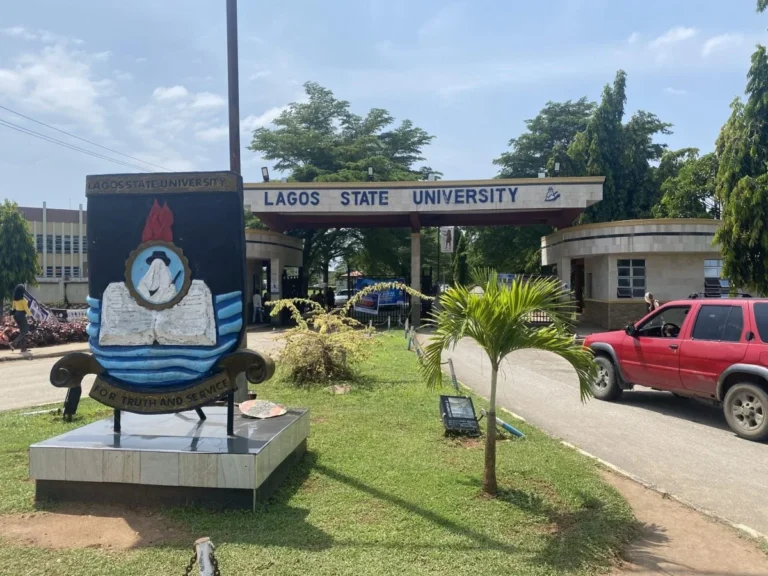
Academic and administrative activities at the Lagos State University (LASU), Ojo, have been brought to an abrupt halt following the declaration of a total, comprehensive, and indefinite strike by the institution’s chapter of the Academic Staff Union of Universities (ASUU-LASU). The industrial action, which officially commenced on Tuesday, 15th September 2026, was unanimously resolved during an emergency congress of the union convened to address what members termed persistent government inaction regarding staff welfare, remuneration, and post-retirement security.
The immediate trigger for the strike was the expiration of a 14-day ultimatum issued to the Lagos State Government. The union had demanded the full domestication and immediate implementation of the 2025 Federal Government/ASUU Agreement within the specified timeframe. With the expiration of the deadline yielding no tangible concessions or official instruments of implementation from the state authorities, the union’s leadership activated the strike mandate, effectively shutting down lecture halls, laboratories, and departmental offices across the main campus in Ojo, as well as satellite campuses.
Background Context of the Industrial Dispute
The standoff between ASUU-LASU and the Lagos State Government is the latest chapter in a long-standing nationwide struggle regarding university funding, staff remuneration, and the autonomy of tertiary institutions in Nigeria. For years, the academic union has campaigned for the renegotiation and implementation of successive collective bargaining agreements with the federal and state governments. The 2025 FGN/ASUU Agreement was designed to comprehensively overhaul the remuneration structure for university lecturers, ameliorate the steady brain drain plaguing the tertiary education sector, and introduce robust funding mechanisms for public universities.
While federal universities have experienced varying degrees of implementation and friction concerning the agreement, state-owned institutions like LASU often require formal domestication by their respective state governments and governing councils. ASUU-LASU has consistently argued that as a premier state university, LASU deserves competitive remuneration that aligns with federal counterparts to maintain its standing as one of the leading state-owned universities in sub-Saharan Africa. However, lecturers contend that state-level bureaucracy, coupled with shifting economic realities and budgetary priorities, has consistently delayed the localization of these critical welfare policies.
Chronology of Events Leading to the Strike
The escalation leading to the 15th September 2026 strike followed a carefully documented sequence of diplomatic engagements, appeals, and ultimatums.
Early 2025: Following the conclusion of the broad negotiations between the Federal Government and ASUU, various state chapters began pushing for state-level adoption of the newly minted 2025 ASUU/FGN Agreement.
Mid-2025 to Early 2026: ASUU-LASU leadership engaged in a series of consultative meetings, letters of appeal, and dialogue sessions with the Lagos State Ministry of Education and university management, pressing for proactive measures to domesticate the agreement and adjust salary scales.
Late August 2026: Frustrated by what they described as a lack of concrete commitment and continuous dilatory tactics by the state authorities, the union convened an expanded executive meeting to review the state of affairs.
1st September 2026: The union officially issued a 14-day ultimatum to the Lagos State Government, warning that failure to implement the 2025 agreement and address systemic welfare issues would result in an industrial shutdown.
14th September 2026: As the ultimatum elapsed without any official government intervention, executive committee members finalized plans for an emergency congress.
15th September 2026: An emergency congress of ASUU-LASU members voted unanimously in favor of a total, comprehensive, and indefinite strike. The union issued a joint statement announcing the immediate withdrawal of services.
Core Grievances of the Union
The joint statement issued at the conclusion of the emergency congress was signed by the Coordinator of the ASUU-LASU Steering Committee, Dr. Oluwaseun Babalola, and the Secretary, Thanny Nooem. The document detailed a catalog of grievances centered primarily on staff welfare, economic sustainability, and post-service security.
Top on the list of grievances is the persistent issue of poor staff salaries. Lecturers argue that the prevailing economic climate, characterized by steep inflation and the high cost of living in Lagos State, has drastically eroded their purchasing power. Despite LASU’s academic accolades and institutional achievements, members argue that their take-home pay fails to reflect the rising cost of basic amenities, housing, and transportation within the commercial capital.
Furthermore, the union expressed deep outrage over unresolved retirement benefits for retired professors and senior academics. According to ASUU-LASU, several professors who dedicated decades of service to the institution have faced agonizing delays, administrative bottlenecks, and financial destitution upon retirement due to unresolved pension harmonization issues and unpaid entitlements. The union maintained that such treatment discourages younger scholars from pursuing academic careers and dishonors senior intellectuals who have contributed immensely to human capital development in the state.
“The union has before now waited patiently and made several attempts to constructively engage the government in good faith,” the joint statement read. “However, the prolonged delay and lack of concrete action have left the union with no option but to resort to industrial action.”
ASUU-LASU emphasized that the strike will remain absolute, comprehensive, and indefinite until every item on their list of demands is fully addressed and the 2025 agreement is signed, domesticated, and implemented without dilution.
Official Responses and Institutional Silence
As of the time of filing this report, neither the Lagos State Government—through the Ministry of Education or the Office of the Special Adviser on Education—nor the management of Lagos State University has issued an official statement addressing the strike declaration.
Insiders within the university administration, who spoke on condition of anonymity, noted that top management officials were holding consultative meetings to evaluate the legal and operational implications of the strike. The university administration typically treads a delicate path in such disputes, balancing its role as an employer with its financial dependence on budgetary allocations and subventions from the Lagos State Government. Observers anticipate that the state government will soon call for an emergency reconciliation meeting to avert a prolonged shutdown that could destabilize the institution’s academic calendar.
Broader Implications for Students and the Academic Calendar
The indefinite shutdown of academic activities at LASU carries far-reaching implications for the student body, parents, the university management, and the broader academic community in Lagos State.
First, the immediate disruption of lectures, ongoing continuous assessments, and impending semester examinations will alter the university’s academic calendar. LASU, which has worked hard over the past decade to build a reputation for stability, timely graduation schedules, and global academic competitiveness, now faces the risk of calendar elongation. For final-year students, a prolonged strike could delay graduation, mobilization for the mandatory National Youth Service Corps (NYSC) scheme, and entry into the job market.
Second, the local economy surrounding the Ojo main campus—which heavily depends on student patronage for accommodation, food services, transport, and retail businesses—stands to experience a sharp economic downturn if the strike persists. Landlords, small business owners, and commercial transport operators who rely on the vibrant student population will feel the immediate financial pinch of a deserted campus.
Finally, the industrial action sends a broader signal regarding the fragility of state-funded tertiary education infrastructure. While Lagos State is often regarded as a frontrunner in infrastructural development and revenue generation among Nigerian states, the standoff highlights the chronic underfunding and structural friction that continue to afflict public education nationwide. Resolving the crisis will require not only political will from the state government but also a sustainable framework for funding tertiary institutions that insulates academic staff welfare from bureaucratic delays and political transitions.
As the strike enters its initial phase, students, parents, and academic stakeholders wait anxiously for a proactive intervention from the Lagos State Government and university authorities to resolve the impasse, restore industrial harmony, and reopen the gates of learning at Lagos State University.