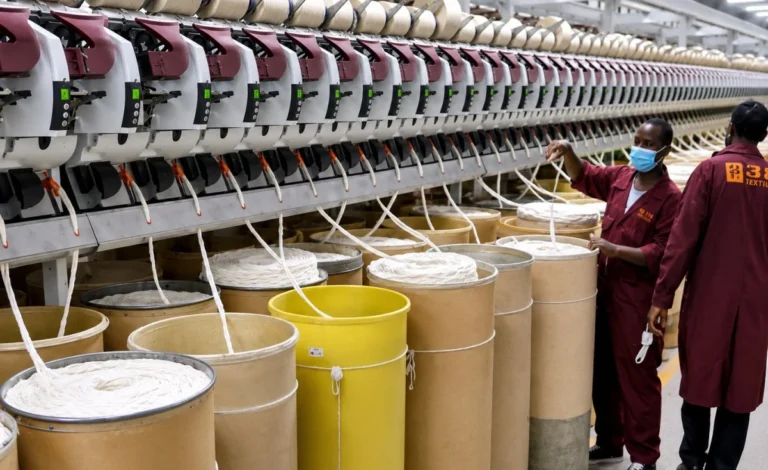
Mali has long held a position as one of Africa’s premier cotton producers, anchoring a vast agricultural sector that supports millions of livelihoods and provides a backbone for the national economy. However, this agricultural triumph masks a critical structural bottleneck: approximately 98 percent of the country’s cotton fibre is exported in its raw, ginned state, leaving the bulk of the value-added potential in the hands of international manufacturers. Mossadeck Bally, a veteran entrepreneur with nearly four decades of experience across West Africa, argues that Mali is currently at a turning point. The nation must pivot from its historical role as a primary commodity exporter to become an industrial textile powerhouse, a transition that requires not just raw material, but a sophisticated, long-term ecosystem of infrastructure, financing, and policy reform.
A Legacy of Agricultural Dominance
The history of Mali’s cotton sector is rooted in post-independence development strategies that prioritized large-scale production. By organizing farmers into a cohesive network and establishing robust ginning infrastructure, the country successfully integrated itself into the global textile supply chain. Today, the sector serves as a vital economic multiplier, sustaining bankers, fuel distributors, insurers, and transport companies. Yet, this success is precisely the source of the current industrial inertia. The existing architecture was designed for a single, narrow mission: grow, gin, and ship.
Bally argues that it is a mistake to label previous industrial attempts as failures. Projects such as COMATEX, Fittina, and ITEMA struggled not because of poor management, but because they operated in a vacuum. A factory cannot thrive without reliable and competitively priced electricity, well-maintained logistics corridors, and, most critically, financing structures that align with the life cycle of industrial assets.
The Chronology of Industrial Ambition
The path forward, according to industry experts and policy observers, requires a phased approach rather than an attempt to build a fully integrated, Asian-style textile industry overnight.
- 1960s–1980s: The Foundation Phase. Mali consolidated its position as a major producer, focusing on smallholder support and building the primary ginning facilities that define the sector today.
- 1990s–2010s: The Industrial Gap. Several attempts at local processing were launched, but most succumbed to the "isolated factory" trap—failing to secure sustainable long-term financing or reliable energy inputs.
- 2020–Present: The Strategic Pivot. A growing consensus among regional entrepreneurs, including Bally, has emerged: the need to shift from exporting raw fibre to exporting yarn.
This sequencing is both logical and logistical. Cotton fibre is bulky and combustible, making it expensive and risky to transport, especially for a landlocked nation located over 1,000 kilometers from the nearest port. Yarn, by contrast, represents a higher-value, more compact product that serves as the natural entry point for global garment manufacturers.
Data-Driven Analysis of the Financial Barrier
The most formidable hurdle to Mali’s industrialization is the structural mismatch between commercial banking and industrial requirements. A modern spinning mill requires a capital investment that may take 15 years to amortize, yet the typical commercial loan in the region rarely exceeds a five- to seven-year maturity.
When a factory is forced to begin principal repayments before it has reached operational efficiency, the project is essentially designed for insolvency. Furthermore, the high equity requirements—often reaching 30 percent of total project costs—immobilize significant capital, creating a barrier to entry that only a handful of local entrepreneurs can clear.
For a theoretical textile plant costing 15 billion CFA francs, an entrepreneur would need to raise 4.5 billion in equity. For many, the prospect of navigating a two-year appraisal process by international development finance institutions (DFIs) to secure the remaining debt is enough to exhaust resources before the first machine is installed.
Bridging the Gap: Financial Engineering
Bally suggests that the solution lies in "deliberate financial engineering." Rather than relying on standard commercial loans, the sector requires:
- First-Loss Guarantees: Utilizing tools from the World Bank’s Private Sector Window to lower the risk profile for private lenders.
- Political-Risk Coverage: Providing security to foreign investors operating in the Sahelian context.
- Institutional Capital: Leveraging the Caisse des Dépôts et Consignations and regional pension funds, which have the long-term liabilities necessary to match the duration of industrial investments.
- Guarantee Funds: Capitalizing the Private Sector Guarantee Fund to replace physical land titles—which are often difficult to secure—with institutional credit guarantees.
The Strategic Role of the State
In this new paradigm, the Malian government must transition from an "operator" to a "strategic architect." The historical model of state-owned factories has largely been replaced by a desire for public-private partnerships (PPPs).
The government’s primary functions should include:
- Infrastructure development: Ensuring competitive energy pricing and logistical connectivity.
- Policy Stability: Implementing a revised PPP law that offers the legal certainty required for 20- to 25-year capital commitments.
- Market Creation: Using public procurement—such as military uniforms, hospital linens, and school uniforms—to provide a guaranteed "anchor market" for nascent local spinning and weaving firms.
- Single-Window Services: Consolidating the fragmented regulatory environment into a single administrative point for investors, reducing the "bureaucratic drag" that currently plagues foreign direct investment (FDI).
Addressing the "Risk Premium" Narrative
A critical challenge in this transition is the external perception of risk in the Sahel. Investors often conflate the logistical difficulties of a landlocked, politically complex region with "impossibility." Bally warns that this leads to an inflated risk premium that keeps capital away from viable, high-demand projects.
Global demand for cotton remains resilient. The infrastructure for production and ginning already exists, proving that operations can survive in a challenging environment. The transition to local transformation is not a theoretical exercise; it is a logical extension of existing industrial flows. Investors are encouraged to move beyond macro-level headlines and focus on the micro-level reality: the assets, the operators, and the proven supply chains already in place.
The Path to 2050
Mali’s vision must be measured in decades rather than electoral cycles. The goal of moving from raw fibre exporter to textile manufacturer is a multi-generational project. By starting with spinning, the country can build the necessary technical expertise and industrial culture. As the ecosystem matures, the focus can expand to weaving, garment manufacturing, and eventually, just-in-time production for European markets using air freight, which can mitigate the disadvantages of being landlocked.
The failures of the past serve as a roadmap of what to avoid rather than a prohibition against future success. As the global textile industry looks to diversify its supply chains away from over-concentrated Asian hubs, Mali finds itself in a unique position. The raw material is there; the workforce is eager; the demand is global. With a shift in financial architecture and a commitment to strategic, private-sector-led growth, the next chapter of the Malian cotton story promises to be defined by value creation rather than raw output. Success in this endeavor would not only revitalize the domestic economy but could establish a new model for industrial development in the interior of the African continent.