The Crisis at Old Trafford
The pressure surrounding Michael Carrick has intensified following a dismal run of results that has seen Manchester United secure only a single victory in their opening ten Premier League matches. With the team winless since August, the atmosphere at the training ground and within the boardroom has shifted from cautious patience to active crisis management. The current standing—18th in the top flight—is statistically the worst start for the club in nearly four decades. Historically, this level of underperformance has almost invariably led to managerial turnover, and the consensus among the club’s leadership appears to be shifting toward the necessity of a fresh voice.
High-Level Meetings and Strategic Reassessment
The immediate future of the managerial position is expected to be determined during a high-stakes summit in Monaco this Wednesday. Key decision-makers, including Chief Executive Omar Berrada, Director of Football Jason Wilcox, and co-owner Sir Jim Ratcliffe, are slated to convene to finalize the strategic direction of the club. Sources familiar with the internal deliberations suggest that Berrada and Wilcox are increasingly inclined to recommend a parting of ways with Carrick, believing that the current tactical setup has hit a ceiling.
The Monaco meeting is not merely a post-mortem of the current season; it is a forward-looking strategy session. The club’s leadership is reportedly looking to address the fundamental structural issues that have hampered United’s progress since the post-Sir Alex Ferguson era. With the January transfer window approaching and the team needing to salvage their league position, the board is looking to act before the club drifts further from the European qualification spots.
The Pochettino Factor: A Persistent Suitor
Mauricio Pochettino’s name has become synonymous with the Manchester United managerial vacancy over the last several years. The 54-year-old was previously in contention for the role following the departures of Jose Mourinho and Erik ten Hag, as well as during the 2022 search for a permanent successor. His tactical pedigree, particularly his ability to develop young talent and implement high-pressing systems, aligns with the long-term vision proposed by the INEOS-led sporting department.
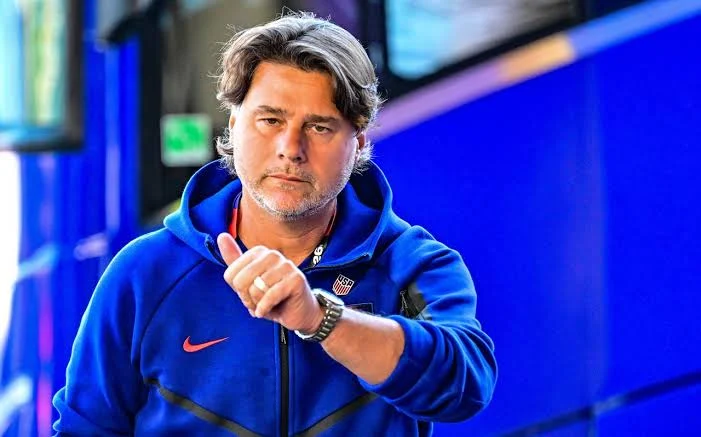
Currently serving as the head coach of the United States Men’s National Team, Pochettino’s situation is complicated by his contractual obligations. Despite signing an extension in August to lead the U.S. through the 2026 World Cup, his agreement contains a reported $10 million release clause. For a club with the financial resources of Manchester United, such a figure is unlikely to be a significant deterrent, provided the board is convinced that Pochettino is the right man to oversee a total cultural reset at the club.
A Chronology of Pochettino’s Premier League Experience
Pochettino’s history in the English game provides a compelling case for his return. His career in the Premier League began in January 2013, when he took charge of Southampton. During his time on the South Coast, he transformed the Saints into a competitive side known for their disciplined, high-energy football.
His subsequent move to Tottenham Hotspur in 2014 marked the peak of his coaching reputation in England. Over five seasons, he elevated Spurs into consistent Champions League contenders, culminating in their memorable run to the 2019 Champions League final in Madrid. Although he left the club in 2019, his impact on the squad and the club’s infrastructure remains a benchmark for success in the modern era.
Following his departure from North London, Pochettino managed Paris Saint-Germain, where he secured a Ligue 1 title, before returning to the Premier League to take the helm at Chelsea for the 2023-24 season. His tenure at Stamford Bridge, while often characterized by instability at the club level, saw him stabilize a young, disjointed squad before he eventually transitioned into international management in September 2024.
Supporting Data and Statistical Context
The severity of the current situation cannot be overstated. Manchester United has historically been a club defined by its presence in the upper echelons of the table, but the current metrics paint a bleak picture. With only one win in ten matches, the team is averaging fewer than one point per game—a trajectory that, if continued, would see the club finish in a position unprecedented in the Premier League era.
Offensively, the team has struggled to convert chances into goals, and defensively, the side has appeared disorganized under pressure. These issues have compounded the frustration of the supporters, who have witnessed the team fail to record a win since the final days of August. The 1986-87 season, which serves as the statistical point of comparison, was a turning point for the club that eventually led to the appointment of Sir Alex Ferguson. The current hierarchy is clearly hoping to find a similarly transformative figure, though they recognize that time is a luxury they do not have.
Implications for the Club and the League
The potential appointment of Pochettino would signify a departure from the recent managerial experiments at Old Trafford. Unlike previous appointments, which often involved high-profile managers with divergent tactical identities, hiring Pochettino would signal a commitment to a specific, identifiable style of play—one that prioritizes fitness, tactical discipline, and a clear transition strategy.
However, the implications of such a change extend beyond the pitch. A mid-season managerial change requires significant logistical adjustment, particularly if the candidate is currently employed elsewhere. Furthermore, bringing in a new manager necessitates a review of the current playing squad. Many players currently on the books were signed under different tactical frameworks, and a transition to Pochettino’s high-intensity system could render some personnel redundant while requiring reinforcements in others.
The broader impact on the Premier League race is also significant. Manchester United’s lack of form has effectively removed them from the conversation regarding the title race and has placed them on the periphery of the battle for European spots. A change in the dugout could provide the "new manager bounce" necessary to climb back into the top six, though the competitive nature of the league means that any recovery will require sustained excellence over the remainder of the season.
Looking Ahead
As the football world turns its attention to the impending meeting in Monaco, the focus remains on whether the club will opt for continuity or a clean slate. The silence from official channels suggests that negotiations remain sensitive, but the momentum is clearly pushing toward a change. Should the board decide to trigger the release clause for Pochettino, the move would arguably be the most significant managerial acquisition of the season, reflecting both the club’s ambition and the desperation of their current predicament.
For Michael Carrick, the coming days represent a critical juncture in his managerial career. Having been thrust into the spotlight, he now faces the reality of the high-stakes environment at Old Trafford. Whether or not he remains in charge, the club is clearly at a crossroads. The upcoming decision will define the remainder of their season and set the tone for the long-term rebuilding project that Sir Jim Ratcliffe and his team have initiated. As the situation develops, the focus for the supporters remains singular: a return to the competitive standards that have defined Manchester United’s history for over a century.