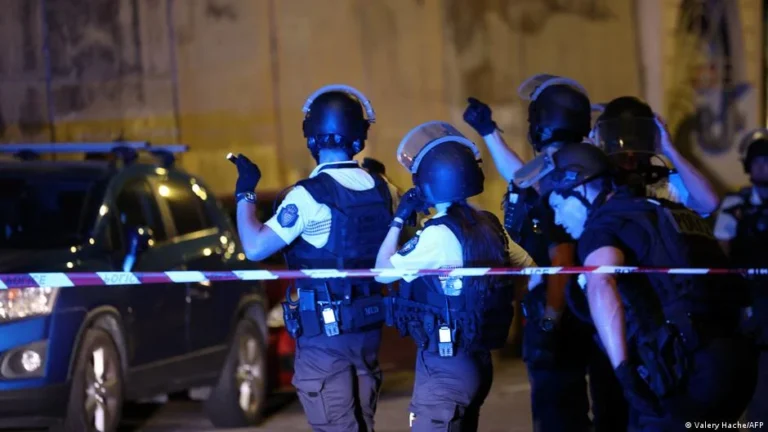
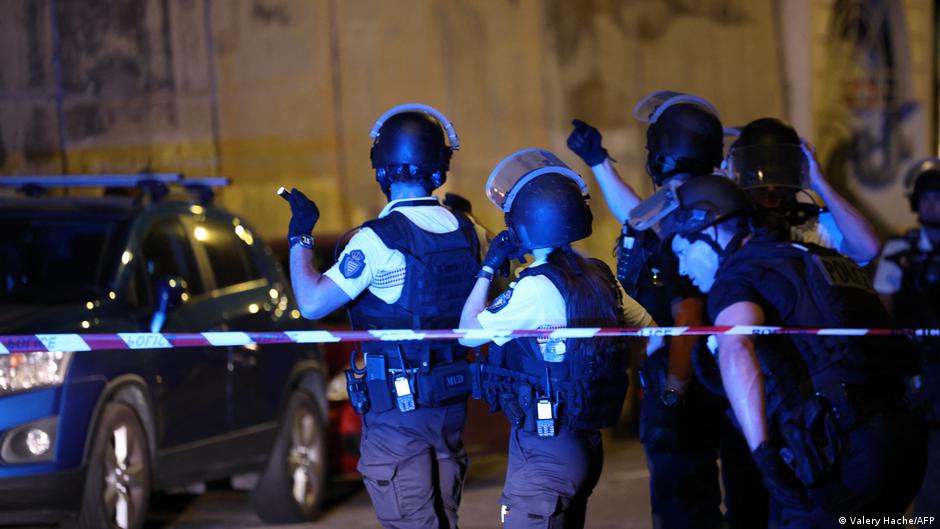
On the evening of June 29, a powerful explosion rocked a residential building in Monaco, immediately drawing international attention to the principality. Initial reports quickly identified Ukrainian businessman Vadym Yermolaiev, a prominent figure from the city of Dnipro and one of Ukraine’s wealthiest individuals, as among those injured in the blast. The incident has since evolved into a complex investigation, with Monaco’s authorities treating it as attempted murder and French media suggesting potential links to Ukraine’s security services, thereby adding a significant geopolitical dimension to the already high-profile event.
Details of the Attack and Initial Findings
The explosion occurred in the lobby of a residential building, a location often frequented by residents and visitors alike, making the targeting appear deliberate and calculated. According to preliminary investigations, an unidentified assailant left a backpack containing explosives and metal shrapnel within the building’s entrance area. The device’s composition, specifically the inclusion of shrapnel, points towards an intent to inflict maximum harm on individuals rather than structural damage, a hallmark of assassination attempts.
The blast resulted in injuries to three individuals. A man and a woman, both reportedly between 50 and 60 years old, sustained severe wounds, as did a 13-year-old boy. The most grievous injury was suffered by the woman, who, according to the French news outlet Nice-Matin, tragically lost both legs in the explosion. Vadym Yermolaiev, identified through subsequent media reports, suffered burns and shrapnel wounds, though his exact condition beyond these details has not been fully disclosed. His wife later informed the press that she had been elsewhere at the time of the incident, confirming her safety and absence from the immediate vicinity of the blast. The scene of the explosion, near the French border, was quickly secured, with forensic teams and investigators commencing their meticulous work to gather evidence and reconstruct the events leading up to the attack.
Investigation Unfolds: Attempted Murder and SBU Lead
Monaco Prosecutor General Stephane Thibault officially declared on July 1 that investigators are treating the incident as attempted murder, underscoring the severity and intentionality of the attack. This classification elevates the investigation from a general criminal act to a targeted attempt on human life, signaling a comprehensive and urgent search for those responsible. The search for the suspects is ongoing, with law enforcement agencies in Monaco and potentially collaborating international partners working to identify and apprehend the perpetrators.
A significant development in the investigation, reported by the French newspaper Le Figaro, indicates that investigators in Monaco are actively pursuing a lead suggesting the involvement of Ukraine’s Security Service (SBU). While no official confirmation or specific details regarding this lead have been publicly released by Monégasque authorities, the mere suggestion of a state security service’s involvement in an attack on foreign soil, targeting one of its own former citizens, introduces a highly sensitive and politically charged element. Such a scenario, if proven, would have profound implications for international relations, sovereignty, and the conduct of state intelligence operations. The SBU, Ukraine’s principal intelligence and counter-terrorism agency, would face intense scrutiny should this lead gain traction, especially given its mandate to protect national interests, which in certain interpretations, could extend to actions against individuals deemed detrimental to the state.
Profile of Vadym Yermolaiev: A Ukrainian Oligarch’s Journey
Vadym Yermolaiev is a figure synonymous with significant wealth and influence within Ukraine, particularly in his native city of Dnipro. He is the founder of the Alef trading and manufacturing group, a conglomerate with diverse interests that has played a substantial role in Ukraine’s economic landscape. Yermolaiev built the majority of his considerable fortune through strategic investments in commercial and residential real estate, transforming the urban fabric of Dnipro with numerous development projects. His business empire extends far beyond property, encompassing construction materials manufacturing, a critical sector for infrastructure development, as well as agriculture, a vital industry in Ukraine. Furthermore, his group’s portfolio includes ventures in welding technology, mining, and logistics, showcasing a broad and diversified economic footprint.
In 2020, Forbes Ukraine recognized Yermolaiev as the country’s 23rd-richest entrepreneur, a testament to his financial prowess and business acumen. Before Russia’s full-scale invasion of Ukraine in February 2022, various media estimates placed his net worth at more than $200 million, solidifying his status as one of the nation’s wealthiest businesspeople. His substantial economic power positioned him as a key player in Ukrainian business circles, albeit one not without controversy, particularly as geopolitical tensions escalated.
Sanctions and Business Dealings in Occupied Crimea: A Contentious Past
A crucial aspect of Vadym Yermolaiev’s recent history, and a potential motive for the attack, revolves around his citizenship status and alleged business activities in Russian-occupied territories. In 2017, Yermolaiev renounced his Ukrainian citizenship, subsequently obtaining Cypriot citizenship. He publicly cited dissatisfaction with Ukraine’s judicial and tax systems as the primary reasons for this decision, a common refrain among some Ukrainian oligarchs who sought to relocate their assets and legal residences abroad.
However, his actions took on a new dimension on December 23, 2023, when Ukrainian President Volodymyr Zelenskyy imposed personal sanctions on Yermolaiev for a period of 10 years. These sanctions, enacted under a decision by Ukraine’s National Security and Defense Council, included a comprehensive set of 16 separate restrictions, notably asset freezes and stringent limits on financial transactions. The imposition of such wide-ranging sanctions against a prominent former citizen underscores the Ukrainian government’s increasing efforts to crack down on individuals perceived as undermining national security or aiding the aggressor state.
The official justification for these sanctions, according to Ukraine’s Security Service (SBU), stemmed from Yermolaiev’s alleged business activities in Russian-occupied Crimea. The SBU stated that several of his companies continued to operate on the peninsula after Russia’s annexation in 2014, re-registering under Russian law. By allegedly paying millions of dollars in taxes to the Russian state on a regular basis, these companies were accused of financially contributing to Russia’s war against Ukraine. This allegation places Yermolaiev in a highly precarious position, as profiting from business in occupied territories and contributing to the occupying power’s budget is viewed by Kyiv as an act of collaboration and treason, especially amidst a full-scale invasion.
One of the specifically sanctioned entities is Alef-Vinal-Crimea, which manages the Crimean operations of Alef-Vinal, a major Ukrainian alcoholic beverage producer reportedly controlled by Yermolaiev. Yermolaiev has publicly and consistently denied these allegations, asserting that he did not act in Russia’s interests and that the sanctions against him are unfounded. He maintains that his business operations were conducted legally and without intent to support the Russian state. This dispute highlights the complex and often murky landscape of business and political allegiances in a conflict zone, where corporate decisions can have profound national security implications.
Scandals and Family Controversies: A Pattern of Scrutiny
The Monaco explosion is not the first instance of Vadym Yermolaiev and his family attracting significant public and media scrutiny. Their involvement in several high-profile scandals paints a picture of a powerful family navigating complex legal and ethical challenges.
In August 2022, as Russia’s full-scale invasion of Ukraine raged, journalists from the Ukrainian news outlet Ukrainska Pravda published an investigative report that exposed what they dubbed the "Monaco Battalion." This report detailed a network of Ukrainian businesspeople, politicians, and oligarchs who had reportedly settled on the French Riviera, including Monaco, during the war. Yermolaiev was explicitly named among those individuals who had relocated to the ostensibly neutral and luxurious enclave, raising questions about their commitment to their homeland during a time of national crisis. The existence of such a "battalion" fueled public anger and resentment within Ukraine, where millions faced displacement, poverty, and the direct threat of war.
Further controversy emerged in August 2024, when the broadcaster Hromadske reported that a Dnipro-based company with alleged links to Yermolaiev had been selected to supply granite for the first phase of Ukraine’s National Military Memorial Cemetery. This revelation sparked outrage, given Yermolaiev’s sanctioned status and allegations of Crimean business dealings. The company in question denied the allegations of direct links to Yermolaiev. However, Hromadske later reported that Yermolaiev had transferred control of the company to his daughter, Sofia Kononenko, in what was perceived as an attempt to circumvent Ukrainian sanctions. Such actions, often referred to as "sanctions dodging," highlight the persistent challenges faced by governments in enforcing financial restrictions against well-resourced individuals who employ sophisticated legal and corporate structures.
The Yermolaiev family’s legal troubles extended beyond Ukraine’s borders. In December 2025, Yermolaiev’s son, Artur, was arrested in Cyprus and subsequently extradited to Estonia. He was implicated in the so-called Milton Group, an international online investment fraud network that defrauded countless individuals globally. Artur Yermolaiev eventually pleaded guilty to his involvement in the scheme, agreeing to pay €8.5 million ($10 million) in compensation to victims. He received a five-year suspended sentence, a judgment that brought some closure to a transnational criminal case involving significant financial misconduct. The timing and nature of these family-related scandals, particularly the high-profile fraud case, could potentially factor into the complex web of motives being considered by investigators in Monaco.
Unconfirmed Motives and Broader Implications
While French and Ukrainian media, citing sources close to the investigation, have widely reported that Vadym Yermolaiev was the intended target of the Monaco attack, authorities in Monaco have yet to officially confirm this. The official stance remains that the search for suspects and motives is ongoing, maintaining a cautious and methodical approach to a highly sensitive case.
However, several potential motives have been discussed in the media, each adding a layer of complexity to the investigation. These include Yermolaiev’s possible ties to former business partners in Russian-occupied areas of Ukraine, which could lead to disputes or retribution. Alleged connections to Russian organized crime represent another speculative motive, given the transnational nature of such criminal networks and their historical presence in various European locales. Furthermore, a possible link to the criminal case involving his son, Artur, and the Milton Group fraud, while less direct, cannot be entirely dismissed, as such high-stakes criminal activities can often engender dangerous enmities. None of these theories have been officially confirmed by law enforcement agencies, emphasizing the need for concrete evidence before drawing conclusions.
The attack on Yermolaiev in Monaco is not an isolated incident in the broader context of attacks on influential figures from Ukraine living abroad. In May 2025, for example, Andrii Portnov, a former politician and lawyer with close ties to the regime of former Ukrainian President Viktor Yanukovych, was shot dead in Spain. These incidents underscore a disturbing trend of violence spilling beyond Ukraine’s borders, targeting individuals with significant political or economic ties to the country. Such attacks raise serious questions about the security of these individuals, the reach of various actors (state or non-state) with grievances against them, and the challenges faced by European law enforcement in investigating transnational crimes that may have deep geopolitical roots.
The implications of the Monaco explosion extend beyond the immediate criminal investigation. It highlights the vulnerability of wealthy and influential individuals, even in seemingly secure havens like Monaco. It also shines a spotlight on the complex and often controversial lives of Ukrainian oligarchs, many of whom have faced scrutiny over their wealth acquisition, political influence, and business dealings, particularly since the full-scale invasion of Ukraine. The potential involvement of a state security service, as suggested by Le Figaro, would escalate the incident into a matter of international diplomacy and intelligence ethics, demanding a robust and transparent investigation to ascertain the truth and prevent further destabilization. The ongoing search for the perpetrators and the true motives behind this audacious attack will undoubtedly continue to captivate international attention, revealing more about the shadowy intersections of wealth, power, and geopolitical conflict.