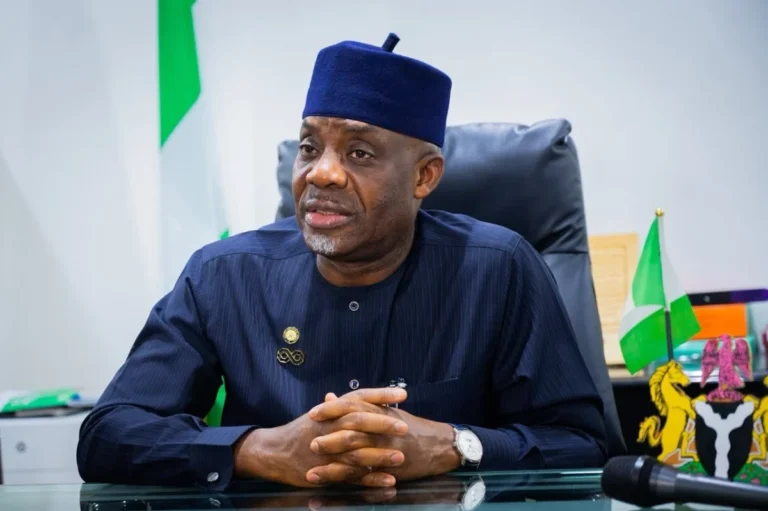
The global landscape of educational reform and diaspora engagement reached a significant milestone in Pennsylvania as the Nigerian Minister of Education, Dr. Olatunji Alausa, was formally conferred with the prestigious 2026 Man of the Year award by the African Cultural Festival (ACF). In a powerful demonstration of international civic diplomacy, the minister was additionally presented with the symbolic Key to the City of Harrisburg during the grand finale of the annual festival. This high-profile international recognition serves as an acknowledgment of Dr. Alausa’s sustained leadership, innovative policy frameworks, and aggressive human capital development strategies designed to reposition Nigeria’s educational architecture for the challenges of the twenty-first century.
The festival, held under the overarching and deeply resonant theme, The Great Reunion: Culture, Education, and Collaboration, brought together international policymakers, diaspora leaders, educators, cultural ambassadors, and innovators. Against this backdrop of cross-continental synergy, Dr. Alausa used the global platform to issue a compelling call to action. He urged the vast Nigerian and broader African diaspora community to forge stronger, more actionable partnerships with domestic institutions to accelerate critical education reforms, advanced scientific research, technological innovation, and holistic human capital growth.
Civic Honors and the Dimension of International Diplomacy
The presentation of the Key to the City of Harrisburg, alongside the ACF Man of the Year distinction, added an extraordinary civic dimension to the minister’s itinerary in the United States. Municipal leaders, including Harrisburg Mayor Wanda Williams and representatives from the Pennsylvania House of Representatives led by Speaker Joanna McClinton, praised the minister’s forward-thinking approach to governance. This civic recognition underscores the growing importance of municipal-level international relations, wherein cities in the United States actively engage with foreign policymakers to foster educational and cultural exchange.
According to a detailed statement released in Abuja by Ikharo Attah, Special Adviser on Media and Communications to the Minister, the dual honors reflect the international community’s close observation of Nigeria’s current developmental trajectory. The event served not merely as a celebration of individual excellence, but as a strategic forum for high-level networking between the Nigerian government and influential members of the global African diaspora.
In his acceptance speech, Dr. Alausa maintained a posture of profound humility and shared responsibility. He noted that the international recognition was a direct reflection of the collective, tireless work being undertaken by the administration of President Bola Ahmed Tinubu to overhaul the nation’s educational system. Rather than accepting the accolade as a personal triumph, the minister dedicated the awards to President Tinubu, domestic education sector officials, frontline educators, institutional stakeholders, and, most importantly, the millions of Nigerian children and youths whose educational aspirations form the bedrock of the federal government’s reform agenda.
Comprehensive Overview of Nigeria’s Education Transformation Agenda
Elaborating on the scope of the ongoing reforms, Dr. Alausa emphasized that the federal administration’s transformation agenda is holistic, covering the entire education value chain. This comprehensive approach breaks away from historical piecemeal policies by simultaneously addressing foundational learning and advanced specialized training. The strategy encompasses basic and secondary education, technical and vocational education and training (TVET), and tertiary institutions.
Among the cornerstone initiatives highlighted by the minister is the Nigerian Education Loan Fund (NELFUND), a transformative financial mechanism designed to ensure that no Nigerian student is denied higher education purely on the grounds of poverty. Furthermore, the federal government has ramped up investments in technical and vocational training to bridge the country’s severe skills gap and combat youth unemployment. Curriculum modernization is also underway across all tiers of education to ensure that graduates possess competencies relevant to the modern, tech-driven global economy.
In the specialized fields of medical education and teacher development, the ministry has introduced aggressive capacity-building frameworks. Substantial financial capital is being channeled into upgrading physical and digital infrastructure, including modern laboratories, simulation centers, student hostels, and smart classrooms. These capital investments are intended to drastically improve institutional access, educational quality, real-world relevance, and the ultimate employability of Nigerian graduates.
Bridging the Gap: The BRIDGE Programme and Diaspora Mobilization
While domestic structural overhauls are vital, Dr. Alausa argued that sustainable national development cannot be achieved in isolation from the global community. He placed significant emphasis on the necessity of mobilizing the immense intellectual capital, financial resources, and professional networks of Nigerians living abroad to complement national efforts in research, development, and innovation.
To operationalize this diaspora integration, the minister passionately advocated for active participation in the BRIDGE programme—an acronym for Bridging Research, Innovation, Development, and Global Expertise. The BRIDGE initiative is meticulously designed to serve as a structured pipeline through which diaspora professionals, academics, researchers, and global institutions can channel their expertise back into the homeland.
Through this framework, diaspora experts can engage in virtual and physical mentorship programs for Nigerian students and early-career academics, contribute to cutting-edge research projects, deliver specialized guest lectures, support modern curriculum design, establish robust institutional partnerships, and facilitate the seamless transfer of emerging technologies and global best practices into Nigerian universities and research institutes.
Dr. Alausa reassured the diaspora community that contributing to national development does not necessitate permanent relocation or the disruption of established careers abroad. He noted that modern technology allows for seamless, high-impact contributions through both physical visits and sustained virtual engagement. This flexibility, he stated, captures the true essence of the festival’s theme, The Great Reunion, by effectively reconnecting Africa with its global diaspora through education, culture, and purposeful collaboration.
Strategic Engagements with DuduPlugs and International Stakeholders
A major highlight of the minister’s visit to Pennsylvania was a high-level strategic engagement with the executive team of DuduPlugs, an organization dedicated to empowering young Africans and connecting indigenous talent with global opportunities. Leila Steinberg, a prominent youth advocate with over 35 years of experience in emotional literacy, creativity, leadership development, and youth empowerment, expressed profound gratitude to Dr. Alausa for taking the time to review the organization’s vision.
Steinberg underscored that DuduPlugs is specifically engineered to help young Africans develop, monetize, and protect their talents, culture, intellectual property, and innovative ideas. By building robust bridges between Nigerian talent pools and international creative and technological markets, the initiative aims to create sustainable economic pathways for the younger generation.
Echoing these sentiments, Wole Adeniyi, Chief Executive Officer of DuduPlugs, thanked the minister for gracing the African Cultural Festival with his presence. Adeniyi characterized the engagement as a watershed moment for cultural diplomacy and cross-border educational collaboration between Nigeria and the United States. He announced that DuduPlugs intends to build upon the momentum generated by the festival by developing a concrete legacy program focused on technology transfer, modern innovation, and robotics education for young Nigerians.
To bring this vision to fruition, DuduPlugs is actively collaborating with an illustrious group of international stakeholders and experts, including Blake Walker, Leila Steinberg, Femi Ojetunde, Dana Sims, and Professor Jody David Armour. These collaborators are working in tandem to explore sustainable, long-term partnerships that will directly benefit the Nigerian education ecosystem.
A Broad Coalition of International and Domestic Supporters
The success of the African Cultural Festival and the robust diplomatic engagements that accompanied it were made possible through the collaborative efforts of numerous public officials, institutional leaders, and community advocates. Dr. Alausa formally acknowledged and expressed deep appreciation for the multifaceted support provided by various dignitaries.
Special recognition was extended to the Pennsylvania House of Representatives under the leadership of Speaker Hon. Joanna McClinton; the City of Harrisburg led by Mayor Hon. Wanda Williams; the organizing team of DuduPlugs and the African Cultural Festival headed by Wole Adeniyi and Goke Adeniyi; as well as international collaborators Leila Steinberg, Blake Walker, Femi Ojetunde, and Dana Sims. The minister also acknowledged the contributions of community leaders including Ms. Phyllis Bennett, Kelly Summerford, Hon. Carol Kazeem of Delaware, and Hon. Segun Adeyina of Georgia.
These acknowledgments highlighted the intricate web of international goodwill and institutional support that continues to position Nigeria favorably on the global stage, proving that educational diplomacy remains a potent tool for strengthening bilateral relations.
Implications and Broader Impact of the Harrisburg Engagements
The engagements in Harrisburg carry profound implications for the future trajectory of Nigeria’s educational sector. For decades, "brain drain" has been framed strictly as a national loss, with skilled professionals emigrating in search of better opportunities abroad. However, Dr. Alausa’s policy posture reframes this phenomenon into a potential "brain gain" through intentional diaspora mobilization and digital integration.
By actively courting international partnerships and leveraging diaspora networks, the Federal Ministry of Education is signaling a pragmatic shift toward an open-source educational model. This model recognizes that education is no longer the exclusive mandate of the central government, but a shared national responsibility requiring active synergy among state actors, educators, private industry, local communities, and the global diaspora.
Furthermore, the integration of advanced technological training, robotics, and modern innovation—championed through partnerships with organizations like DuduPlugs—directly addresses the imperatives of the Fourth Industrial Revolution. As global economies rapidly pivot toward artificial intelligence, automation, and digital services, equipping Nigerian students with relevant, future-proof skills is critical to ensuring the nation’s economic competitiveness.
Reaffirming Commitment to Sustainable Educational Reform
In his concluding remarks, Dr. Alausa reaffirmed the unwavering commitment of the Federal Ministry of Education to pursue sweeping, sustainable reforms that permanently expand educational access, enhance the practical utility of school curricula, and elevate overall academic quality. He stressed that the ultimate metric of success for any educational policy is its ability to equip Nigerian youths to compete favorably and contribute meaningfully in a rapidly evolving global economy.
The minister assured stakeholders that the ministry will continue to institutionalize open, transparent avenues for all Nigerians—both at home and across the global diaspora—to actively participate in the ongoing national development process. By continuously strengthening the institutional linkages connecting Nigeria’s educational infrastructure to international knowledge centers, advanced innovation hubs, and cutting-edge technologies, the current administration is laying a formidable foundation for sustainable, knowledge-driven economic growth.